
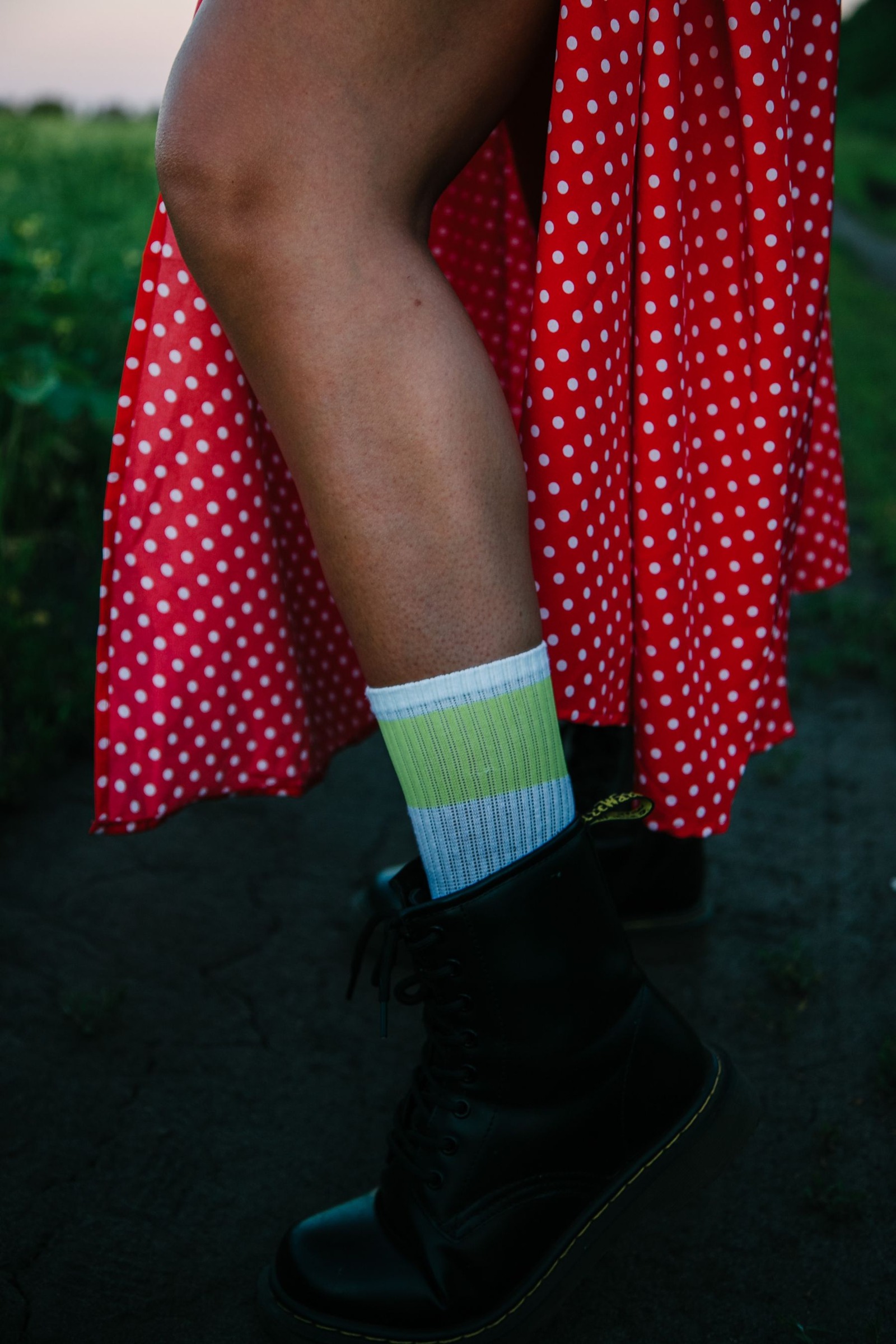
When a dress and a pair of shoes seem mismatched, look at the small space between them before replacing either piece. The hem, ankle opening, straps and shoe upper create a series of visible edges. Sometimes those edges compete; sometimes they connect. Understanding that relationship gives you more options than assigning one shoe style to every dress length.
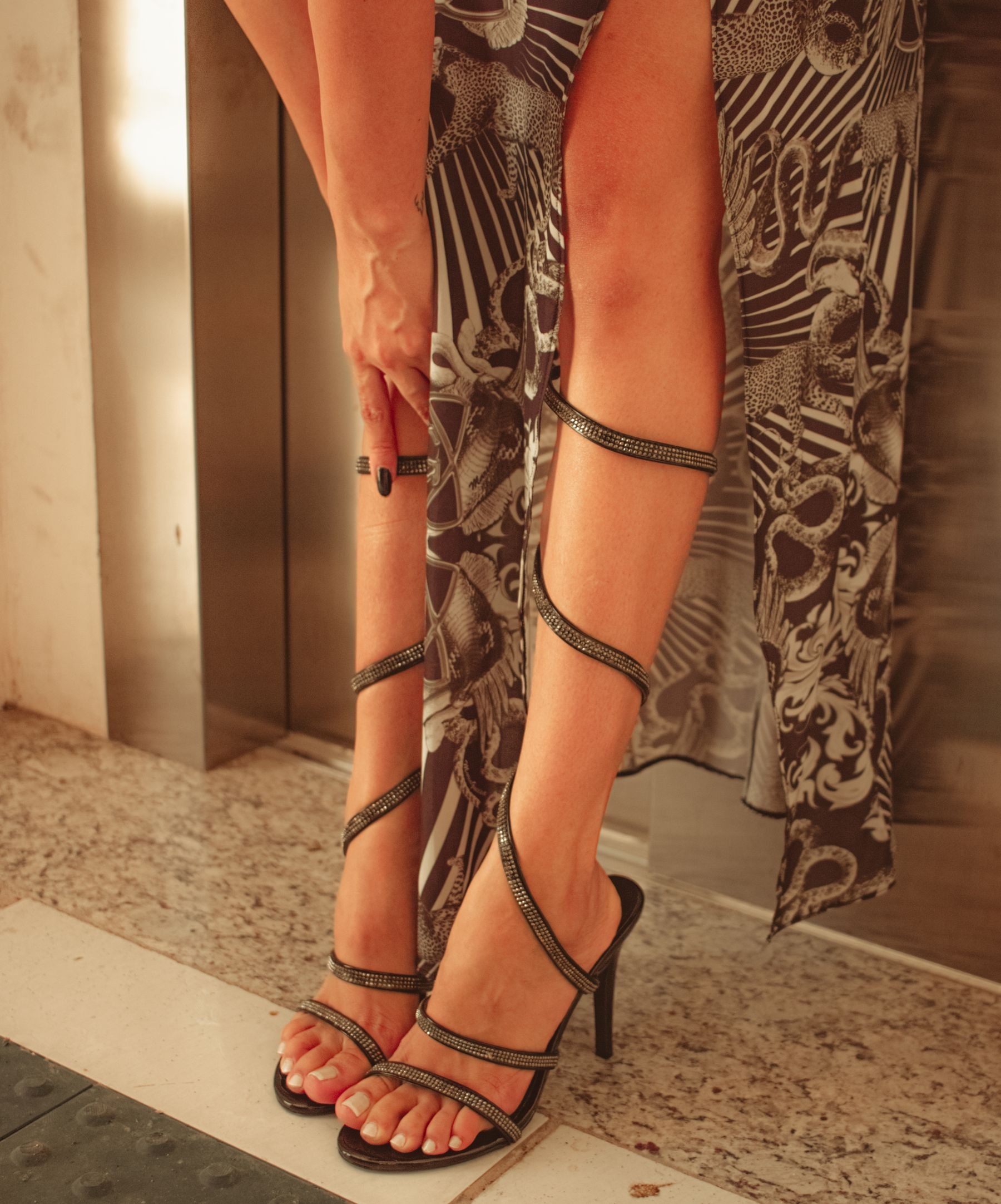
Start with footwear suitable for the ground and the amount of walking involved. Then judge the outfit. A visually pleasing pairing is not useful if a trailing hem catches under the sole or a narrow skirt prevents a normal stride. Practical clearance belongs in the same decision as color and shape.
Look at the actual hem, not its label
Length names are only rough descriptions. The same dress can reach different points on different wearers, and an uneven hem may be much lower at the back. Put it on with the shoes you intend to use and check the front, sides and rear. Do not assume a product photograph shows your proportions.
Notice whether the edge is straight, curved, ruffled or split. A firm straight hem creates a clear horizontal boundary. A soft ruffle makes a busier edge, while a slit reveals changing amounts of shoe as you walk. Those details can matter more to the pairing than a difference of an inch in length.
Compare an open gap with a continuous line
An ankle boot ending just below the hem creates a different effect from one that disappears underneath it. Neither is automatically wrong. A small visible gap makes the two edges obvious. An overlap can look quieter, provided the skirt falls freely over the boot shaft instead of catching or bunching on it.
If the space feels visually fussy, try a lower shoe or a taller boot that safely fits beneath the skirt. Keep the dress unchanged while comparing. With a wide skirt, there may be ample clearance around a boot. With a narrow skirt, a broad shaft can distort the hem every time you take a step.
Inspect the overlap in motion
- Walk several normal steps and turn around without holding the skirt.
- Check whether the hem settles outside the boot after each step.
- Look for fabric caught on buckles, zippers or decorative tabs.
- Test stairs using a handrail, especially with longer or uneven hems.
Read straps as part of the outfit
An ankle strap introduces another visible line. With a detailed hem, several broad straps can create a busy lower section. Try a simpler upper if you want the dress to stand out. Alternatively, repeat the strap color elsewhere in a small accessory so the stronger footwear feels connected to the rest of the outfit.
A shoe close in color to tights can create visual continuity without requiring a particular heel. A contrasting shoe makes a clearer stopping point. Choose based on the effect you like, not on a promise that one option suits every leg shape. Your own mirror comparison is more useful than a universal rule.
Balance fabric weight with shoe structure
A crisp dress can hold its shape beside substantial loafers or a firm sandal. A very fluid skirt moves differently and may look calmer with a less detailed shoe. Yet contrast can be appealing: lace-up shoes with a soft dress can feel deliberate when the rest of the outfit remains simple.
Watch the toe as well as the sole. A pointed toe projects beyond the dress differently from a rounded or square one. If the hem is long, check that it cannot slide beneath that projecting tip when you step backward. Do not rely on standing still to judge clearance.
Keep a small pairing record
Lay out two suitable shoe choices and compare them with the same dress, bag and outer layer. Photograph each from the same distance. Ask a specific question: does the boot interrupt the skirt, do the sandal straps compete with the ruffle, or does the shoe feel too delicate beside a heavy fabric?
Keep the combination that looks intentional and passes the walking check. Note the shoe’s role, such as a low opening that leaves a clear gap or a smooth boot shaft that fits underneath. This creates a repeatable decision for that dress, while leaving room for different shoes when the ground, weather or occasion changes.