
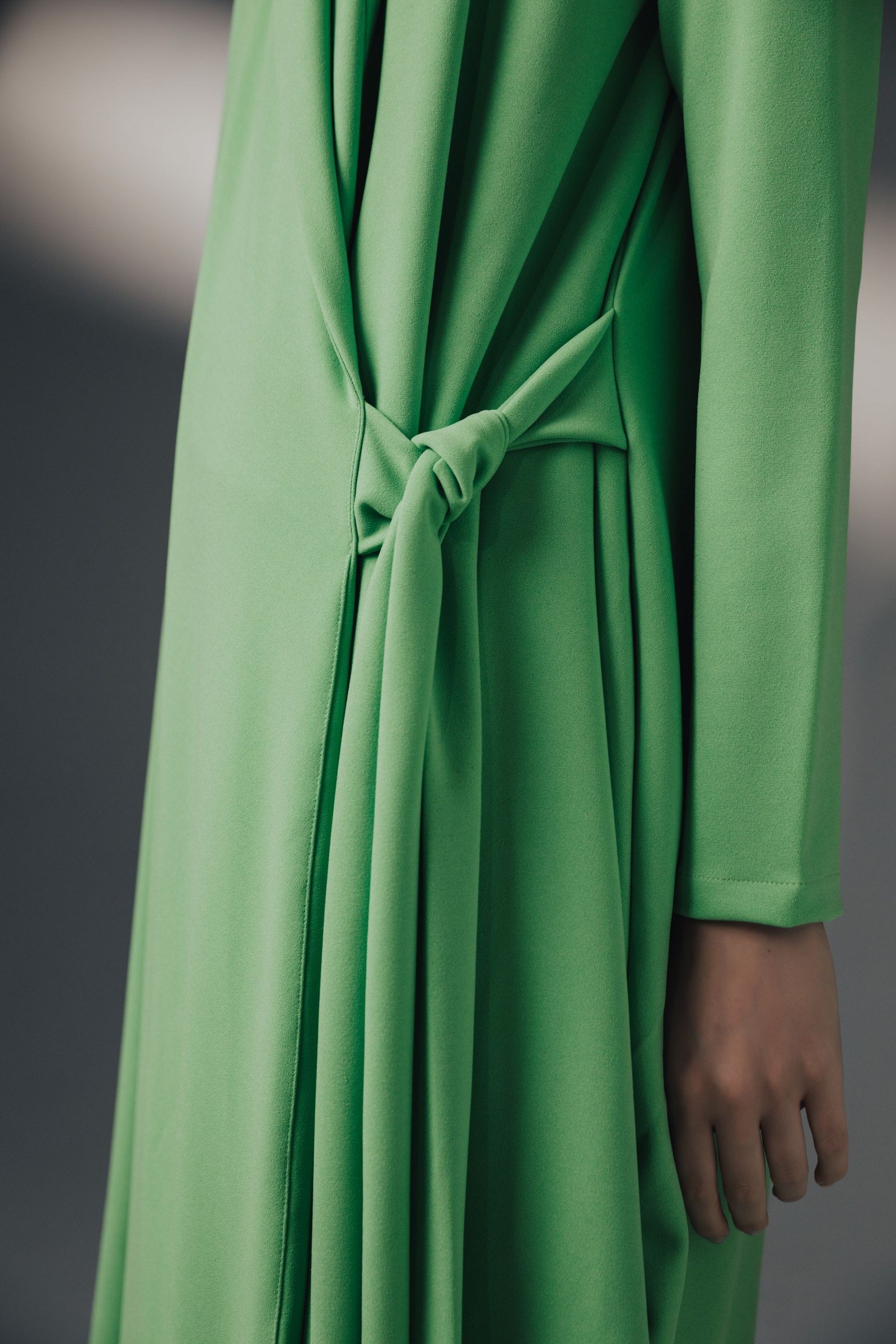
A belt changes where a dress gathers and how its fabric hangs. It does not simply draw a line around the waist. On a loose dress, it can lift the hem and create folds above the buckle; on a fitted dress, it may add detail without changing the shape much. Understanding that difference helps you choose a comfortable placement.
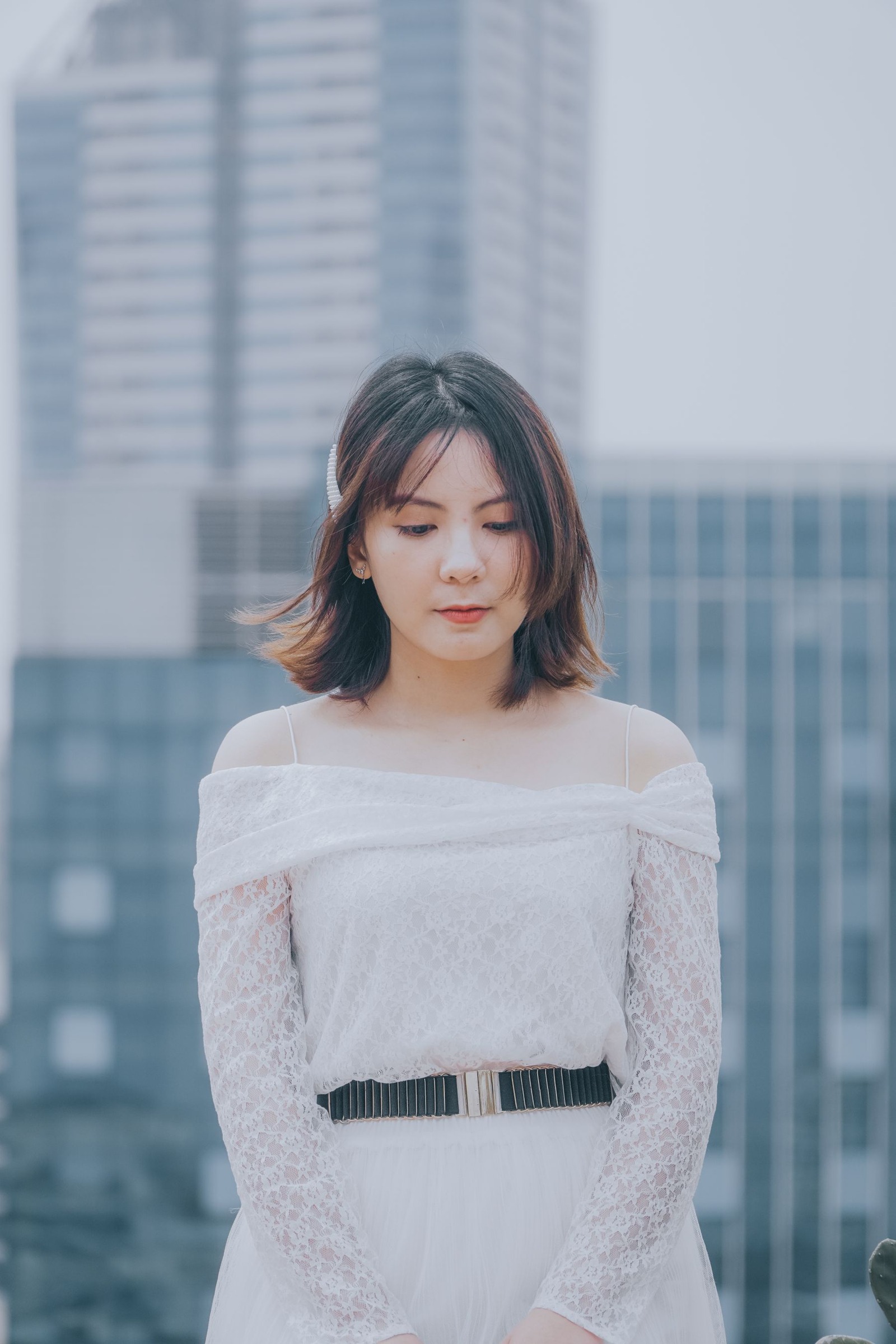
Start with a dress that fits without the belt. Fasten all closures and let the fabric settle. If the neckline, armholes or hips already pull, tightening a belt is unlikely to solve the underlying issue. Treat the belt as an optional styling tool, not a way to make an unsuitable size behave.
Find a position that works while sitting
Hold the belt loosely at several heights and look at the effect before fastening it. The most useful position is one where it feels stable without pressure and does not cross a bulky seam. On a dress with a defined waist, begin near that seam. On a straight dress, experiment within a comfortable range.
Now sit down. A wide, rigid buckle can press differently when your torso bends, and a belt placed over a thick gathered seam may feel bulkier than expected. If you need to loosen it substantially every time you sit, choose a softer belt, another placement or a different dress for this combination.
Distribute fabric instead of cinching harder
After fastening a belt over a loose dress, gently arrange the folds around it. Move excess fabric away from the center front if it obscures buttons or produces a thick mound beneath the buckle. Keep enough ease above the belt to breathe and reach normally, without pulling the entire bodice upward into a large pouch.
Check the sides and back. A smooth front can conceal a bundle of fabric gathered at the spine. Spread the fullness where it falls comfortably rather than forcing all of it behind you. If there is simply too much fabric for a stable result, the dress may look better unbelted.
Watch what changes below the belt
- Look for a hem that has lifted more on one side than the other.
- Check whether a side seam has rotated toward the front.
- Open and close your stride to see whether folds restrict the skirt.
- Make sure pockets remain accessible without dragging the belt downward.
Choose width for the available space
A wide belt needs a reasonably clear area to sit. If it overlaps a bust seam, ribbed waistband or several tiers, it can buckle and tilt. A narrower belt may fit the available space more comfortably. Conversely, a very thin belt can disappear into heavy gathers or twist beneath a thick waist tie.
Consider flexibility as well as width. A soft woven belt follows movement differently from a stiff leather one. An elastic style can accommodate changes in posture, but it should not squeeze or cause the dress fabric to bunch into a narrow ridge. Try the actual belt with the dress rather than choosing by appearance alone.
Respect loops and existing ties
Small thread loops are often intended for the dress’s original lightweight tie. They may not support a heavy buckle or a wider belt. Do not force a replacement through them if it strains the stitching. If you prefer another position, the loops may remain visible; decide whether that bothers you before removing anything permanently.
For a dress with a sewn-in sash, work with its intended fastening rather than stacking a heavy belt over the knot. Try a flatter knot or a different side if the sash allows it. A belt should not cover an important closure you need to reach when dressing or using the restroom.
Finish with a no-adjustment trial
Wear the belted dress indoors for several ordinary tasks. Reach for a cup, walk, sit and stand, then check the mirror before smoothing anything. A neckline that has crept upward suggests too much fabric was pulled through the belt. A migrating buckle may indicate that the belt is sliding across a slippery surface.
Keep the setup that stays comfortable with minimal attention. Record the belt and fastening position if it helps, but leave room to choose an unbelted version on another day. A successful belt adds a detail or changes the silhouette because you enjoy the result, not because every dress needs a defined waist.