
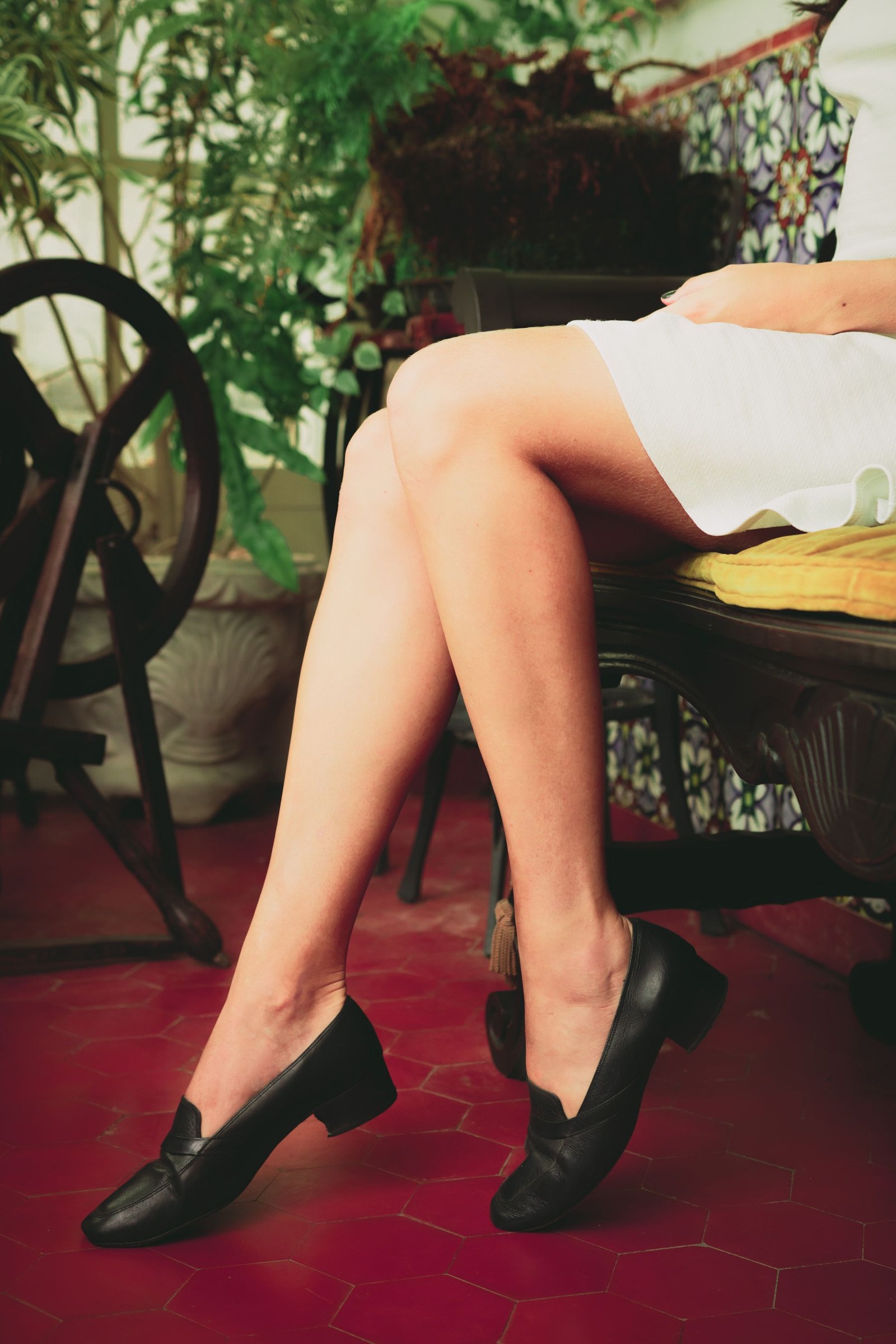
A dress hem moves when you sit because the skirt must travel over your lap. How far it moves depends on the cut, available room and fabric, not only the standing length. If you want a dress for meals, desk time or public transport, seated coverage deserves its own fitting check before shoes and accessories distract you.
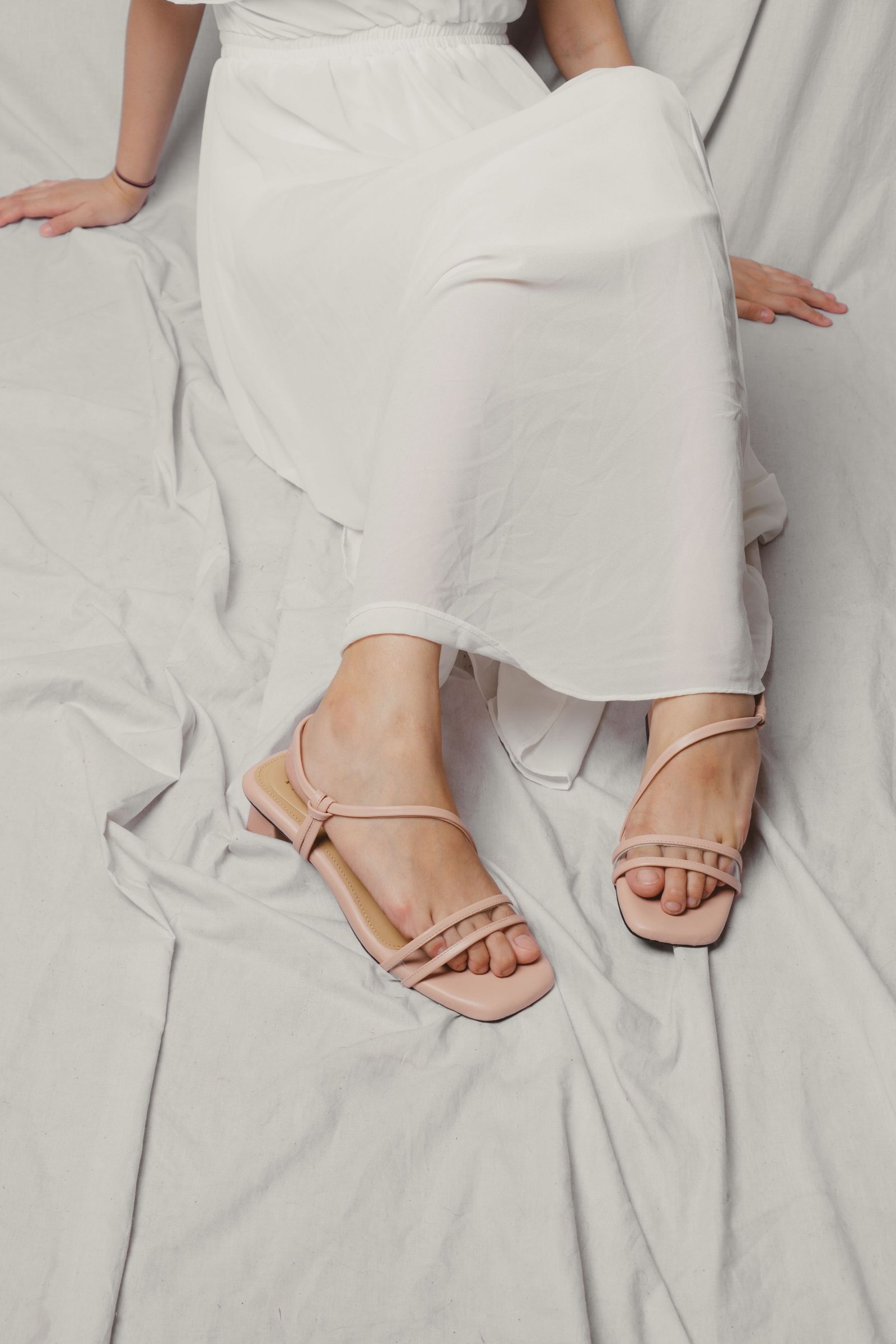
Choose the amount of coverage that feels comfortable to you. There is no single correct place for every hem to land. The practical aim is to know how the dress behaves in ordinary positions so you can wear it without repeatedly gripping the skirt or arranging your legs to compensate for an unsuitable cut.
Use a chair that resembles real life
A high fitting-room stool does not show the same result as a normal dining chair. At home, sit on a stable chair with your feet supported naturally. Let the skirt settle rather than stretching it downward with both hands. Look at the front and sides before making any small adjustment you normally would.
If you often use a lower chair or sofa, test that too. A deeper seat changes the angle of your thighs and can shift the hem differently. Stand up afterward without holding the skirt and check whether it returns to its original position or remains gathered around the hips.
Notice where the fabric is being used
A narrow skirt has less spare width to spread over the lap than a fuller one. It may rise even when its standing hem seems generous. Horizontal tension across the upper thighs is useful fit information. More length alone may not solve it if the same tight shape is simply extended downward.
Try a cut with more ease through the seat and hips, or a skirt that widens below the waist. A pleat can add room if it opens in the right place, but a stitched-down pleat may offer little extra space at the lap. Test the construction rather than relying on the style name.
Separate three different concerns
- A short but relaxed hem may suit your preference perfectly.
- A longer skirt under visible tension may need a different size or cut.
- An opening slit may reveal more than the main hem suggests.
- A lining can restrict sitting even when the outer skirt looks roomy.
Check slits, wraps and button fronts
A slit that sits quietly while standing may open across the lap. Inspect its highest point and the fabric around it. If the opening is being pulled wide by tension, consider more room. If it lies easily but shows more than you prefer, look for a different slit placement or a less open design.
With wrap and button-front dresses, watch the overlap separately from the hem. The outer layer may move sideways while the visible front edge stays relatively low. Sit, shift slightly and turn as though speaking to someone beside you. Coverage should remain acceptable without pinning the panels together with your hands.
Try the underwear and layers you intend to wear
A slip or tights can change friction, making the skirt settle differently. Test the intended combination rather than assuming all underlayers help a hem fall. A lining that catches on textured tights may hold the skirt high after standing. A smoother combination may reduce that problem without changing the dress.
Check the underlayer’s length as well. If the dress rises while the slip stays lower, its hem may become visible. That can be a deliberate layered look if you enjoy it, but an unexpected strip of lining is a separate issue from the outer dress’s seated coverage.
Make a deliberate keep-or-change decision
Repeat the seated test without watching yourself constantly. Put a bag beside the chair, reach for it and return upright. The dress should let you perform ordinary movements within your preferred coverage. If you keep adjusting it, record the specific problem: narrow lap room, opening slit, riding lining or simply a shorter hem than you want.
Use that observation when comparing another dress. A roomier skirt may solve the problem better than choosing a much longer version of the same cut. Once you find a reliable length and shape, note the measurements for reference. Seated comfort is a useful garment feature, not something you need to create through careful posing.