
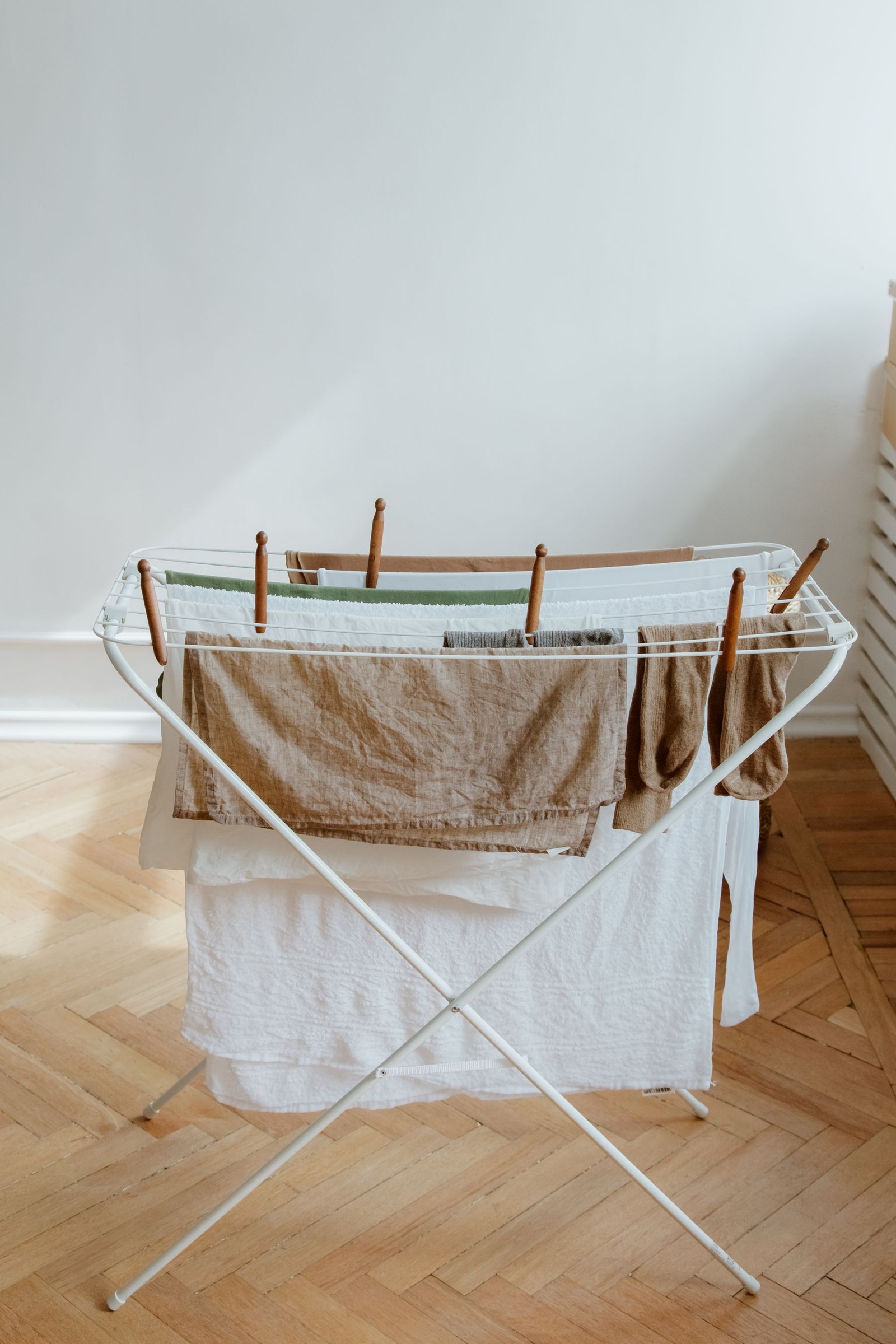
Dress care is easier when you look at the whole garment rather than only the main fabric. A cotton outer layer may contain a lining, decorative trim or a fastening that needs different handling. Before washing, read the care label and check the construction so your chosen method suits the actual dress.
Keeping shape involves more than selecting a wash temperature. How you support the garment when wet, arrange its seams and dry it can affect the result. Build a simple routine around the label’s instructions instead of applying one familiar laundry setting to every everyday dress.
Inspect the dress before it enters the wash
Empty pockets and look inside them for tissues, clips or loose items. Check the underarm area, neckline and hem for marks that need attention. Note any loose stitching, pulled trim or partly detached buttons. Addressing a small construction problem first can prevent the wash from making it harder to repair.
Fasten closures as appropriate for the garment and protect delicate details according to its instructions. Turn the dress inside out if the care guidance supports doing so. Separate pale items from strongly colored ones and consider any dye-transfer warning rather than relying only on whether the dress has been washed before.
Match the method to the complete garment
Follow the washing, bleaching, drying and ironing symbols together. Permission to wash does not automatically mean permission to tumble dry. A garment labeled for professional cleaning should not be treated as machine washable merely because its main fiber often appears in washable clothing. Construction and finishes matter too.
If using a permitted machine wash, choose the instructed cycle and detergent amount for the load. Avoid packing the drum so tightly that the dress has little room to move. A mesh bag can protect suitable small or delicate garments, but it does not override care restrictions or make an unsuitable cycle gentle enough.
Check the details most likely to catch
- Tie loose sashes only as the garment’s care guidance allows.
- Keep hook fastenings from catching on open weaves.
- Look for decorative pieces that may strike or snag other clothing.
- Inspect the lining separately for trapped items or twisted sections.
Treat marks without creating a second problem
Identify the mark and check whether the fabric allows the treatment you intend to use. Follow the product’s instructions and test a hidden area first. Avoid vigorous rubbing on a delicate surface, which can change its appearance even when the original mark fades. Stronger treatment is not automatically more effective.
Keep incompatible cleaning products separate and do not combine them in an attempt to improve results. If you cannot identify a suitable method for a valued dress, ask an appropriate cleaner to assess it. That is a specific care decision, not a reason to apply a general household remedy to every fabric.
Support the dress while it is wet
Lift a wet dress with its weight supported rather than pulling it up by thin straps or one shoulder. If hand washing is permitted, remove excess water using the instructed method and avoid twisting the garment aggressively. A long, heavy wet skirt can put considerable strain on small attachment points.
Arrange the dress for the drying method shown on its label. If flat drying is required, use a suitable clean surface and set the seams in their natural positions. If hanging is allowed, choose support appropriate to the garment rather than a narrow hanger that leaves strong pressure points in soft fabric.
Finish only after the dress is fully dry
Check that the outer fabric and lining are both dry before storing the dress. Smooth straps, unfold pocket bags and inspect the hem. If pressing or steaming is permitted, follow the stated temperature and method, testing a concealed area where useful. Do not assume the same setting suits both shell and lining.
Try on the dress after care if its shape seems different. A twisted lining or folded seam can look like a fit change until it is arranged properly. Keep a brief care note for dresses with unusual instructions. A repeatable routine built around the actual garment is more dependable than trying to repair avoidable distortion after each wash.
When storing the dress, remove a heavy belt if it pulls on small loops. Keep detachable pieces together in a labeled place so the next wear does not depend on finding a missing sash or fastening after the garment is already on.