

A skincare shelf can look beautifully coordinated while making the daily routine harder. Tall bottles hide shorter ones, jars need two free hands and several nearly finished products compete with unopened replacements. Organizing by packaging and current use is often more practical than sorting everything by label color.
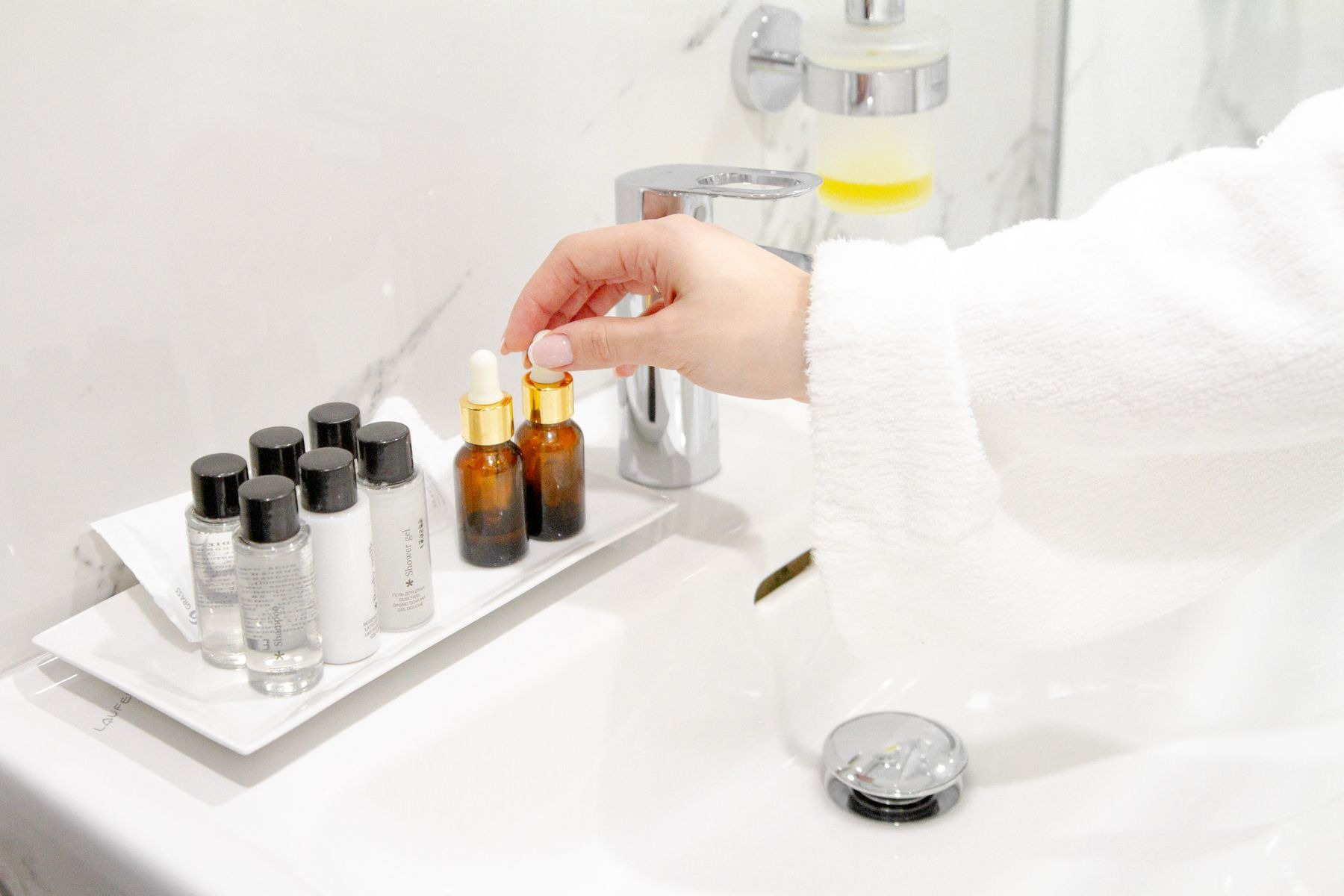
Begin with the products already in the space. This is a storage reset, not a reason to add steps to your skincare routine. The aim is to reach the intended bottle easily, read its information and put it away securely without knocking over the rest of the shelf.
Separate what is open from what is waiting
Place products currently in use in one group and unopened replacements in another. Check labels for storage instructions, use periods and any specific handling requirements. Do not invent one expiration rule for every formula; the packaging and manufacturer’s guidance are the relevant references.
If a product’s opening date matters to its instructions, record it clearly without covering the original label. Keep any important outer packaging information accessible. An anonymous decanted jar may look tidy, but it can remove the very details you need to identify and handle the product properly.
Give pump bottles room to work
A pump needs space above the nozzle and enough clearance for a hand. Place it where you can use it without angling the bottle toward the edge of the shelf. If the shelf above is too low, move the bottle rather than repeatedly removing the pump or tilting the container.
Wipe exterior residue using a method suitable for the packaging and keep the nozzle as directed. Do not add water to a bottle to make the remaining product easier to dispense. If the pump stops working, follow the maker’s guidance instead of dismantling it with household tools.
Keep jars where both hands can reach
Place jars on a stable surface with enough room to set down the lid. Avoid stacking several open-use jars in a tower that must be rebuilt twice a day. A lower, accessible position is often more useful than displaying them at eye level behind tall bottles.
Handle the product as directed
Use clean, dry hands or the applicator specified by the product. If a spatula is supplied, follow its cleaning and storage instructions rather than leaving it resting across an open jar. Close the lid securely after use and avoid balancing it upside down on a wet basin.
A small tray can define the area, but it should not become a collection point for standing water. Check beneath bottles and wipe the shelf when needed. The tray is there to make handling simpler, not to turn every container into part of a tightly packed display.
Make labels readable from the front
Turn similar containers so their names are visible and avoid placing lookalike bottles directly behind each other. If you use separate morning and evening products, organize the storage around that distinction only where it helps you identify them. Do not create elaborate categories that take longer to maintain than the routine itself.
- Put frequently used products within an easy reach.
- Keep replacements in a separate dry storage area when appropriate.
- Leave room around fragile glass containers.
- Store each product according to its own label.
Do not assume all skincare belongs in a refrigerator or on a bathroom windowsill. A product may specify particular conditions, and decorative convenience should not override them. Use a protected cupboard or drawer when that best matches the instructions and your available space.
Review the nearly empty containers
Keep only the products you are actually using at the front. If a bottle is nearly finished, make it easy to reach rather than hiding it behind the replacement. Do not combine leftovers from different products or top up one jar from another to make the shelf look simpler.
If a container has changed unexpectedly in smell, color or texture, consult the product guidance rather than reorganizing it out of sight. Set aside packaging that no longer closes properly. A tidy arrangement should reveal handling problems, not conceal them.
Leave space for the routine to happen
Return each item to its practical position after use and close the cupboard or drawer only when surfaces are dry. The best shelf has a little empty room for lifting lids and reaching pumps. It does not need to resemble a shop display. Its success is that the right product remains identifiable, accessible and securely stored.