
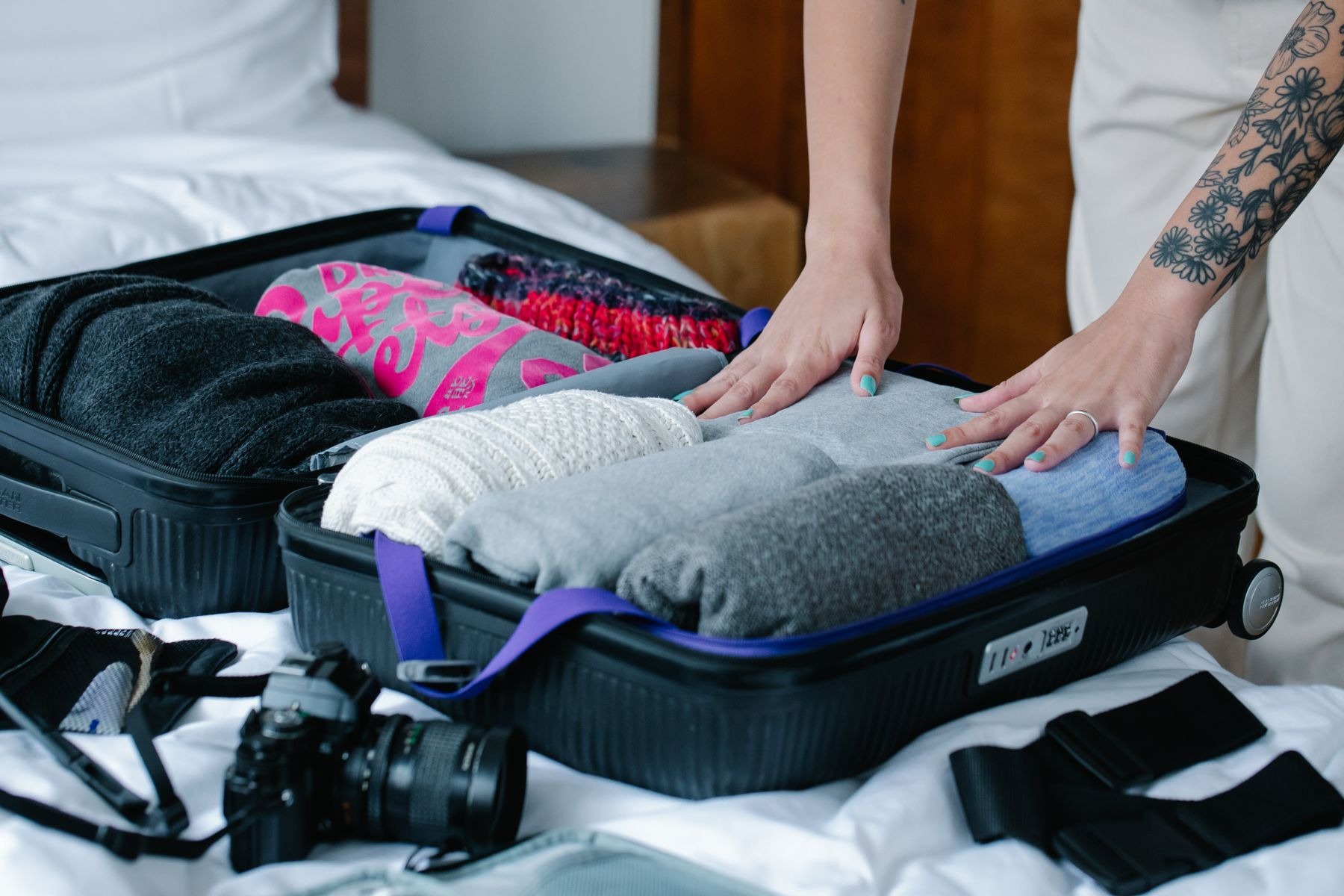
A packed dress does not need to emerge looking freshly pressed, but you can avoid some awkward folds by working with its construction. A thick waist seam, raised buttons or a structured bodice changes how the garment fits into a bag. Treat those features as packing information rather than forcing every dress into the same tight rectangle.
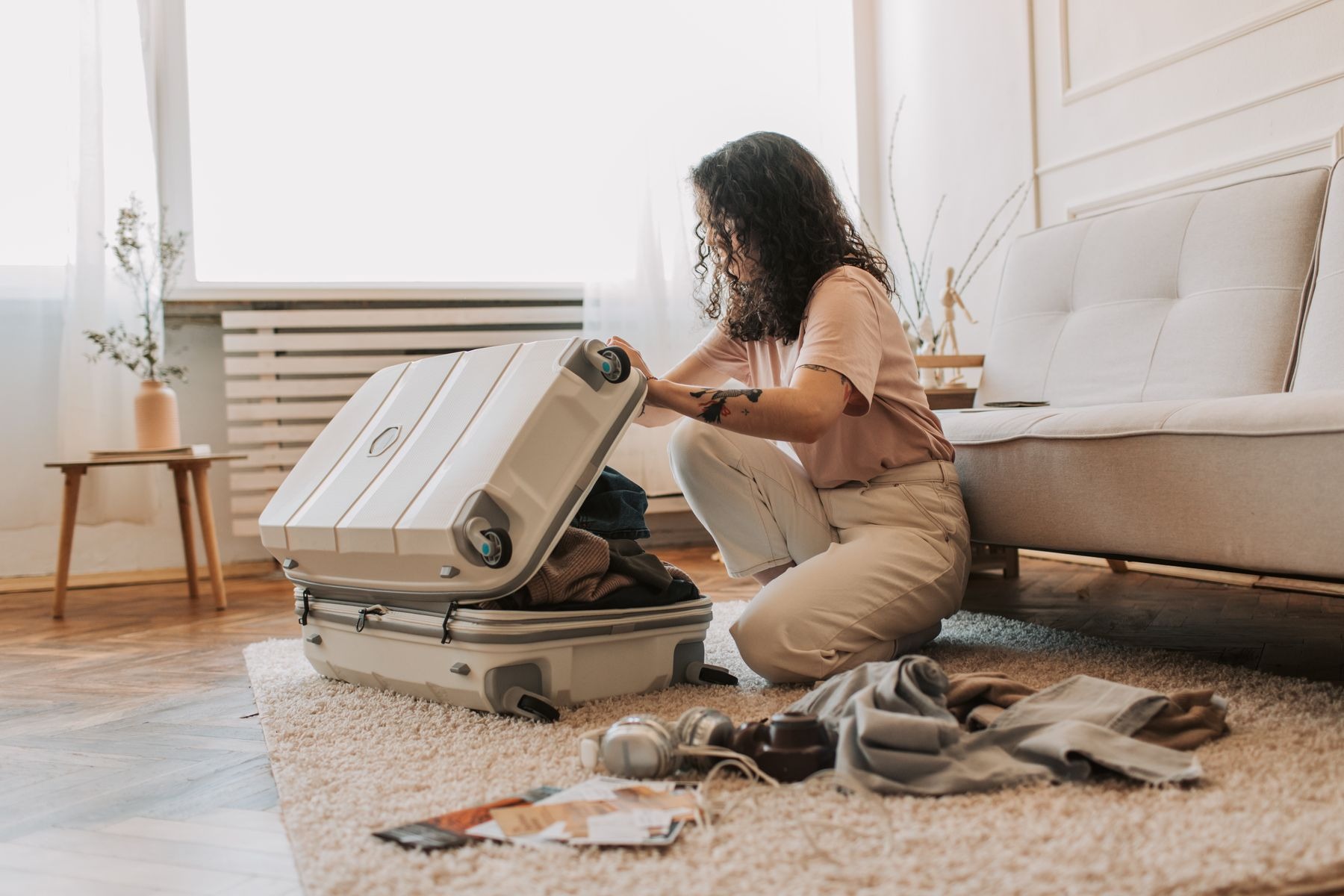
Start with a clean, fully dry dress and enough space to lay it out. Check its care instructions so you know which finishing options are available after arrival. If a dress needs equipment or handling you will not have, choose another one rather than relying on an uncertain last-minute rescue.
Examine the parts that should not be crushed
Look at collars, shaped bodices, bows, pleats and any raised decoration. A firm collar can acquire an awkward fold when pressed beneath shoes, while a heavy buckle can leave an impression against thin fabric. Remove detachable belts or accessories when the design allows and pack them separately with their fastenings protected.
Fasten the dress in a way that helps it keep its natural shape without placing closures under strain. Smooth the lining independently before arranging the outer skirt. A lining twisted during packing can create extra creases and make the dress seem distorted when you unpack it.
Use broad folds for simple woven dresses
For a straightforward woven dress, lay it flat and bring the sleeves inward without sharply folding the sleeve heads. Fold the skirt along its natural width, keeping thick seams from stacking directly on top of one another where possible. Make the smallest number of broad folds that fits your bag.
A loose roll can suit some soft, unstructured dresses, but it is not a universal wrinkle-prevention method. It may compress collars, pleats or raised details. Compare the shape of the packed garment with the space available, and stop tightening when the roll begins to feel like a hard bundle.
Give special details their own plan
- Keep embellished areas away from rough hardware on other items.
- Arrange pleats in their existing direction rather than folding across them repeatedly.
- Lay a soft sash flat so it does not form a dense knot.
- Support a structured bodice instead of flattening it beneath heavy objects.
Separate smooth fabric from rough contents
Pack shoes, zippers and abrasive accessories so they cannot rub directly against the dress. Clean packing cubes or suitable garment bags can help keep items organized, but do not overfill them. A tightly compressed cube may create the same pressure folds as an overpacked suitcase.
For a garment you particularly want to protect, a clean smooth barrier between folds can reduce direct contact with buttons or trim. Check that any packing material is appropriate for the fabric and will not transfer color. Avoid heavily scented or printed materials when you do not know how they will behave against the dress.
Place the dress according to weight, not convenience
Keep heavy objects from pressing concentrated points into the garment. A dress near the top of a bag may avoid some pressure, but it still needs to be secured so it does not slide into a crumpled corner. Leave enough space to close the bag without kneeling on it or forcing the zip.
If using a garment carrier, check the dress’s length and support its lower section rather than letting it bunch heavily at the bottom. Protect straps and delicate shoulder details from the hanger. Hanging transport is useful for some garments, but the carrier’s shape still needs to suit the dress.
Unpack before deciding what needs pressing
Remove the dress soon after arrival and arrange it using a suitable hanger or flat surface according to its care needs. Straighten the lining and let the garment settle before assessing creases. Some folds may soften with rest; others will need an allowed pressing or steaming method.
Use only the finishing method and temperature the garment permits. Do not press directly over raised decorations or assume a hot iron suits an unfamiliar lining. A small test in a concealed area can prevent a visible mistake. Good packing reduces unnecessary compression, while careful unpacking lets you address the remaining folds without rushing or improvising.
For a return journey, separate worn dresses from damp towels and toiletries. Check that every garment is dry before closing the bag. Protecting the fabric from moisture and leaks matters as much as arranging folds neatly for the outward trip.