
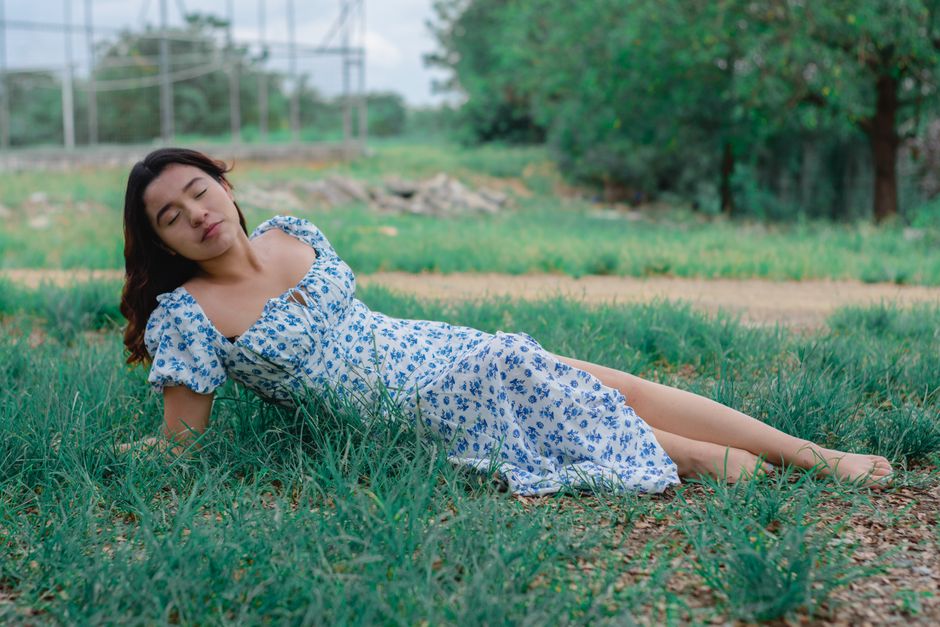
A floral dress can feel easy and expressive, yet the finished outfit sometimes looks sweeter than you intended. Usually, it is the combination of details doing the work: a tiny flower print, gathered sleeves, a bow and delicate accessories all pulling in the same direction. If you want something less twee, you do not need to give up flowers. Start by deciding which romantic details you enjoy, then give them a little space. A simpler shape, a firmer shoe or an unadorned bag can change how the whole dress reads.
Look at the whole dress before judging the flowers
Print alone does not determine the mood. A rose pattern on a straight, loosely cut dress feels different from the same pattern on a fitted bodice with a frilled collar. Before changing accessories, lay the dress out and notice its neckline, sleeves, waist and hem. Which features catch your eye first? Those are the details your styling needs to work with.
There is nothing wrong with a romantic dress. The useful distinction is between choosing that mood deliberately and finding yourself in an outfit that feels more decorative than you wanted. If you love the puffed sleeves, keep them as the main feature and simplify what surrounds them. You do not have to remove every soft detail.
Choose flowers with the mood you want
Consider the background colour
A dark background can make pale flowers feel sharper, particularly when there is a clear difference between the petals and the base colour. Navy, charcoal, deep green or brown may give you the grounded feeling you want. Black is another option, but it is not a requirement for making florals feel less sweet.
Light backgrounds can work just as well. Look at whether the print has crisp outlines, loose brushstrokes or recognisable botanical shapes. A cream dress with spare, sketchy stems can feel quite different from one covered in softly shaded pink rosebuds. Choose the drawing style you enjoy, rather than assuming every pale floral needs toughening up.
Notice scale and spacing
Larger flowers can make a bold statement, while scattered motifs leave more of the background visible. Tiny, closely packed flowers can look almost like a texture from a distance. None of these is automatically more flattering or modern. Hold the dress away from you, or step back from the mirror, and check whether you like the overall effect as well as the individual flowers.
Let the shape provide some simplicity
If you are choosing a dress, look for a silhouette you already feel comfortable wearing in plain fabric. A straight cut, an easy column or a gently shaped A-line gives the floral pattern room to stand on its own. You may find that an uncomplicated neckline makes a busy print easier to wear without feeling dressed for a particular theme.
When you already own a more detailed dress, start with what can be adjusted without altering it. Leave optional neck ties loosely undone if the neckline still sits securely, or remove a detachable decorative belt. Avoid buying a replacement simply because your dress has a ruffle. One romantic feature can be exactly what makes an otherwise simple outfit interesting.
Use shoes to set the tone
Shoes are a useful place to introduce a different mood because they do not cover the dress. A plain trainer can make flowers feel everyday; a loafer adds a crisp, practical note; an unfussy ankle boot gives a floaty skirt a firmer finish. Choose the option that suits your plans and the ground you will be walking on.
Look at decoration as well as shoe type. Bows, scalloped edges, flowers and fine straps can repeat the dress’s sweetness. If that is the effect you want to reduce, try a smoother shoe with fewer details. You do not need heavy footwear: a simple flat with a clean outline can provide enough contrast.
Keep the bag and jewellery deliberate
A bag with a defined shape can bring some structure beside soft fabric. Try a plain shoulder bag or a simple handheld style you already own. The aim is to give the eye somewhere quiet to rest. A floral dress does not need a bag that repeats its flowers, and an exact colour match is optional.
With jewellery, select a detail you want to notice. Small metal hoops, a plain cuff or a simple pendant can finish the outfit without extending its floral theme. If the neckline is already decorated, you might prefer earrings alone. Equally, a favourite ornate ring can stay: assess the combination rather than treating every decorative piece as a problem.
Repeat one colour, rather than the entire palette
A multicoloured floral can make accessorising seem complicated. Pick one colour from the print and repeat it once, perhaps in a bag or shoes. It need not be the brightest flower. A muted green leaf, an ink outline or the background itself can give you a quieter starting point.
If every accessory matches a different petal, the outfit may feel more carefully coordinated than you intended. Try keeping the remaining pieces in a familiar neutral. Brown, grey, navy, cream and black each create a different result, so compare what you own beside the fabric. There is no need to assemble a new set of accessories for one dress.
Build an outfit from your existing wardrobe
Before spending anything, test a few combinations with the same dress. Keep the experiment small so you can see which change makes a difference. These starting points use contrast without requiring a complete wardrobe overhaul:
- For everyday errands: a floral dress, plain trainers and an undecorated shoulder bag.
- For a more defined finish: a simply cut floral dress, loafers and a bag with a firm shape.
- For an evening out: a floral dress, plain shoes and one piece of jewellery you want to stand out.
Adapt each combination to the actual dress and occasion. If the dress is particularly floaty, the defined bag might do enough on its own. If the print is bold and graphic, you may enjoy a softer shoe. Contrast should help the outfit feel like you, rather than become another rule to follow.
Make the final edit in the mirror
Once dressed, step back and look at the outfit as a whole. If it still feels too sweet for your taste, change the detail that contributes most: perhaps the bow on the bag, a decorative hair accessory or the shoes. Swap one thing, then look again. This is more useful than adding several stronger pieces and losing sight of what you liked about the dress.
Keep the elements that feel natural to you. You can enjoy flowers, gentle colours and a flowing skirt while choosing a plainer finish elsewhere. The most useful outfit is one you can put on comfortably, recognise yourself in and repeat with clothes you already have.