
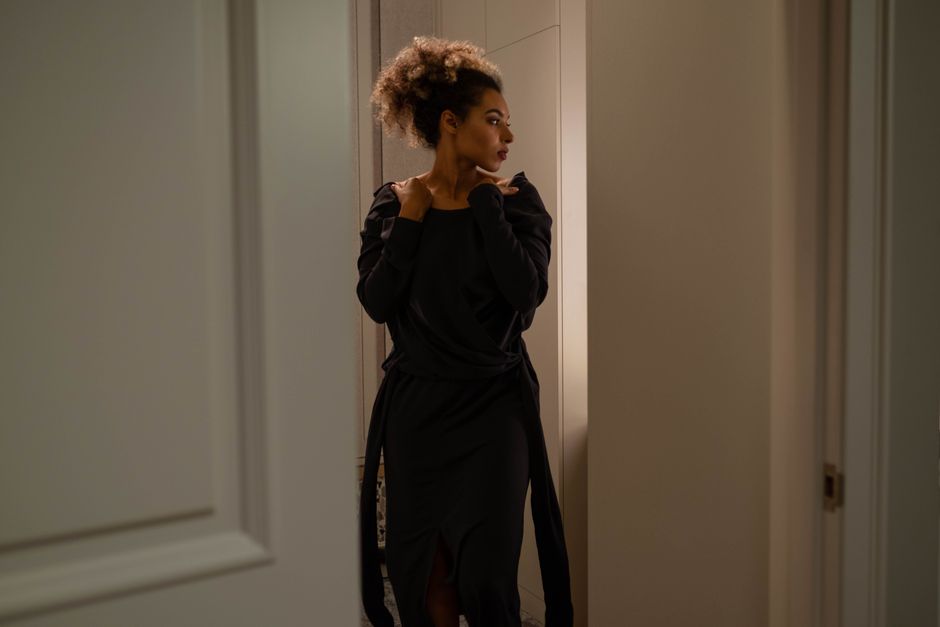
Want a winter dress that looks polished but does not leave you freezing by lunchtime? Start with the fabric, then judge the cut. A long sleeve alone proves very little. A thin rayon dress with full-length sleeves can feel colder than a sleeveless wool dress worn over a thermal base layer.
The best long-sleeve winter dress uses a dense, warm fabric, covers the neck and wrists, leaves room for one thin base layer, and ends below the knee. That combination blocks heat loss without turning the outfit into a padded tube.
Which winter dress fabrics actually keep you warm?
Fabric weight and fiber matter more than the word winter on a product page. Wool traps warm air, dense knits slow down wind, and brushed interiors hold heat against the skin. Thin synthetics can feel smooth but offer little insulation. Cotton jersey feels comfortable indoors, yet it absorbs moisture and dries slowly when you walk through snow or rain.
Choose insulation before softness
Merino wool is the strongest all-round choice because it insulates across a wide temperature range and handles small amounts of moisture without feeling clammy. Dense ponte works best for commuters who want structure, wrinkle resistance, and a smoother office finish. Fleece-backed jersey wins for casual wear, especially when the dress will sit under a coat for hours.
| Fabric | Useful weight or build | Warmth | Best use |
|---|---|---|---|
| Merino wool | 180–260 gsm knit | High | Cold commutes and outdoor walking |
| Wool blend | At least 30% wool with a dense knit | Medium to high | Office dresses with easier care |
| Ponte | 300–450 gsm double knit | Medium | Structured workwear and travel |
| Fleece-backed jersey | Brushed inner face, medium-heavy weight | Medium to high | Casual weekends and errands |
| Thin cotton jersey | Under 200 gsm | Low | Layering, not standalone winter wear |
Read the fiber label, not the marketing copy
Look for wool, merino, alpaca, cashmere, or a dense synthetic knit near the top of the fiber list. A dress labeled wool blend may contain only 5% wool, which adds a name but not much heat. Rayon, viscose, and modal improve drape, not insulation. For a dress you plan to wear outside below 45 degrees Fahrenheit, choose a dense knit and pair it with a thin wool or synthetic base layer.
Verdict: Pick merino for maximum warmth-to-weight, dense ponte for polished practicality, and fleece-backed jersey for casual comfort. Skip lightweight jersey as your main winter fabric.
How should a winter dress fit to hold in heat?
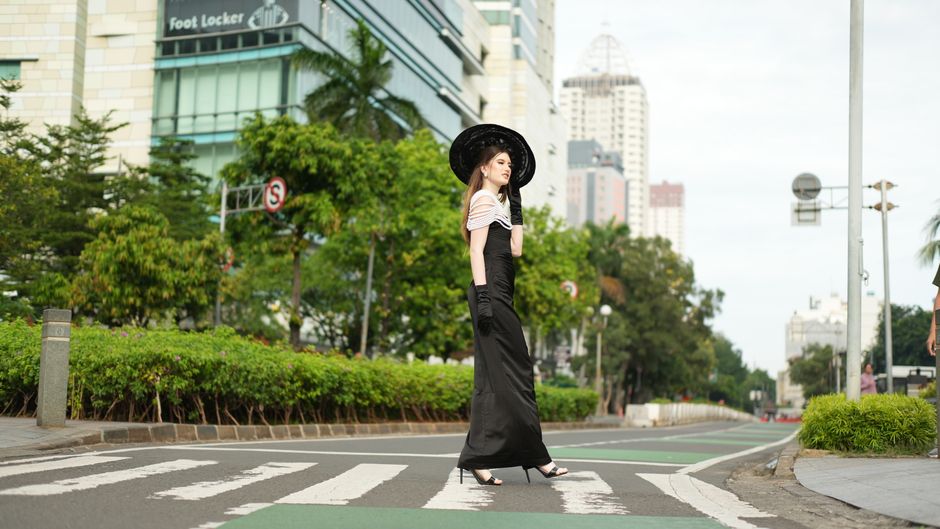
The warmest cut is not the tightest cut. A body-hugging dress can compress the air space that helps insulate you, restrict a thermal layer, and leave cold spots at the shoulders and waist. An oversized dress creates a different problem: cold air moves through the hem and sleeves every time you walk.
Use a close fit at the openings
Choose a neckline that sits near the base of the neck. Mock necks, funnel necks, and high crew necks beat wide bateau necks in cold weather because they reduce exposed skin and stop warm air escaping at the collar. The sleeve should finish at the wrist bone or slightly below it. A sleeve that stops above the wrist creates a gap exactly where gloves, coat cuffs, and base layers need to meet.
Leave room through the middle
Measure the dress against the layers you will actually wear. Add about 2 inches of ease around the bust and 1 to 2 inches around the waist for a thin thermal top. You need less room at the hips if the skirt falls straight, but a pencil cut should never pull when you sit. A slight A-line or column shape gives better air space than a clingy ribbed tube while still looking sharp.
Check the hem and the wind gap
A midi hem ending between the knee and mid-calf is the most useful winter length. It covers more leg than a mini and does not drag through wet streets like a floor-length maxi. Slits should stay short and sit at the back or lower side; a thigh-high slit turns a warm dress into a cold-weather skirt with extra fabric. Also check the hem circumference. A very wide swing skirt looks attractive but lets wind circulate freely, so it needs warm tights and a long coat.
My pick is a high-neck midi with wrist-length sleeves and a gently shaped waist. That cut gives the body room to create a warm air layer while keeping the openings tight enough to block drafts.
Which cut works for commuting, offices, and weekends?
What is best for a cold commute?
Choose a merino midi with a mock neck, long sleeves, and a straight or softly flared skirt. It layers under a wool coat without bunching and covers the knees when you sit at a bus stop. Wear opaque wool-blend tights and boots with a shaft that meets the hem. This setup is warmer than adding a thick cardigan over a thin dress because the insulation stays close to your body.
What is best for a heated office?
Choose dense ponte with a simple crew neck and a defined waist. Ponte resists wrinkles, holds a clean line after a train ride, and does not look too casual at a meeting. Avoid heavy turtlenecks if your office runs hot. A high crew neck gives enough coverage while making it easier to remove a coat or scarf indoors.
What is best for outdoor weekends?
Choose fleece-backed jersey or a midweight wool dress with room for a thermal layer. You need movement through the shoulders and hips for walking, shopping, and climbing stairs. A dress that only works with heels is a poor winter buy. Pair the style with thick tights, flat boots, and a water-resistant coat so the outfit works on wet pavement.
The clear buying rule is simple: choose a merino high-neck midi for cold exposure, ponte for indoor polish, and fleece-backed jersey for active casual days. One dress cannot handle all three jobs equally well.
Real dress benchmarks: what is worth buying?
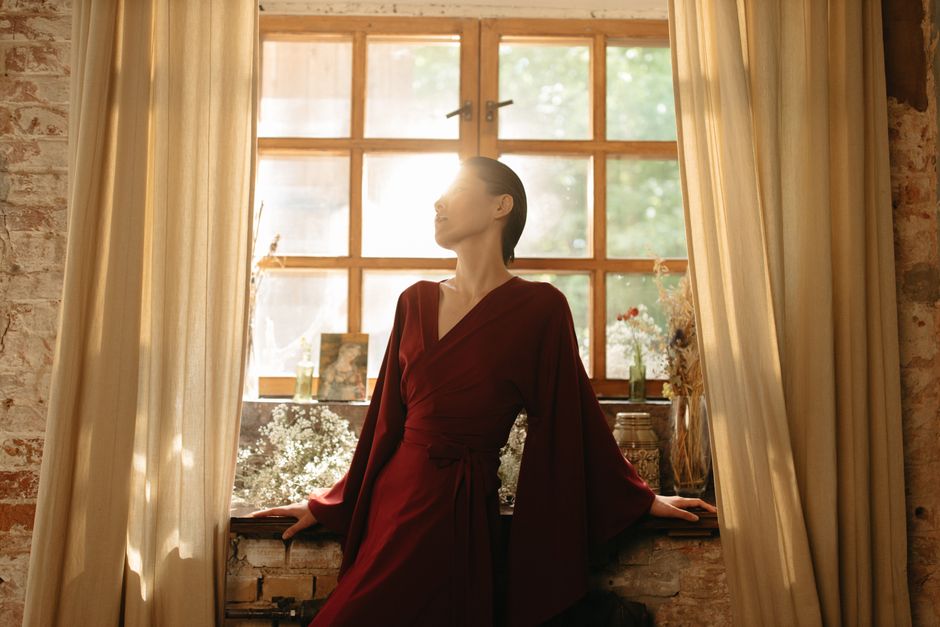
The UNIQLO 3D Knit Extra Fine Merino Ribbed Fitted Long-Sleeve Dress is the best benchmark for a true wool dress. The product uses 100% extra-fine merino wool and a straight silhouette, so it offers real fiber-level insulation rather than a synthetic dress with a winter-colored photo. Its fitted rib structure looks sleek, but the close shape means you should check the bust and upper-arm measurements before ordering. Store it folded, not on a hanger, because wool knit can stretch at the shoulders.
The Wool& Rowena Swing Dress is the better choice for people who want merino with more movement. Its 100% merino construction gives it stronger cold-weather credentials than a thin rayon jersey dress, while the swing shape leaves room for tights and a base layer. The tradeoff is wind: a wide skirt needs a long coat and warm legwear because air can move under the hem.
The M.M.LaFleur Etsuko Dress is useful as a workwear comparison, but I would not call it a severe-cold dress. Its stretch fabric contains 93% polyester and 7% polyurethane, and the three-quarter sleeves leave the wrists exposed. It is machine-washable, wrinkle-resistant, and polished, so it wins for travel and heated offices. It loses outdoors unless you add a warm long-sleeve base layer, full-length coat, and gloves.
These examples show the key difference: fiber controls warmth, while shape controls layering and movement. For genuine cold, buy the merino option. For desk-to-dinner practicality, choose dense structured fabric and treat warmth as a layering job.
What is the final verdict on warm long-sleeve dresses?

Buy a merino midi if warmth is the priority. The UNIQLO 3D Knit Extra Fine Merino Ribbed Fitted Long-Sleeve Dress is the strongest named benchmark because its 100% merino fiber gives it genuine insulation, while the Wool& Rowena Swing Dress is better for relaxed movement and layered styling.
Choose the M.M.LaFleur Etsuko Dress only for polished indoor wear or travel where wrinkle resistance matters more than maximum warmth. Its three-quarter sleeves and synthetic stretch fabric make it a poor standalone choice for long outdoor exposure, even though the cut looks refined.
Before buying, check four measurements: sleeve length to the wrist, hem length below the knee, room for a thin thermal layer, and neckline coverage. Then match the fabric to the day you will actually spend in it. A warm dress that cannot fit under your coat is not practical, and a beautiful dress that leaves your wrists and neck exposed will send you back to your coat within minutes.
The single most important takeaway is this: choose a dense merino or ponte midi with a high neck, wrist-length sleeves, and enough room for one thin thermal layer.