
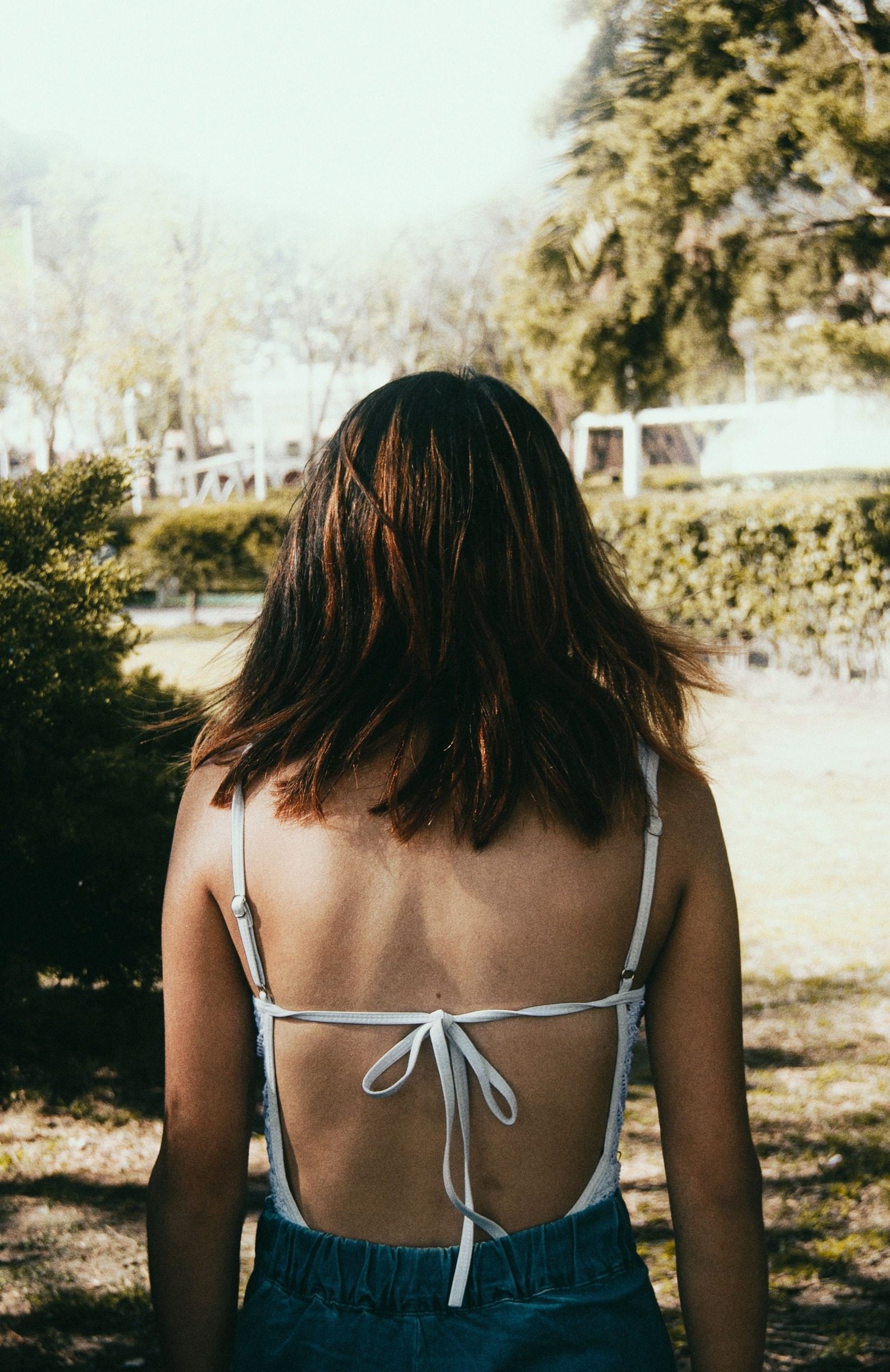
A hairstyle can change how a dress reads without changing the dress itself. Loose lengths may soften a simple neckline, while gathered hair can reveal a collar, an open back or an interesting shoulder seam. There is no fixed rule that a particular neckline demands an updo. The useful question is which garment detail you want to leave visible.
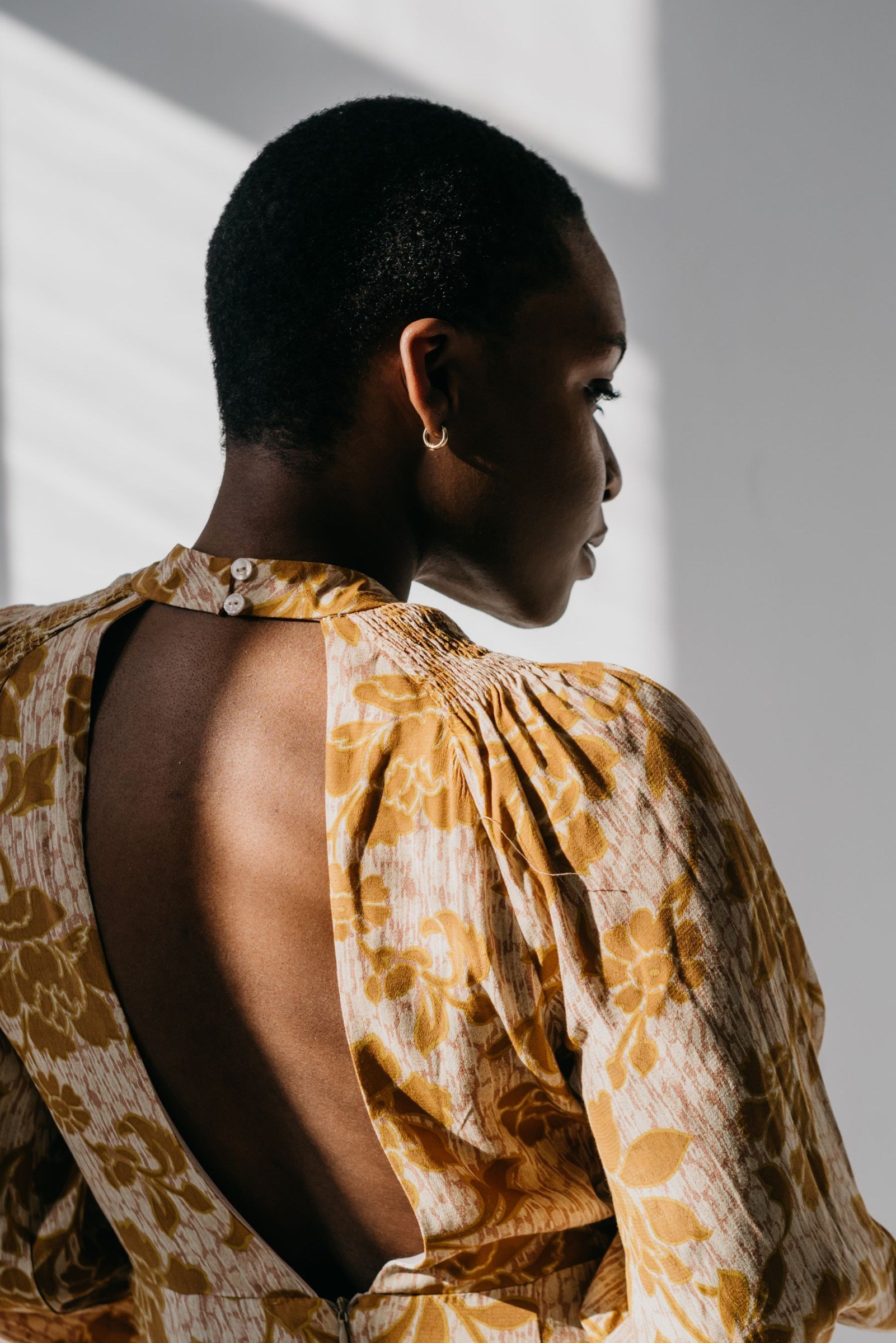
Try the dress on before finalizing the hair. A neckline held against your body on a hanger cannot show how the collar moves, where a sleeve meets the shoulder or whether your hair catches in a fastening.
Identify the detail that needs clear space
Stand in front of a mirror and choose one feature of the dress as the reference. It might be a high gathered collar, an asymmetric shoulder or a row of buttons down the back. Then look at where your hair naturally falls across that area.
If the hair and garment overlap attractively, there is no need to separate them. If a specific detail disappears, try moving only the section that covers it. A half-up style or a single side tuck can be enough; the choice does not have to jump from fully loose to tightly pinned up.
Work with high and open necklines differently
High collars and detailed necklines
A low gathered style, an upward twist or a partial arrangement can leave the collar visible. Check that the base of the hairstyle does not sit directly on a bulky bow or fastening. A low bun may look right from the front yet collide with the collar whenever you turn your head.
Open, square and scoop necklines
Loose hair can provide a soft frame, while gathered hair leaves the neckline more clearly outlined. Try both before choosing jewelry. The amount of exposed space is a styling preference, not a problem that must be filled with a necklace, curls or extra accessories.
Consider the shoulder line as well
With a one-shoulder dress, compare hair on either side rather than assuming it belongs opposite the strap. Hair over the covered shoulder can emphasize the bare side; hair over the bare shoulder can soften the asymmetry. Turn slightly in the mirror to judge the relationship in three dimensions.
Puffed sleeves, structured shoulders and wide straps add their own shape. A hairstyle with substantial width at the same level may look busier than intended. Moving some hair upward or behind the shoulders changes that outline without requiring a completely different hairstyle.
Check the back before the front is finished
Use a second mirror or a simple rear-view photograph to see where the hair ends. If the dress has an open back, decide how much of it you want visible. A long ponytail may still cover the central detail, while a tucked arrangement reveals it more fully.
Look for practical conflicts too. Hair can catch around decorative hooks, textured trim or exposed zippers. Finish dressing before the final hair arrangement when possible, especially if the garment needs to pass over the head. Protect the hairstyle from a tight neckline instead of rebuilding it afterward.
Test the combination in motion
- Turn your head in both directions.
- Raise and lower your arms comfortably.
- Sit down to check the collar against the hairstyle.
- Put on the outer layer you expect to wear.
A style that works only while standing perfectly still is not a useful match for an ordinary event. Adjust the placement if a clip meets the collar or a loose section repeatedly catches beneath a strap. Comfort and freedom of movement are part of the finished appearance.
If you are deciding between two versions, take photographs from the same height and distance. Include the whole upper body rather than cropping to the face. The garment and hairstyle need to be evaluated together for the comparison to answer the original question.
Choose one finishing accessory, if needed
A small comb, barrette or simple tie can repeat a material or color already present in the outfit. It does not need to match every metal detail exactly. If the dress has a decorative neckline, a quieter hair accessory may give that detail more room.
Take one final look from conversation distance rather than examining only the hairline. The aim is a balanced arrangement in which the hairstyle and the dress remain readable together. Keep the version that makes the chosen garment detail visible and still feels natural when you move, not the one that follows the strictest neckline chart.