
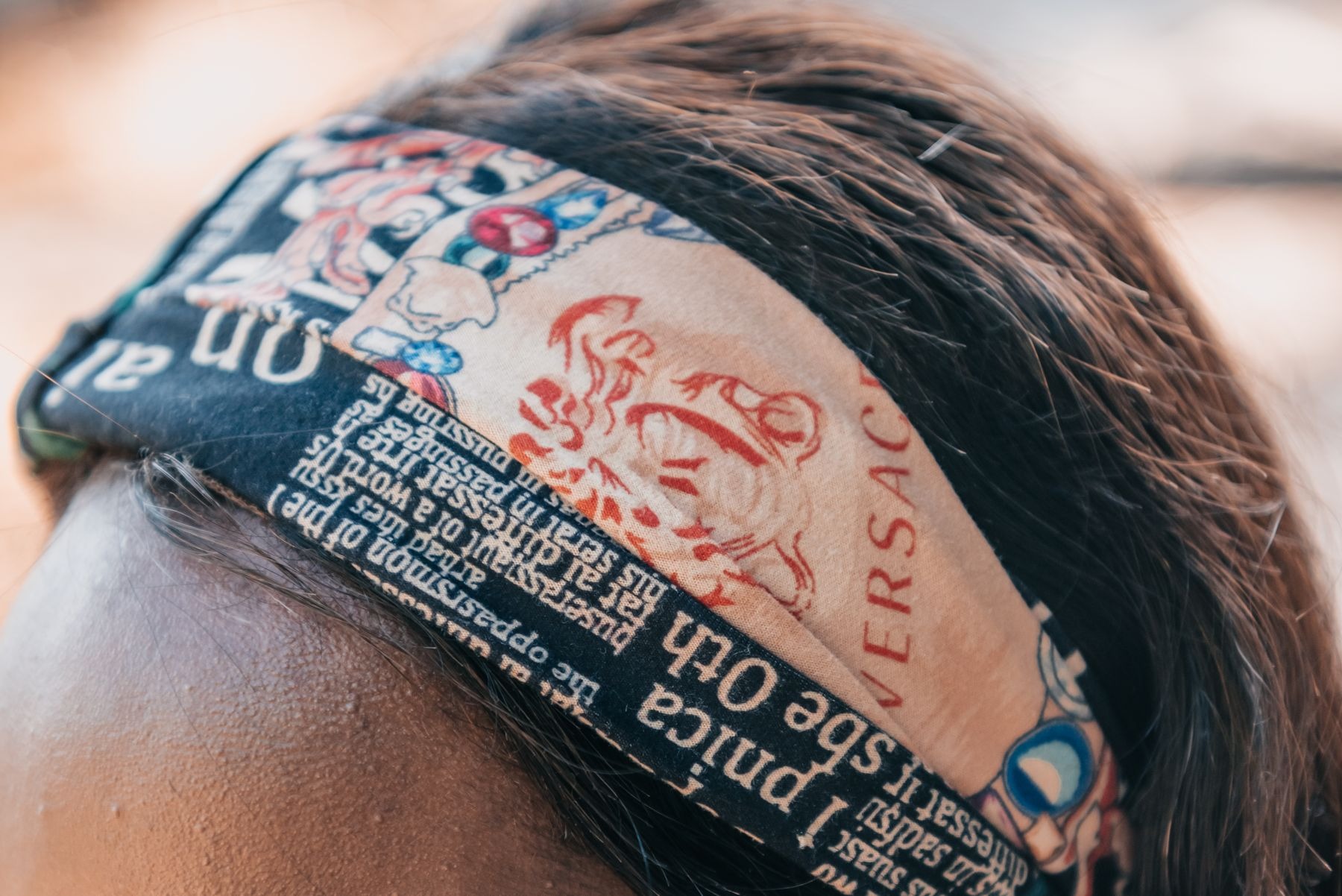
A headband can organize loose hair without a complicated hairstyle, but its shape needs to suit more than the view from the front. The ends may collide with glasses, the underside may catch short hairs and a padded top may compete with large earrings. Small fit decisions make the accessory much easier to wear.

Begin with your hair in its usual dry, manageable state and put on the glasses you expect to use. Evaluate the headband as part of that ordinary combination, rather than choosing it while every other accessory is sitting on the dressing table.
Inspect the underside and the ends
Look for exposed joins, rough fabric edges and teeth that feel sharp. Check that any covering remains secure at the tips. A decorative band with a smooth top can still have an uncomfortable underside, so do not judge construction only by the part visible in a product photograph.
Place the band gently without stretching it beyond its intended range. If the ends press painfully behind the ears, remove it. Do not rely on wearing it for a long time to force a better fit. The curve, width and flexibility of another design may suit you more naturally.
Find a position before smoothing the hair
Try the band slightly forward and then a little farther back. Notice how each position changes the height around the crown and the amount of hair visible at the front. You may prefer a few short sections left loose rather than all the hair swept tightly away.
Move the band by lifting it off and replacing it, not by dragging it repeatedly across the same section. Teeth and fabric can catch as they slide. Once the position feels right, use your fingers to arrange the loose hair around it instead of pressing the entire surface flat.
Let the front have some shape
A headband does not need to begin at a perfectly straight line. A soft fringe, a curved front section or a few loose layers can make it look integrated with the hairstyle. Keep the arrangement that sits comfortably rather than forcing each side into identical tension.
Make room for glasses at the temples
Put the glasses on and off once while wearing the band. Check whether their arms cross directly beneath the headband ends or push them outward. If two rigid pieces occupy the same narrow area, a different band shape or position may be more helpful than tightening either accessory.
Look down as though reading and turn your head as though speaking to someone beside you. The combination should remain comfortable during those movements. A band that works only when the glasses are removed is not a useful everyday partner for them.
Choose earrings after checking the side view
A wide or embellished headband already creates detail near the face. Small earrings can keep the combination quiet, while a larger pair can work if there is clear space between the two. The issue is visual and physical overlap, not a rule that statement accessories must never be combined.
- Check whether a dangling earring catches in loose hair.
- Leave room around the headband tip.
- Compare the side view, not only the front.
- Remove one accessory if the combination feels crowded.
Metal color does not need to match perfectly, but repeated materials can make the arrangement feel considered. A simple fabric band may sit more easily beside detailed earrings than a second heavily decorated piece.
Deal with slipping by changing the fit
If the band moves backward, look at its curve and the amount of hair beneath it. Do not immediately add strong hold products or several hidden pins. A lighter band, a different lining or a smaller amount of gathered hair may solve the problem more directly.
Some styles work better with hair partly tucked behind the ears; others need the lengths left loose. Test the arrangement during a short ordinary activity before committing to a long outing. If you keep touching the band to make it comfortable, that is useful feedback about the fit.
Store the shape you chose
Keep a structured band where it will not be flattened under heavy items. Clean fabric, metal and decorative details according to their care instructions, and allow any cleaned piece to dry fully before wearing. A small selection of comfortable bands is more useful than a crowded drawer of attractive ones that never survive an afternoon.