
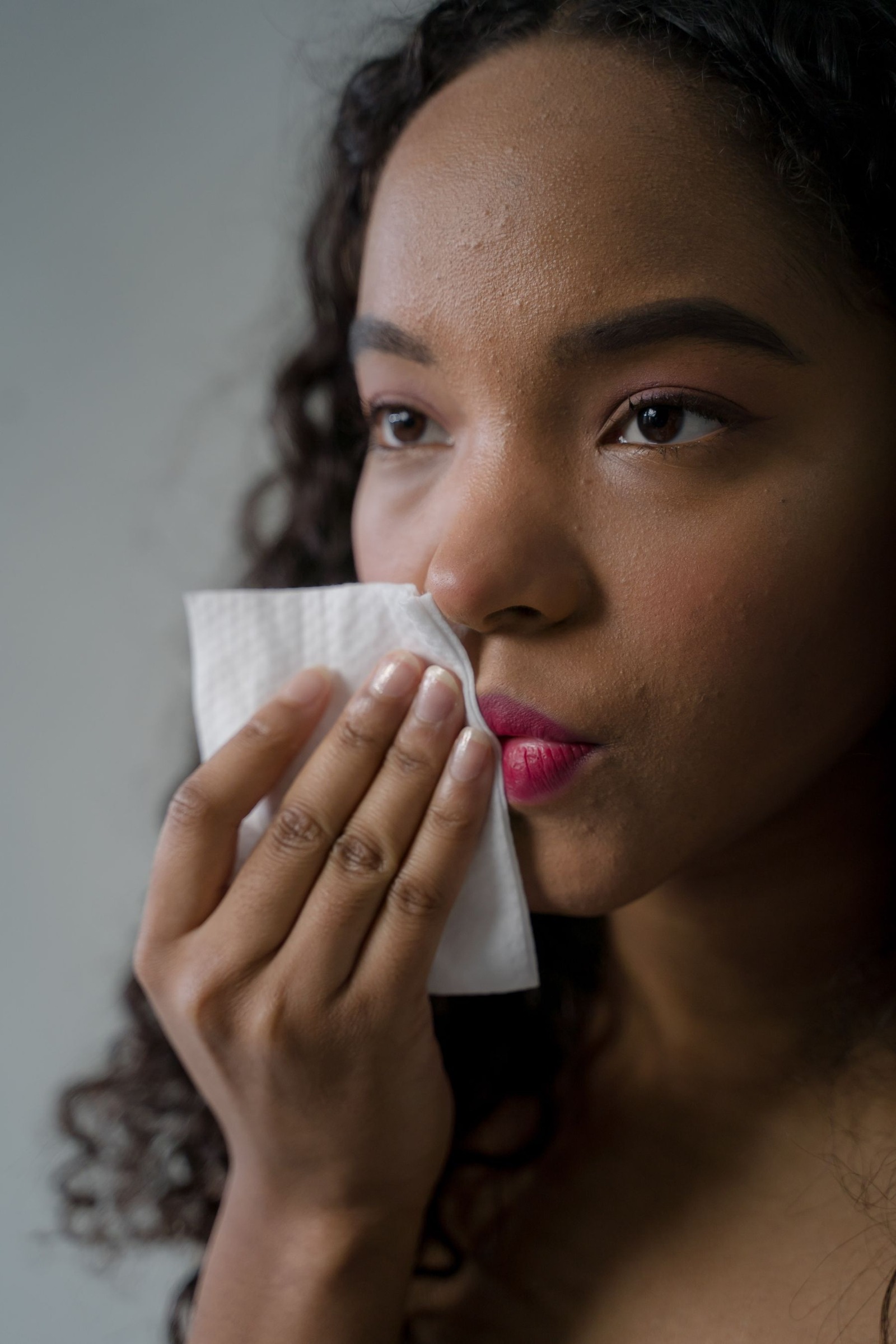
Removing a long-wear lip color can become messier than applying it. A dry tissue drags at the coating, a large cleansing pad spreads pigment beyond the mouth and repeated wiping leaves the edge difficult to see. A controlled removal sequence gives the remover time to work and keeps the used color contained.

Start with the lipstick’s removal directions and a product intended for the lip area. Some formulas have a specified remover or method. Do not assume an eye product, a household oil or a general face cleanser is automatically suitable simply because it feels slippery.
Prepare the small things first
Move hair away from the face and take off a scarf or high collar that could catch pigment. Set out a mirror, the chosen remover and several suitable clean pads or cloth sections. Use a surface that is easy to wipe if a colored drop escapes.
Choose a moment when you can finish the process without rushing. Half-removing a dark lipstick and then searching through a cupboard for more cotton makes it easier to transfer color onto handles, sleeves and the rest of the face. Keep the clean supplies apart from the used ones.
Let the formula loosen before moving it
Apply the remover as directed, using the appropriate amount and contact time. Keep your mouth relaxed and avoid pressing the lips together repeatedly. The aim is to soften the coating enough that it lifts with controlled movements, not to scrub it away while it is still firmly attached.
If the first pad barely changes the color, review the directions before increasing pressure. A different compatible remover may be needed. Adding force can turn a product mismatch into an uncomfortable routine without making the removal cleaner.
Keep the working area close to the lips
Use a manageable folded pad or cloth section rather than a large loose surface that sweeps across the chin. Support the movement with a clear view in the mirror. Keep the product out of the mouth and follow any rinsing instructions on the remover.
Lift pigment in short, contained passes
Work on one section of the lip at a time, moving gently and replacing the contact area as it becomes colored. A used pad can redeposit pigment, so turn to a clean section before the next pass. Keep the movement within the lip boundary whenever possible.
Check the corners separately. Color often collects where the lips meet, but there is no need to dig with a fingernail or sharp tool. Use a small suitable clean section and the remover’s recommended method. If a little pigment reaches the surrounding skin, address that patch with a fresh tool rather than widening the same wipe.
Distinguish remaining coating from a stain
After the first removal, look at the texture as well as the color. A smooth trace of pigment can be different from a visible layer still sitting on the surface. Some lip colors leave a residual tint, and more rubbing does not necessarily make the result more comfortable.
- Check whether an actual coating remains.
- Use fresh remover only as the instructions allow.
- Do not scrape dry flakes or pick at the lip surface.
- Stop a method that feels uncomfortable.
A magnifying mirror can encourage repeated correction of a trace that is barely visible normally. Step back before deciding another pass is needed. The endpoint is removal of the product through its intended method, not a demand that every natural variation in lip color disappear.
Finish according to the remover directions
Rinse or wipe away the remover if required, then dry gently. If you use a familiar lip-care product afterward, apply it to the cleaned area rather than mixing it into remaining lipstick. Do not use an abrasive scrub as an automatic final step.
For an immediate color change, allow the surface to become ready for the next product as its instructions require. A heavy residue of remover or balm can change how a new long-wear formula applies. It may be more practical to choose a simpler lip product than to repeat a full removal and repainting cycle.
Keep the next removal straightforward
Note which remover and contact time worked for the formula, and keep that product accessible. Clean any reusable cloth according to its care instructions and discard used pads. A reliable pairing of lip color and removal method is more useful than collecting several removers that all require the same repeated wiping.