
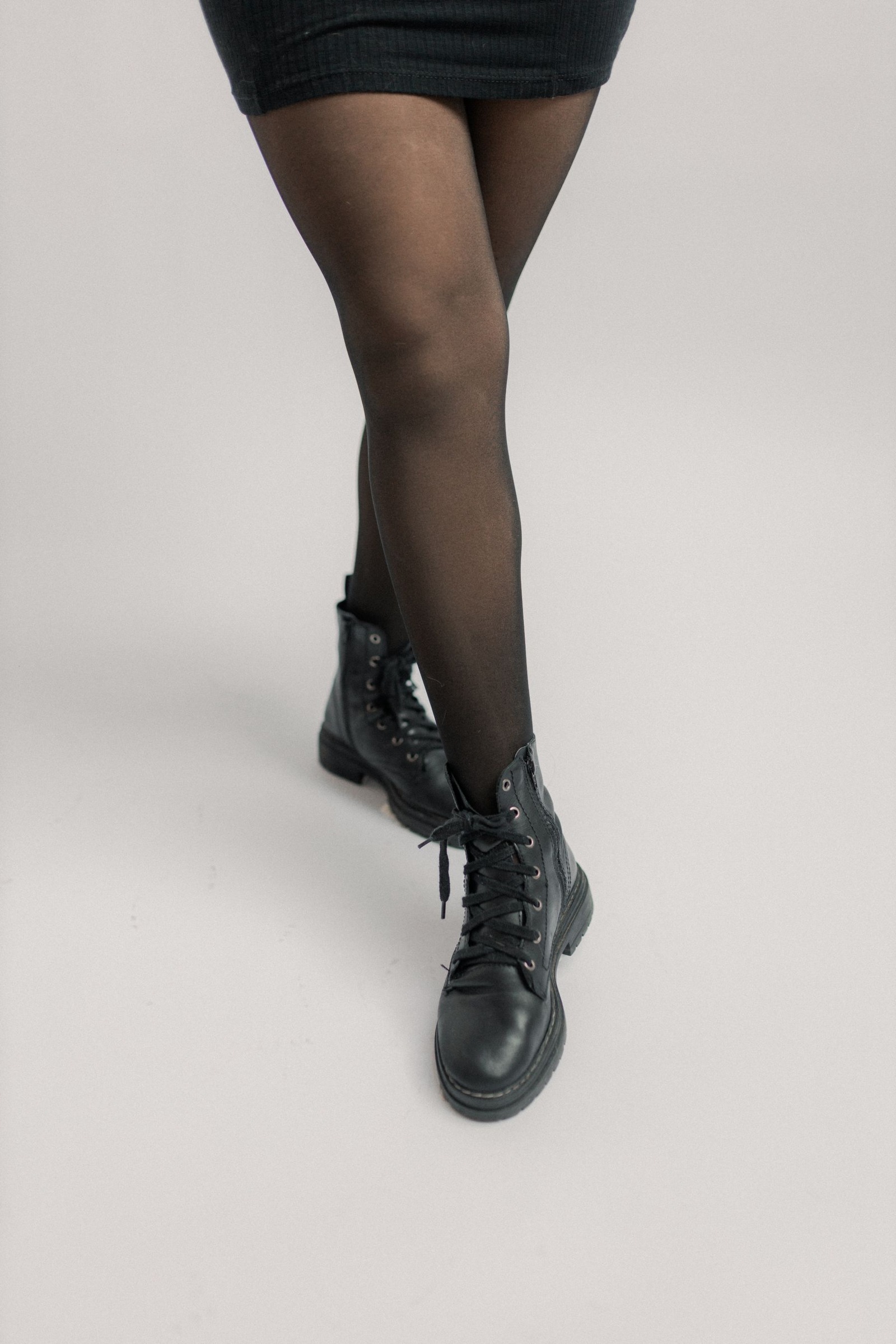
A skirt that climbs as you walk can turn a comfortable dress into something you keep pulling down. Before reaching for a product or blaming static, separate the possible causes. The dress may lack room, its lining may be twisted or the surfaces of two layers may simply catch against each other.

Work in a clean indoor space with the dress, tights and any slip you intend to wear. Change only one layer at a time. This makes it easier to tell whether the problem comes from fit, texture or the way the inner layers are arranged, rather than collecting several fixes without knowing which one matters.
Observe the problem before smoothing it away
Walk several normal steps, turn and stop. Look at where the fabric has gathered. Is only the outer skirt raised, or has the lining moved too? Does the problem happen at the knees, hips or upper thighs? Those locations point to different contact areas and help you inspect the relevant part of the outfit.
Check whether the skirt is under tension while standing. A dress that fits tightly through the hips may climb even without tights. Try it briefly without the additional layer, where appropriate, to see whether the same behavior remains. If it does, focus on the cut and available room before changing hosiery.
Arrange the lining independently
Gently straighten the lining beneath the outer skirt. Make sure it has not twisted around a side seam or folded upward at the waist. Sit and stand, then inspect again. If the lining repeatedly rotates, look at the dress’s internal attachment points in a garment you own rather than forcing it back into place throughout the day.
A lining that is narrower than the outer skirt can limit movement even when the dress looks generous. Notice whether it pulls across the lap while the shell remains loose. Adding another slip is unlikely to create more room inside an already tight lining. A different size or a professional assessment may be more relevant.
Compare the surfaces in contact
- Raised patterns on tights may catch a textured lining.
- A rough inner seam can rub against a separate slip.
- A rolled slip hem can stop the outer skirt from falling freely.
- A soft knit dress may grip a bulky underlayer at the hips.
Try a smoother combination
If the dress hangs comfortably without the original tights, compare another suitable pair with a smoother surface. Keep the dress and other layers unchanged. Walk and sit again. You are testing the actual pairing, not assuming that one fiber or hosiery label guarantees a particular result across all garments.
A smooth slip can help separate surfaces when there is enough room for it. Choose an appropriate length and check its lower edge under the dress. The slip should move comfortably without bunching or introducing a new visible ridge. If it rides up too, assess its own fit rather than treating the outer dress as the only problem.
Do not improvise with household coatings
Spraying a dress with products not intended for garment use can leave marks or change the surface. Avoid substituting hair products, oils or cleaners for a fabric treatment. If you choose a garment product, follow its directions and care restrictions, and test compatibility in an inconspicuous area before using it visibly.
Static may contribute to cling, but a treatment cannot supply missing ease or untwist a lining. Check those mechanical causes first. Keep the care labels for all layers in mind, especially when the dress combines delicate fabric, embellishment and a separate lining with different needs.
Confirm the solution after sitting
Once one change seems helpful, wear the outfit through a short sequence of ordinary movements. Sit for a few minutes, stand and walk without smoothing the skirt. A combination that works for three steps but catches again after sitting still needs attention. Note which layer moves first when the issue returns.
Keep the simplest pairing that remains comfortable and falls back into place with minimal adjustment. You may find that one dress works better with a particular slip or without textured tights. That is useful wardrobe knowledge, not a rule about all dresses. The aim is a dependable combination, identified through the fabric behavior you can actually observe.