
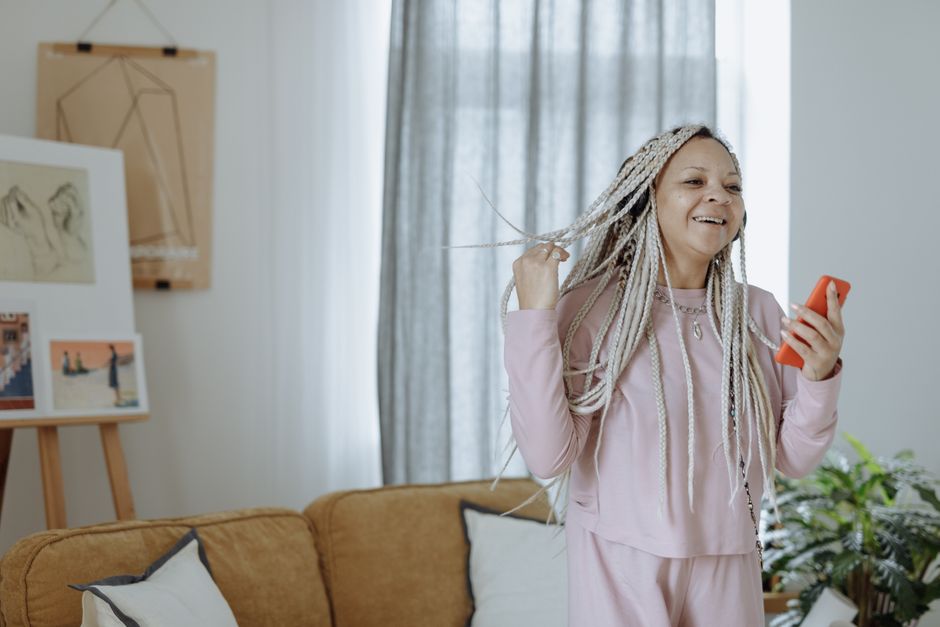
Simple summer hairstyles should make getting ready feel easier, whether you are heading out for a walk, travelling to work or spending an afternoon outdoors. The most useful options work with your natural texture and keep styling manageable. You do not need a drawer full of accessories or a completely smooth finish. Start with the hair you have that morning, decide how much you want away from your face and try one of these relaxed everyday shapes.
Choose a style for the day ahead
Think about what you will actually be doing before deciding on a hairstyle. If you will be sitting against a train seat or driving, a bulky knot at the back of your head may become awkward. For a breezy walk, gathering the lengths can be more practical than leaving everything loose. Shorter hair might only need a change of parting or a small front plait.
Work with your existing texture rather than trying to create a different one every morning. Straight hair can look lovely in a simple folded shape, while waves and curls can give a loose updo its character. Coily hair can be gathered, sectioned or styled in twists according to its length and your usual routine. Keep every style comfortable, and loosen or remove anything that pulls.
Try a loose plait over one shoulder
A side plait is useful when you want longer hair gathered without putting a knot behind your head. It also gives you an easy way to see what your hands are doing. Start with hair that is ready to handle using your normal routine; there is no need to brush curls out simply to copy a smooth example.
- Bring the lengths over whichever shoulder feels most natural.
- Divide them into three roughly equal sections.
- Cross one outer section over the middle, then repeat from the other side.
- Continue down the length and secure the end with a covered hair tie.
Keep the plait relaxed from the start instead of making it tight and pulling it apart afterwards. Shorter layers can remain loose if they sit comfortably. For a different finish, place the plait down your back, starting low enough that you can keep your shoulders relaxed while working.
Make a low folded bun
A folded bun gives medium or longer hair a compact shape without needing an elaborate twist. Gather your hair low at the back, then use a covered tie as you would for a basic ponytail. On the final pass, draw the hair only partway through to leave a loop, with the ends hanging free.
The loop can sit vertically or sideways depending on your hair and where you find it comfortable. Leave the ends visible for a casual finish. If your hair is very long, make a smaller loop so the loose ends do not create a heavy bundle. Avoid adding extra wraps of the tie just to force the bun into a tiny shape.
This works best when your hair can fold easily without resistance. If the style feels bulky, return to a loose plait instead. The aim is an everyday option you can repeat comfortably, rather than a perfectly symmetrical bun.
Use two easy plaits for active days
Two ordinary plaits can be a practical choice when one thick plait feels heavy or swings across your shoulder. They also let you divide the work into smaller sections. Make a centre or slightly off-centre parting, separate the hair into two sides and plait each one from around ear level downwards.
You do not need to master a scalp braid for this look. Keep the sections close to where they naturally fall and check that neither side tugs around your temples. If one plait starts slightly lower than the other, adjust its starting point rather than tightening it to match.
Use matching ties if you want a tidy finish, or simply use the comfortable ones you already own. A slightly uneven parting is perfectly suitable for an ordinary summer day.
Keep the front back with a small plait
When you like wearing your hair loose but want the front sections out of your way, a small plait can be enough. Take a section beside your parting, divide it into three and plait it towards the side of your head. Secure the end with a small covered tie and let it sit among the loose lengths.
Choose a section large enough to handle without fiddling. Very tiny sections can turn a simple hairstyle into a frustrating job. You can repeat the plait on the other side, but one is often enough to keep a longer fringe from falling forward.
On a bob, the plait might only reach your temple. On longer hair, it can continue further down. Let your haircut determine the result instead of stretching short pieces to reach an imagined finishing point.
Give short hair a deliberate shape
Short hair does not need to be tied up to look styled. Try shifting your parting slightly, smoothing one side behind your ear or arranging a fringe away from your eyes. With a cropped cut, defining a few sections using a little of a styling product you already use may be all you want.
For a curly bob, arrange individual curls with your fingers rather than repeatedly brushing the surface. If you normally refresh curls with damp hands, do that before deciding which sections to move. Keep water away from electrical styling tools, and follow the directions for any products you use.
Check the back with a second mirror if you have one. A quick look can help you spot a flattened section without restarting the whole style.
Adjust the finish without buying more
Small changes can make these basic styles feel different throughout the week. Move a plait from one shoulder to the other, change where you part your hair or leave a few comfortable face-framing pieces loose. You can also wear the same shape with a softer or neater finish depending on how you arrange the front.
- For a softer finish: keep your natural texture visible and let shorter layers sit where they fall.
- For a neater finish: arrange the front sections before gathering the lengths, rather than smoothing everything repeatedly afterwards.
- For less fuss: choose one secure shape and skip decorative extras that need adjusting.
Keep your routine comfortable
Give yourself permission to change styles during the day. If a tie begins to pull or a section feels sore, take the style down and rearrange it more loosely. Do not keep tightening a hairstyle to make it last. Persistent scalp discomfort, irritation or unusual hair loss is a reason to ask a pharmacist or GP for advice.
Before leaving home, turn your head, look down and sit back briefly to check how the style feels. Keep a spare covered tie in your bag if you have one. Once you find two or three shapes that suit your length and routine, summer hair becomes a small, easy part of getting dressed.