
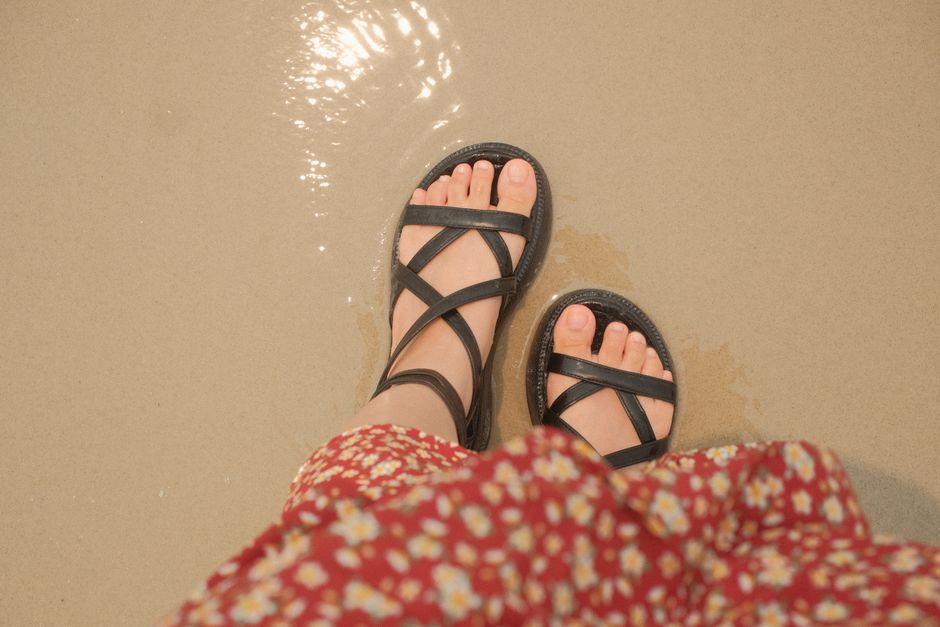
Keeping feet sandal-ready is mostly about comfortable skin, tidy nails and a routine you can repeat without much effort. You do not need perfectly smooth heels or painted toenails to wear open shoes. A little regular care can help your feet feel more comfortable and make getting dressed easier, whether you are putting on a cotton dress or cropped trousers. Start with what you already have, keep the steps gentle and leave ambitious last-minute treatments out of the plan.
Start with a quick look at your feet
Before reaching for a file or nail polish, look at your heels, soles, toes and nails in good light. Notice where a strap has rubbed, whether any skin is broken and whether a nail edge is catching. This helps you decide what needs ordinary care and what needs a pause. A sore patch deserves attention before a cosmetic finishing touch.
Use a mirror if seeing your soles is awkward, and sit somewhere stable when caring for your feet. If you have diabetes, reduced sensation or poor circulation, ask your healthcare team about suitable foot care before using files or treatments for hard skin. Follow any individual advice you have been given.
Make washing and drying your daily foundation
Wash your feet with warm water and a mild cleanser, then rinse away any residue. You do not need a long soak or a bowl full of extras. Keep the water comfortably warm rather than hot, and avoid vigorous scrubbing when your skin already feels sensitive.
Dry carefully with a clean towel, paying particular attention between the toes. It is easy to step straight from the shower into sandals while these small spaces remain damp. Give yourself time to dry them properly, without rubbing hard or pulling at loose skin. Wash your towel regularly and let it dry fully between uses.
Put moisturiser where it is useful
If your feet feel dry, smooth a little moisturiser over your heels and other dry areas, avoiding the spaces between your toes. A simple cream you already tolerate may be enough; an elaborate foot-care collection is unnecessary. Follow the product instructions and stop using anything that causes irritation.
Choose a moment when you can let the cream settle before walking about. Slippery soles and smooth floors are an awkward combination, and freshly applied cream can leave sandals greasy. An evening application often fits more comfortably into your routine than trying to squeeze it in immediately before leaving home.
Avoid chasing perfectly smooth heels
Heels naturally have texture. Repeatedly filing them because they do not look airbrushed can leave the skin tender. Never cut away hard skin with scissors or blades, and do not pick at cracks. If hard skin is painful, keeps returning or makes walking uncomfortable, ask a pharmacist or podiatrist for advice rather than trying increasingly harsh treatments.
Avoid experimenting with strong peeling treatments just before an occasion. The result may be irritation or shedding skin when you wanted a simple tidy-up. Consistent gentle care is easier to manage, particularly when your feet will be exposed to straps, pavement dust and repeated washing.
Keep toenails comfortable and manageable
Use clean toenail clippers and work in good light. Trim nails straight across without cutting them very short or digging into the corners. Gently file any sharp edge that might catch on clothing or press against a neighbouring toe. Leave the skin around the nail alone rather than cutting or pushing it aggressively.
If you cannot comfortably reach or see your nails, arrange suitable help instead of cutting by guesswork. Thickened, painful or unusually shaped nails may need professional care. Do not dig beneath a sore nail edge or attempt to remove an ingrowing section yourself.
Make nail colour an optional extra
Bare, tidy nails look perfectly at home in sandals. If you enjoy colour, choose a shade you like wearing rather than feeling obliged to match every dress. Remove old polish gently, check the nails underneath and apply fresh polish only to healthy, unbroken nails and surrounding skin.
Allow enough drying time before putting on shoes or going to bed, following the polish instructions. Keep remover away from irritated skin, close bottles after use and work somewhere ventilated. If a nail has changed colour or texture unexpectedly, leave it unpainted and seek advice rather than repeatedly covering the change.
Notice what your sandals do during the day
Foot care also means recognising repeated friction. A strap can feel fine while you are seated and rub once you start walking. If you notice a tender patch, stop and adjust or change your footwear when practical. Tightening straps harder is unlikely to solve every problem, especially if your feet feel warmer or fuller later in the day.
Keep the surfaces touching your feet clean, using a method suitable for the sandal material. Grit caught beneath a strap or on a footbed can make a comfortable pair feel rough. Let cleaned sandals dry properly before wearing them, and check for curled edges or damaged stitching that might scrape the skin.
If a blister appears, avoid popping it or peeling away its covering skin. Protect it from further rubbing and ask a pharmacist about a suitable dressing if needed. Choose footwear that does not press on the area while it recovers. A favourite pair is easier to enjoy when wearing it does not hurt.
Keep your routine small and affordable
You are more likely to keep up a routine when the useful items are easy to find. A clean towel, nail clippers, a nail file and a moisturiser may cover your everyday needs. Keep personal tools clean and dry according to their care instructions, and avoid sharing them.
- After washing, dry your feet carefully and check for rubbing.
- Apply moisturiser to dry areas when you have time for it to settle.
- Check nail length regularly and deal gently with catching edges.
- Before an outing, make sure your feet and sandal footbeds are clean and dry.
There is no need to buy everything labelled for feet. Use suitable basics consistently, replace tools when they no longer work properly and resist adding treatments just because an event is approaching. Comfortable feet rarely depend on a crowded bathroom shelf.
Know when everyday care needs support
Persistent itching, peeling, cracks, nail changes or soreness deserve advice from a pharmacist or GP. Similar-looking problems can need different care, so avoid guessing from appearance alone. Seek prompt medical help for spreading redness, heat, swelling, discharge or worsening pain, particularly if you also feel unwell.
If you have diabetes or reduced sensation, report a new wound or other foot change promptly to your healthcare team, even if it does not hurt. For everyday dressing, let comfort guide the finishing touches: clean, dry feet, manageable nails and sandals that leave your skin comfortable are enough to step out feeling ready.