
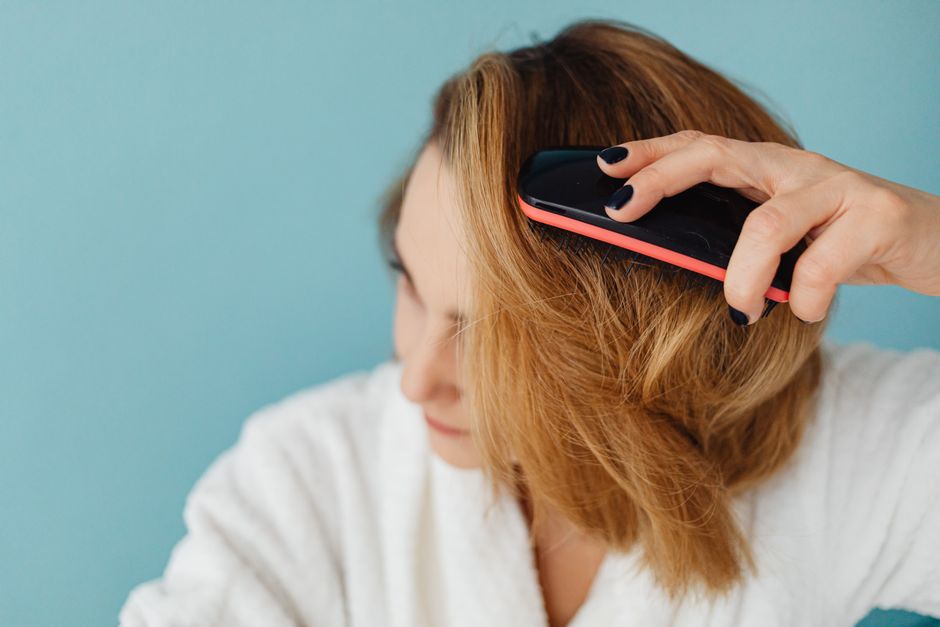
Winter hair can look tidy when you leave home, then float around your face as soon as you remove your hat. Damp weather can create a different problem, leaving the lengths fluffy even when the roots stay flat. Managing these changes does not require an expensive new routine. Start by noticing when your hair becomes difficult, then adjust the conditioning, styling and clothing contact that affect those particular areas.
Tell static and frizz apart
Static often appears as individual strands lifting away from each other or sticking to your face. You might notice it after pulling off a jumper, brushing dry hair or removing a hat. Frizz looks more like a fuzzy outline or a loss of definition through your usual texture. Damp outdoor air can make it more noticeable, especially along rough or damaged lengths.
You can have both at once, so judge what happens rather than assigning your hair a permanent label. Hair that lifts immediately after taking off a scarf needs a different adjustment from curls that expand during a misty walk. The aim is a comfortable, manageable finish. Your natural waves, curls and softer strands do not need to disappear for your hair to look cared for.
Make conditioner work where you need it
Keep your washing schedule responsive to your scalp and everyday activities. You do not need to leave greasy roots uncomfortable simply because your ends feel dry. Apply shampoo mainly to the scalp, massage gently with your fingertips and rinse well. Avoid repeatedly scrubbing fragile lengths. Letting the lather pass through them during rinsing may be enough for your usual wash.
Apply conditioner through the areas that feel rough or catch against clothing, following the directions on the bottle. Spread it evenly rather than leaving a thick patch on the outer layer. Rinse as instructed. If your hair feels coated or falls flat afterwards, reduce the amount before assuming you need a different product. If only the ends feel dry, concentrate your attention there.
- Fine hair: begin with a light application towards the ends and keep richer products away from roots if they flatten your style.
- Thick hair: divide the lengths into manageable sections so conditioner reaches the inner layers.
- Curly or coily hair: keep your preferred curl pattern in mind and limit handling after styling.
- Mixed needs: treat an oily scalp and dry ends separately instead of using a heavy coating everywhere.
Add a finishing product only if it helps
A leave-in conditioner or smoothing product can make the lengths easier to manage, but it is an optional step. Check whether your existing product is intended for damp or dry hair. Spread a small amount between your palms, then apply it to the affected lengths. Begin below the roots unless the instructions suggest otherwise. Add more only if your hair still needs it.
Choose the texture by how your hair responds. Fine strands may become limp under a rich cream, while coarse ends may benefit from a little more weight. An oil can help smooth the surface for some people, but it does not replace conditioner. Avoid layering several unfamiliar products together: you will struggle to identify what helped, and what left your hair feeling sticky or coated.
Let your style settle before adding winter layers
If practical, allow your hair to dry before putting on a snug hat. Damp lengths can take on the shape of whatever presses against them, including a scarf or coat collar. When using a dryer, choose a comfortable setting, keep the airflow moving and avoid holding concentrated heat on one patch. Follow the instructions for a heat protectant when heat styling.
For a smoother finish, direct airflow along the lengths instead of blowing them in every direction. For curls, use your usual gentle drying method and avoid repeatedly disturbing their shape as they dry. A hairstyle that fits the time you actually have is useful here. Repeated hot-tool passes to force a polished finish can leave already rough ends harder to manage.
Reduce rubbing from hats, scarves and collars
If the hair at your nape becomes fluffy while everything else stays settled, look at where it meets your clothes. Lift long hair clear before wrapping a scarf. A loose plait can contain the lengths during a windy journey, while a comfortable low bun may keep the ends away from a rough collar. Avoid pulling either style tight just to suppress a few flyaways.
Try the hats you already own and notice how the inside feels against your hairline. A smoother lining may reduce rubbing, though no fabric guarantees a static-free result. Check for a rough seam or label catching strands. Take your hat off gently, then give your hair a moment to settle before rearranging it. Warmth and comfort still matter more than keeping every strand in position.
Use a small reset when you arrive
Remove your coat and scarf before fixing your hair, so you do not immediately disturb it again. Release any strands caught under the collar, find your parting with your fingers and gently lift flattened roots. Repeated brushing can make static more noticeable and break up curl definition. Pause before treating your whole head when only a small area needs attention.
If necessary, smooth a tiny amount of a suitable hair product over the flyaway lengths with your palms. For an isolated curl, lightly dampened hands may help you reshape it; let it dry before handling it again. Avoid soaking an entire style to settle a few strands. Keep laundry sheets, household anti-static sprays and fabric treatments away from your hair and scalp.
Spend less by changing one thing at a time
Give each adjustment several washes or outings before judging it. First improve conditioner coverage, then try keeping your hair clear of your scarf, then consider whether a finishing product adds anything useful. Notice the location and timing of the problem. This gives you a clearer basis for decisions than buying a full winter range and changing every step together.
Stop using anything that irritates your skin. If you have persistent itching, soreness, scaling or unusual hair loss, speak to a pharmacist or GP rather than treating it as a styling problem. For everyday winter flyaways, keep your expectations gentle: a little movement around your face is normal. Build a routine around comfortable conditioning, less rubbing and a quick adjustment that suits your natural texture.