
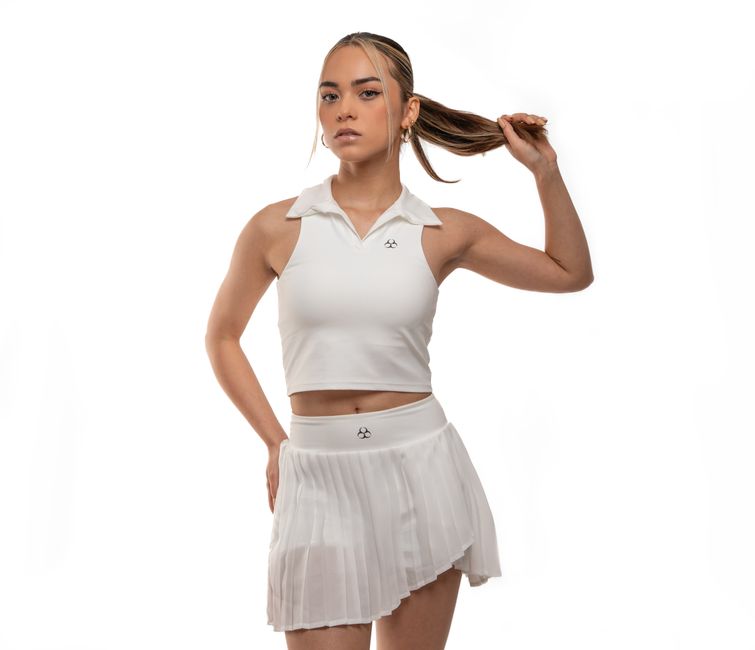
A pleated skirt brings movement to an outfit before you add anything else. Its folds can make a plain T-shirt feel considered, soften a crisp shirt or give a familiar jumper a different shape. The useful starting point is how those pleats hang and move on you. Once the waistband sits comfortably and the folds can open freely, you can build outfits around the skirt using pieces you already own.
Start with pleats that hang comfortably
Try the skirt with the underwear you expect to wear beneath it, then let it settle before judging the fit. The waistband should stay where you want it without digging in or sliding around. Look at the pleats immediately below it: they should fall into their intended folds rather than being pulled constantly open across the front or sides.
Some designs have stitched-down pleats near the hips, while others release straight from the waistband. Neither is automatically better. What matters is whether the fabric has enough room to fall as designed. If the skirt feels restrictive when you sit, sizing up or trying a different cut is more useful than finding a top to hide the tension.
Walk, sit and turn before deciding. A pleated skirt naturally expands with movement, so a still reflection only tells part of the story. Check that the lining moves comfortably too; an outer layer with plenty of volume can still have a lining that feels narrow.
Let the fabric guide the outfit
Fine, lightweight pleats tend to ripple as you walk. They work easily with soft cotton tops, light knitwear and relaxed shirts. Firmer box pleats hold a clearer shape and can sit well beside a straightforward sweatshirt or a neatly cut top. You do not need to make the whole outfit formal just because the skirt has structure.
A shiny finish catches light along every fold, making the skirt visually busy even in a single colour. If you want an everyday outfit, pair that surface with something matt, such as a cotton T-shirt or a plain jumper. For a dressier feel, a smooth blouse can work without needing extra embellishment.
Handle the skirt before buying if you can. Fabric that feels comfortable against your hand may still rustle loudly or cling to its lining when you move. These small details matter more in regular wear than how neatly the pleats sit on a hanger.
Choose where your top finishes
The meeting point between top and skirt changes the outfit noticeably. Begin with a top that ends around the waistband, or tuck in a lightweight one so the pleats have space to emerge. This gives you a clear view of the skirt’s shape and makes a useful baseline for trying other combinations.
Use a light tuck for thin fabrics
A thin T-shirt or blouse can usually tuck in without adding much bulk. Smooth the fabric around your middle, then raise your arms and let a little ease return above the waistband. You should be able to move without the top pulling tight or gradually dragging itself out.
Keep thick knitwear outside
With a substantial jumper, try leaving it untucked first. A shorter hem can finish just above the fullest part of the pleats, while a longer jumper creates a softer, flowing outline. Check the side view: if the hem catches on the folds, gently reposition it or try a smoother knit. There is no need to force a bulky waistband tuck.
Build colour around the folds
Because pleats create their own pattern of light and shadow, a simple colour combination can feel complete. A navy skirt with a cream top, a chocolate skirt with pale blue or an olive skirt with soft pink gives the eye enough variation without demanding lots of accessories.
For a printed pleated skirt, pick one colour from the fabric and repeat it in your top. You do not need an exact match; a related shade often looks relaxed. Notice how the print changes when the folds close. The colour that appears strongest when the skirt hangs still may be different from the one revealed as you walk.
If you enjoy wearing similar shades together, mix textures so each piece remains visible. A smooth pleated skirt with a softly textured jumper can look interesting even when both are grey. Use what is already in your wardrobe before assuming a new colour is needed.
Make familiar tops work harder
- A plain T-shirt: tuck it lightly into the waistband and let the sleeves sit naturally for a relaxed everyday outfit.
- A cotton shirt: tuck it in with a little breathing room, keeping any bulky tails evenly distributed underneath.
- A fine jumper: choose a hem that rests comfortably above the pleats or sits smoothly over their upper section.
- A simple sleeveless top: use a clean neckline to give a detailed or metallic pleated skirt room to stand out.
Try each combination without accessories first. If the outfit feels unfinished, adjust the top’s position before adding anything. Often a small change in where the fabric ends is enough to make the skirt feel connected to the rest of your clothes.
Add outer layers that move with you
Put your jacket on over the complete outfit, including any tuck. A short jacket can leave the pleats visible from the waist, while an open longer layer creates a vertical line through the middle. Both can work; look for fabric that falls freely rather than catching and holding the folds beneath it.
Fasten the jacket as well as wearing it open. If it compresses the top of the skirt, the pleats may spring out below its hem or the waistband may feel crowded. A little more room in the outer layer, or a thinner top underneath, can make the combination easier to wear.
Keep footwear suited to your plans
Start with the shoes you can comfortably wear for the day ahead. Trainers make a fluid pleated skirt feel relaxed, loafers give it a tidy finish, and simple flats can sit comfortably between the two. Heels are an option when you enjoy them, but the skirt does not require them to look dressed.
Try walking at your normal pace, especially in a long skirt. You should not need to shorten your stride or keep lifting the hem away from your shoes. If the fabric regularly catches underfoot, choose a different length or have suitable alterations assessed before wearing it out.
Keep the pleats ready for another wear
Read the care label before washing, steaming or ironing. Pleats may be heat-set or formed through the construction, and the wrong treatment can change their shape. Avoid assuming that every crease needs pressing; the intended folds need to remain distinct from accidental wrinkles.
Store the skirt with its folds falling naturally and without squeezing it into an overcrowded space. Before getting dressed, check that the lining has not twisted and gently settle the pleats into place. A comfortable waistband, freely moving folds and a familiar top are a strong starting point for an outfit you can repeat with confidence.