
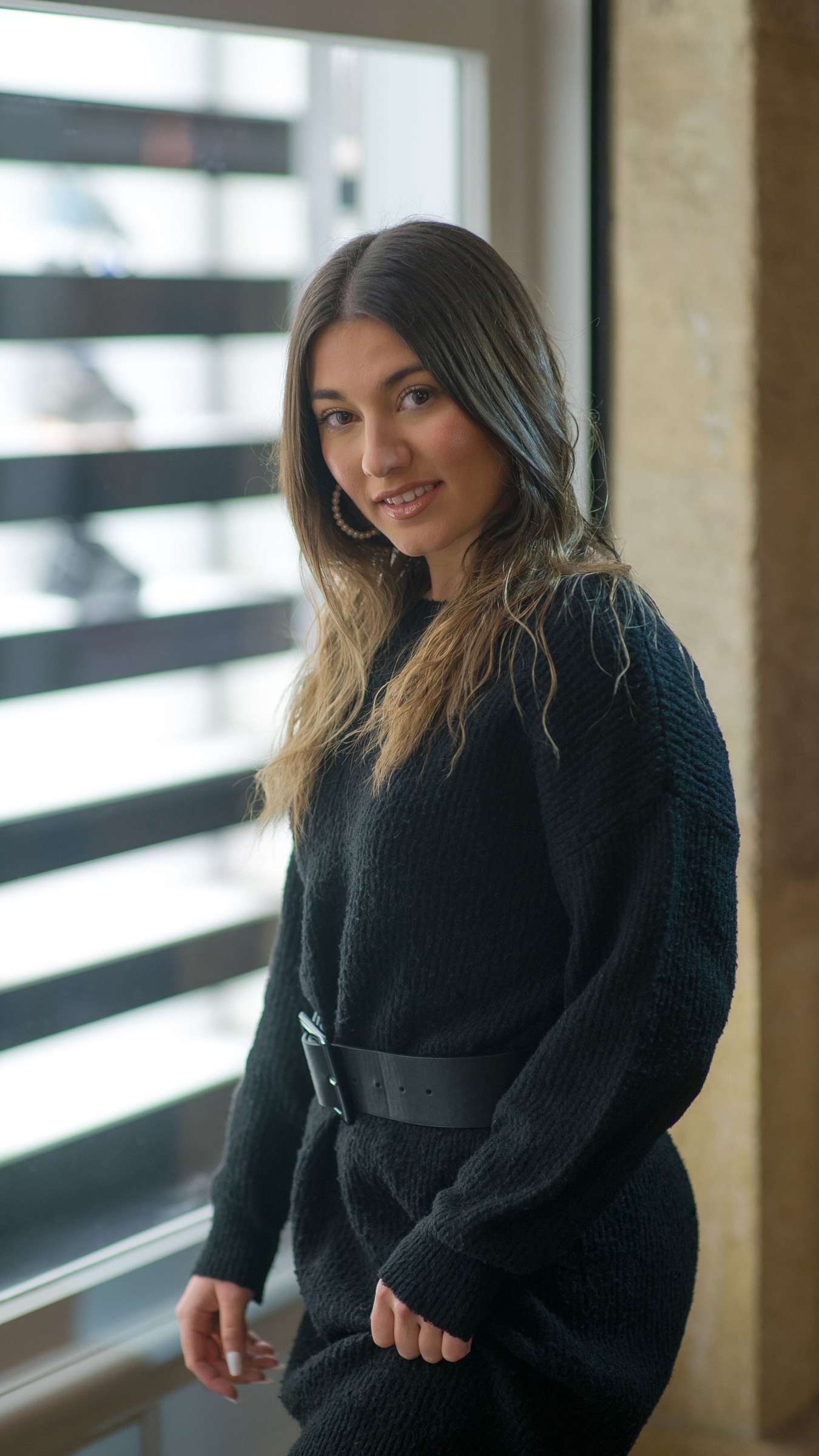
A knit dress stretches, but stretch is not the same as comfortable room. A garment can pull over the body and still feel restrictive, show strained stitches or climb upward while walking. Assess how the knit behaves at rest and after movement rather than choosing a size solely because you can get into it.
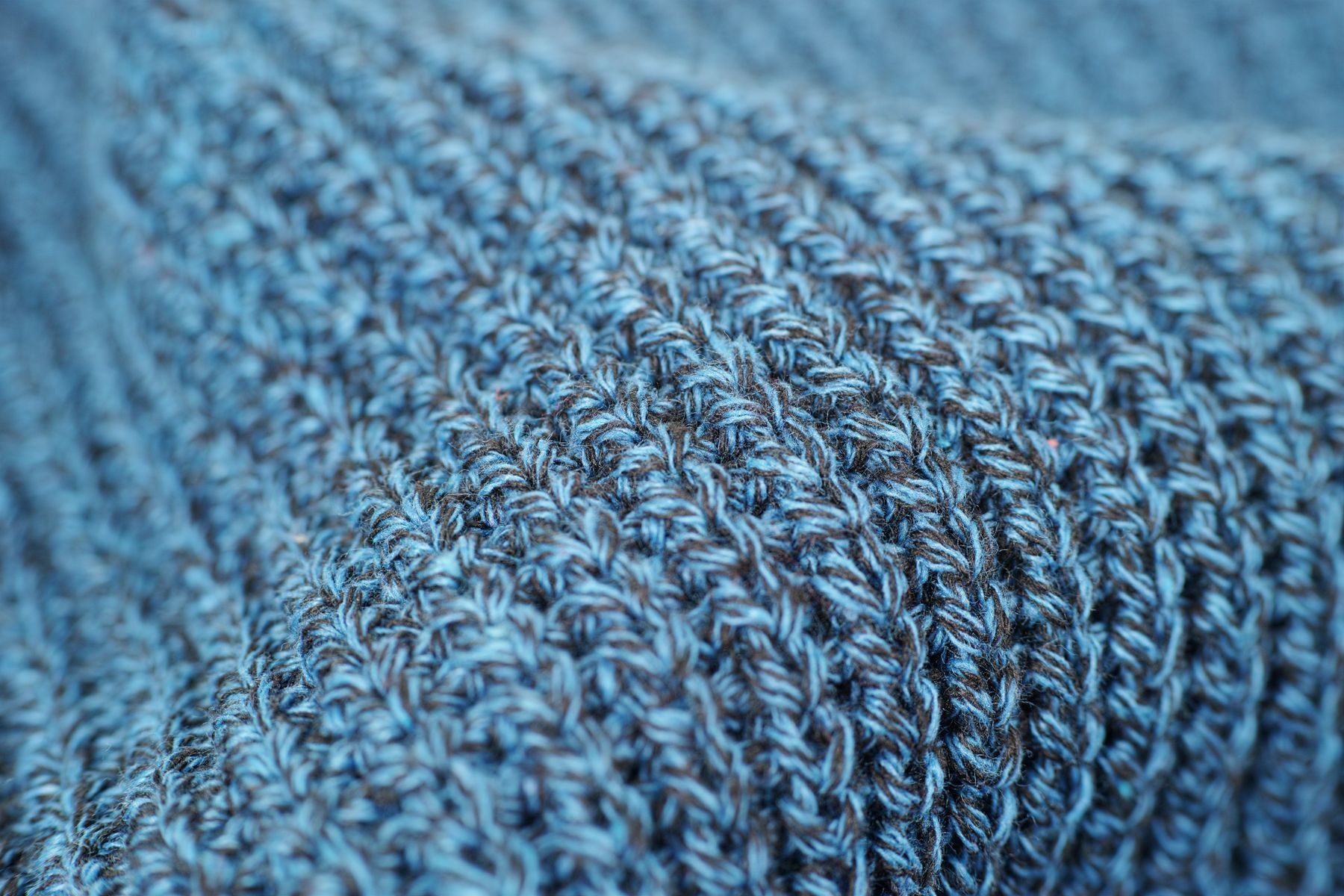
Begin with the dress’s intended shape. A close ribbed style, a relaxed sweater dress and a finely knitted straight dress will not hang alike. Decide which effect you want, then check whether the fabric produces that effect without being held under constant tension. The size label is only one part of that decision.
Look at the stitch before the silhouette
Examine the fabric across the chest and hips in good light. If the knit opens substantially in those areas, the dress may be stretching more than you want. Rib spacing can widen as well. Compare it with a section that is not under tension, such as a loose sleeve or the lower skirt.
Some knits are intentionally open, so a visible stitch pattern is not automatically a fit fault. The useful question is whether the appearance changes sharply where the garment stretches. Check the same areas with your intended underwear and any slip, because added layers can affect both opacity and available room.
Leave ease where you need to bend
Sit on a normal chair and notice the waist, upper thighs and knees. A knit can feel comfortable standing yet resist bending when it is stretched close across several points. If the hem immediately climbs and stays high, consider more room through the hips or a straighter cut.
Stand again without pulling the dress down. Some temporary folds are ordinary, but the garment should not need a complete reset after every movement. A hem that repeatedly rises may involve fabric friction, insufficient room or both. Test another size or a smoother underlayer separately so you can identify which change actually helps.
Assess a fitted ribbed dress
- Check that ribs are not pulled much wider across one area.
- Look for side seams that stay reasonably vertical.
- Make sure the neckline does not spread as the skirt stretches.
- Walk normally rather than keeping your knees close to preserve the outline.
Observe recovery without stressing the garment
During a try-on, wear the dress for a few minutes and include sitting. Then look at the elbows, seat and knees for areas that remain stretched or bagged. Do not yank at a borrowed or shop garment to test it. Normal movement provides more relevant information than an exaggerated stretch demonstration.
In a dress you own, notice how it looks after resting according to its care needs. Different knit structures and fibers recover differently, and composition alone does not describe the whole garment. Your observation of the actual dress is more useful than assuming every knit with a particular fiber will hold its shape identically.
Keep outer layers from gripping the surface
A textured knit can catch beneath a rough jacket lining or a strongly textured cardigan. Put on the outer layer and reach forward, then see whether the dress follows it upward. A smoother lining or more generous jacket can reduce that interference. Check the upper arm carefully when two knitted sleeves overlap.
Bags can also change the way a knit dress hangs. A crossbody strap may pull a soft neckline sideways, while a bag resting at the hip can rub the same area repeatedly. Try your usual bag during the fitting, not only after the outfit is finished. Remove or reposition it if it distorts the dress.
Plan storage and drying around the knit
Read the care label before deciding whether the dress fits your routine. If it requires flat drying, consider whether you have a suitable surface. A long wet knit can become heavy, so hanging it when flat drying is specified can change its shape. Support the garment rather than letting its weight pull from the shoulders.
For storage, folding may be more suitable than leaving a heavy knit on a narrow hanger. Keep folds loose and avoid crushing decorative details. A useful knit dress balances the silhouette you enjoy with enough ease to sit, walk and rest naturally, supported by care that respects the way the fabric is constructed.