
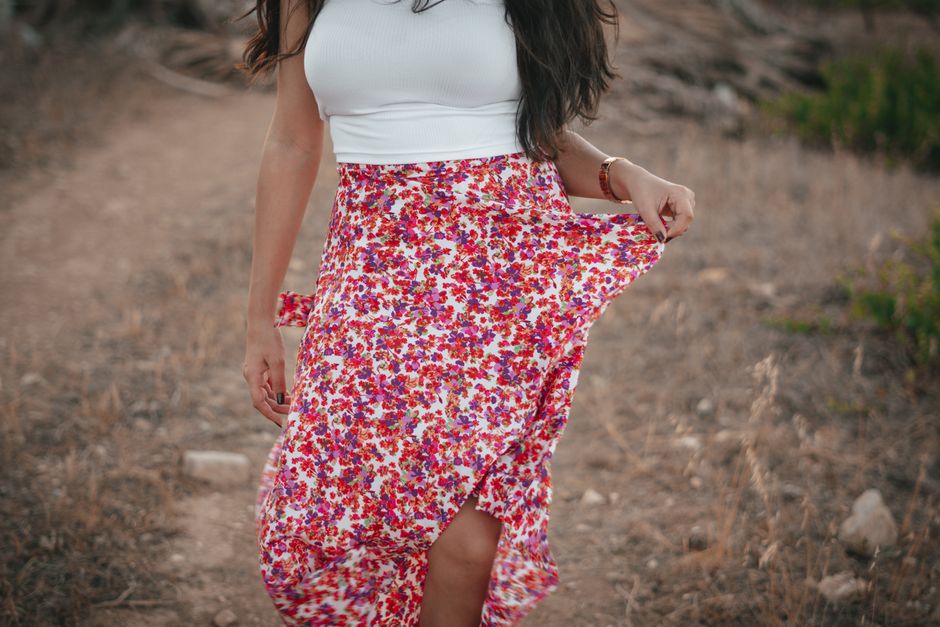
A midi skirt can be straight, full, softly draped or somewhere between, so there is no single body shape it belongs to. The useful question is how a particular cut sits on your body and whether you enjoy wearing it. Look for a comfortable waistband, enough room where you need it and a length that feels right. This guide to midi skirts for every body shape will help you compare those details before spending money.
Start with your proportions
Body shape descriptions can offer a starting point, but they cannot tell you how every garment will fit. Two people with similar measurements may have different torso lengths, hip positions or preferences about showing their waist. Your size may change between cuts. Treat the size label as a way to locate something to try, rather than a verdict on your body.
Begin by deciding where you want the waistband to sit. Your natural waist, a slightly lower position and a high rise can each feel different. A skirt designed for one position may hang awkwardly when pulled to another. Let it settle where its construction suggests, then decide whether that placement suits you.
Compare the main silhouettes
A-line skirts
An A-line skirt widens gradually towards the hem. It can provide room around your hips and thighs without lots of gathered fabric at the waistband. Look at where the flare begins: a gentle flare from the upper hip behaves differently from a sharply structured triangle. Compare how each feels as you move.
Straight skirts
A straight midi follows the body more closely, although it should still allow you to sit and walk comfortably. A vent, split or stretch fabric may provide movement. If you like a streamlined shape but dislike cling, try a woven skirt with a little ease through the hips. A neat outline need not mean a tight fit.
Full skirts
Full skirts create a more expansive silhouette. Gathered waists concentrate fabric at the top, while panelled designs can distribute fullness further down. If you love volume but want a smoother waistband, compare those constructions. A full skirt is available to any body shape; the amount and placement of fabric simply change the effect.
If your hips are fuller than your upper body
Check that the skirt has enough space across your fullest hip measurement before assessing the waist. An A-line or panelled cut may give you that room naturally. A straight skirt can work equally well when its shaping matches yours. Side seams should fall smoothly, without being dragged forwards or backwards by tight fabric.
If the hips fit and the waistband gaps, trying another cut may solve more than going down a size. A shaped waistband or some back elastic can accommodate the difference. Pockets deserve attention too: openings that stand away from the body may indicate insufficient room, rather than anything you need to hide.
If you carry more fullness around your middle
Choose the waistband by comfort first. A broad, firm band may feel supportive to one person and restrictive to another. Soft elastic can be comfortable, but narrow elastic that rolls or digs in is unlikely to improve during the day. Sit normally and breathe comfortably before deciding that the fit is right.
Look for fabric that falls from the waistband without stretching taut across your middle. Flat-front designs, gentle A-lines and softly shaped panels are options to compare. Wear a top tucked in, left loose or ending near the waistband. There is no requirement to define your waist if you prefer a relaxed outline.
If your waist is more defined
A noticeable difference between waist and hip measurements can make fit more important than skirt style. Find enough room at the hips, then check whether the waistband follows your waist without standing away. Shaped seams and curved waistbands may help. A fixed, straight band can be less accommodating even when the size seems correct.
If you enjoy highlighting your waist, a top that finishes around the band can make that detail visible. Avoid pulling the skirt higher simply to close a gap, as this may shift its shaping away from your hips. Where the rest fits well, consider whether a modest waist alteration would make the skirt more useful.
If your waist and hips have similar measurements
You can choose a continuous, straight outline or add volume, depending on the look you like. A column-shaped midi can follow your proportions with little interruption. A fuller skirt creates more width below the waist, while gathers introduce extra texture around it. These are styling choices, rather than corrections your body needs.
Pay attention to how a skirt stays in place. A waistband that relies on a sharply defined waist may shift on you, even if it closes comfortably. Try a different rise or an adjustable construction. Secure should mean that the skirt stays put during ordinary movement, without being tightened until it pinches.
Account for height and torso length
Midi generally describes a hem below the knee and above the ankle, leaving plenty of variation. The same skirt may be calf-length on one person and nearly ankle-length on another. Compare the actual garment length with a skirt you already wear, especially when buying without trying it on.
If you are shorter, try different lengths before assuming you need heels. A slightly shorter midi may give you the look you want with flat shoes. If you are taller, check that the skirt has enough length for your preference. A very high waistband can also feel crowded beneath the bust on a shorter torso.
Let fabric inform your choice
Crisp cotton holds its shape away from the body, while a soft woven fabric tends to fall closer. Stretch knits can feel flexible but may follow every contour. Choose the behaviour you like, rather than expecting different fabrics to produce the same silhouette. Colour and print are personal choices on every shape.
Check the lining as carefully as the outer fabric. A narrow lining may restrict you even when the skirt looks roomy. Seams that pucker or fabric that pulls into horizontal lines are reasons to reassess the fit. Try another size or cut before assuming the issue is your proportions.
Choose carefully on a budget
A useful midi skirt should work with clothes you already own. Think of a familiar top, such as a favourite jumper, and shoes you would actually wear with it. This keeps the decision focused on your wardrobe instead of an imagined outfit requiring several more purchases.
- Check the fastening: it should close without straining.
- Check the drape: the fabric should settle once you stop adjusting it.
- Check your stride: you should walk naturally within the cut.
- Check the care label: choose upkeep that fits your routine.
With a second-hand skirt, allow for any alteration before deciding it is good value. Shortening a hem may be straightforward, but changing vents or shaped panels can be more involved. Choose the midi that fits your everyday life and makes you want to wear it again. Your favourite shape may be one a body shape chart would never have suggested.