
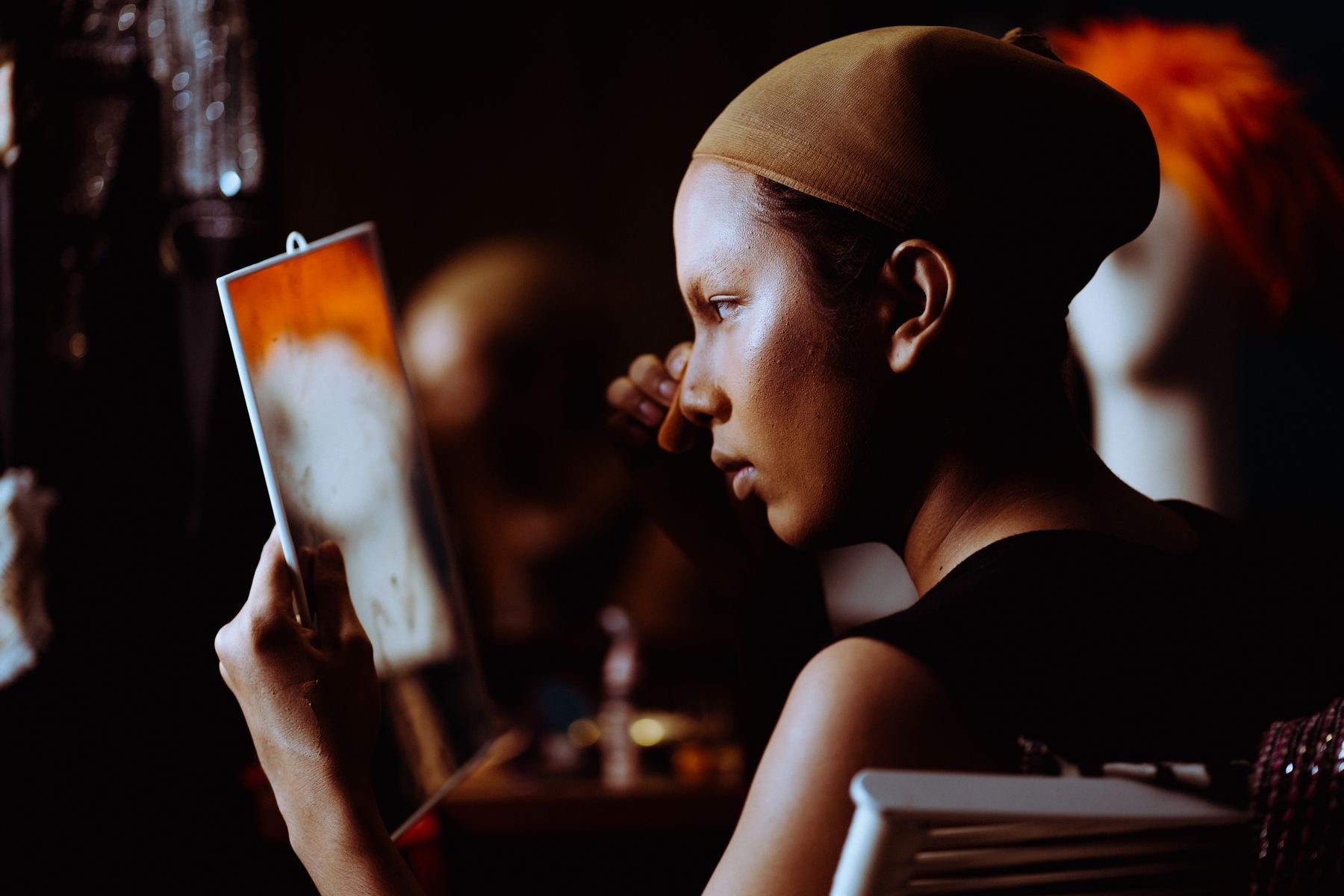
A shiny patch does not always need another layer of powder. If the makeup beneath it still looks even, pressing away some surface shine may be enough. Repeatedly dusting powder over the same area can change the texture and make a small touch-up more noticeable than the original shine.
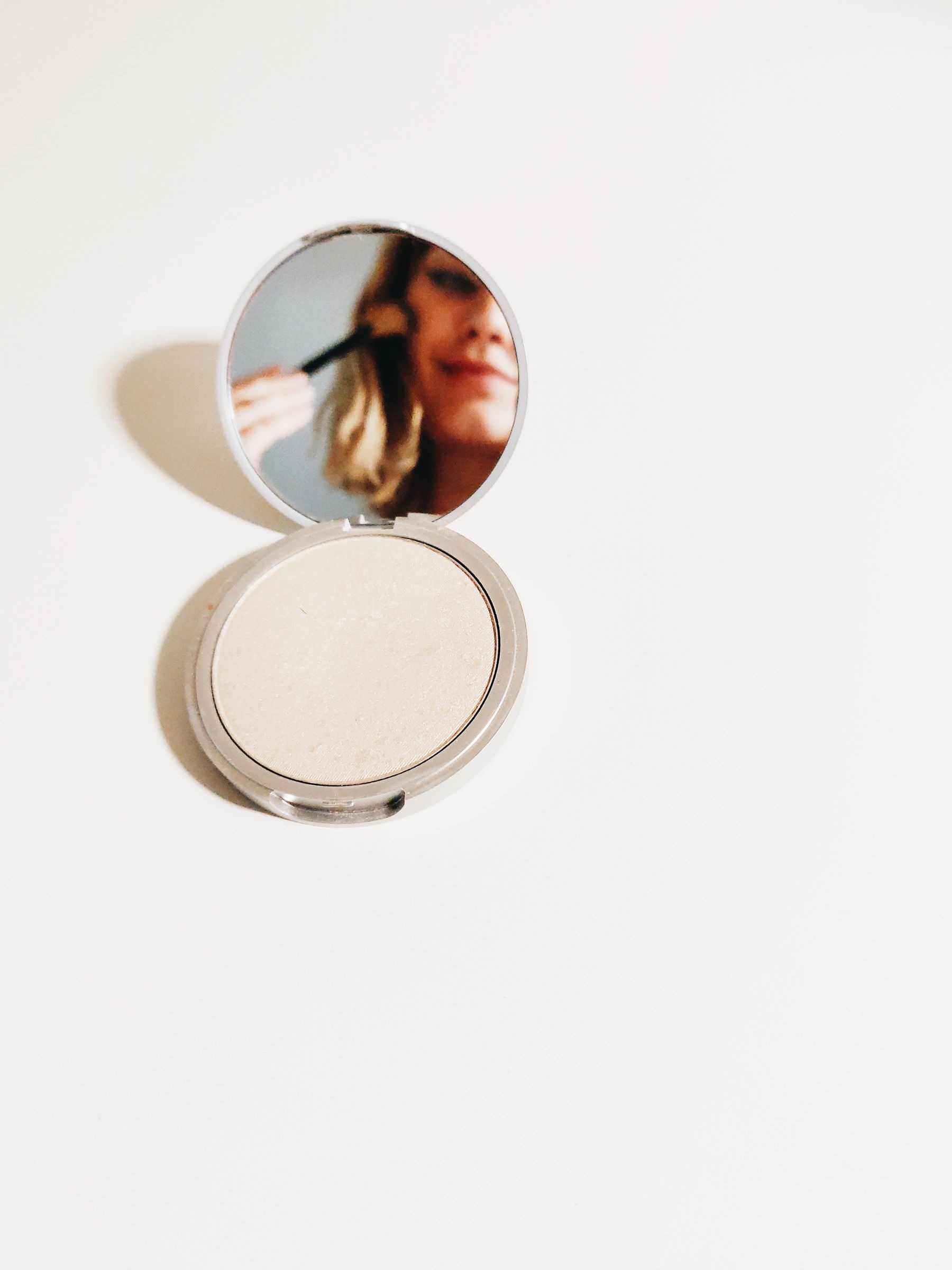
Before reaching for a compact, take a brief look in ordinary light. Separate reflection from missing coverage, creasing and marks left by glasses or clothing. These are different jobs. A blotting sheet can change surface shine, but it will not repaint an area where the base has been rubbed away.
Identify the exact area you want to change
Look at the center of the forehead, beside the nose and around the chin without assuming they all need attention. Leave areas alone when you like their finish. A softly reflective cheek does not have to match a more matte nose for the overall makeup to look intentional.
Check whether the brightness moves as you turn your head. Strong overhead light can exaggerate a reflection that is less obvious at normal conversation distance. The aim is to adjust the finish to your preference, not to eliminate every point of reflected light from the face.
Choose a clean blotting material
Use a blotting paper intended for the face, following its instructions. Some sheets already contain powder, so check the packaging before treating them as a neutral first step. If you use a tissue, choose a clean, soft one that does not leave visible lint and avoid perfumed household papers.
Keep unused sheets protected inside their packet rather than loose at the bottom of a bag. Handle the clean portion as little as possible. A fresh sheet is easier to position precisely than a crumpled piece that has already picked up makeup from several areas.
Press and lift instead of wiping
Place the sheet on the chosen patch with light pressure, then lift it away. Avoid dragging it across the base as though removing makeup. Use another clean part of the sheet if you move to a second area, following the product’s use directions.
Work around small features
Beside the nose, fold the sheet into a manageable shape without making a sharp edge. Keep it clear of the eyes and avoid rubbing back and forth in the crease. A tiny area may need a smaller contact point, not a larger amount of pressure.
Pause and look again after one pass. The surface may already have the finish you wanted. Do not continue pressing simply because the sheet still has unused space. Excessive handling can disturb makeup that was otherwise sitting neatly.
Decide whether powder has a remaining job
If the area looks even and sufficiently matte after blotting, stop. If you still want a softer finish, pick up a small amount of face powder with a clean suitable tool. Apply only where needed rather than repeating a full-face setting step.
- Blot surface shine before assessing powder.
- Use a light pickup rather than a heavily loaded puff.
- Keep powder away from areas whose reflection you like.
- Check the result before returning for another layer.
A puff can place powder precisely, while a brush may distribute it more broadly. Use the tool that suits the area and formula. The important part is controlling the amount, not assuming one applicator guarantees a better finish.
Do not disguise missing makeup with dry layers
If the base has separated, creased or rubbed away, more powder may not solve the visible problem. Blot gently if needed, then assess whether a localized reset is more sensible. Remove a disturbed patch carefully with a suitable product and reapply only the necessary makeup once the surface is ready.
Do not mix several touch-up techniques in the same spot without looking between them. Blotting, adding base and powdering all at once makes it difficult to know what helped or what created a thicker patch.
Keep the routine small enough to repeat
Return the powder applicator to its designated clean compartment and discard the used sheet. Check your face from normal distance before packing everything away. A useful touch-up may take only a few targeted presses and no additional makeup. Remember which areas actually needed attention so the next check begins with observation instead of an automatic all-over powder layer.