
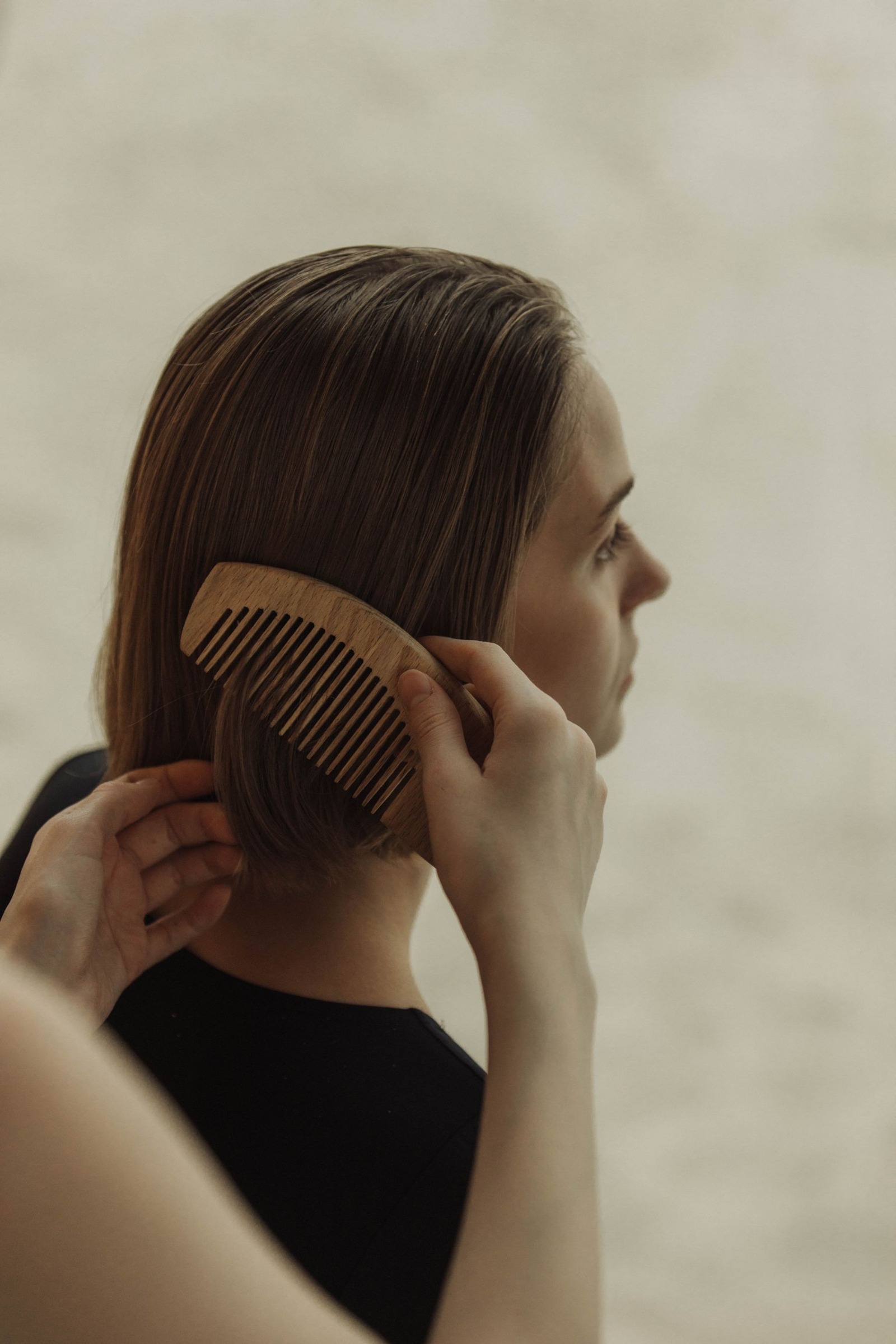
A comb that stops halfway through the hair is a signal to pause, not to pull harder. Repeating a full-length stroke through the same knot can make the task frustrating while the surrounding lengths get dragged along. Small sections and short, controlled movements give you a clearer view of what is catching.
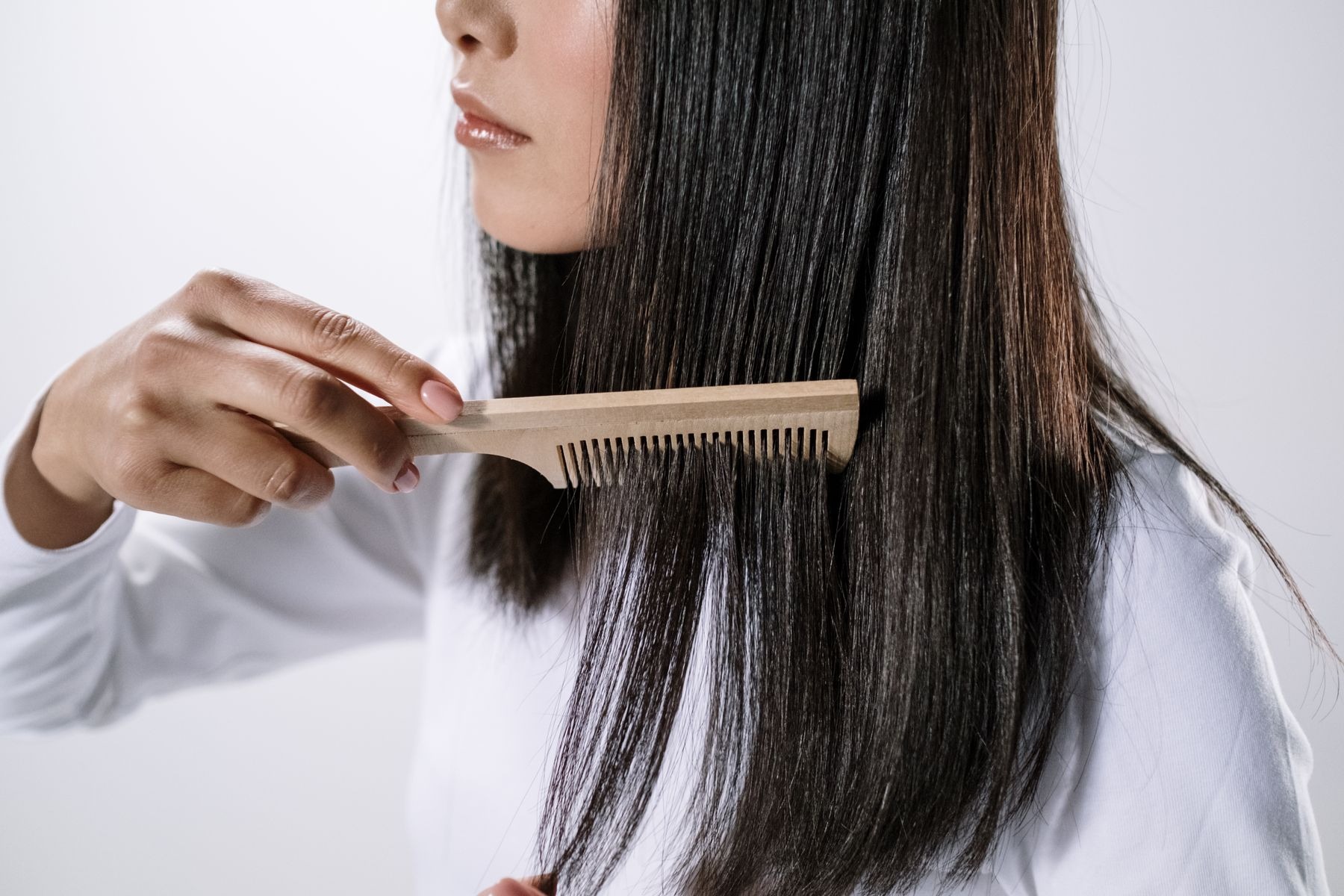
The useful sequence is simple: choose a manageable section, support it with one hand, work through the lowest tangle and move upward gradually. The aim is not to finish in a certain number of strokes. It is to make each pass easy enough that the comb does not need force.
Choose the right moment and tool
Start with the detangling conditions that suit your hair and familiar routine. Some people work through sections with conditioner during washing; others manage their hair dry. Follow the directions for any conditioning or detangling product rather than assuming every texture needs the same amount of water or slip.
Use a comb designed for hair, with smooth teeth and enough spacing for the section you are handling. A wooden comb can work if its finish is intact and its care instructions suit the intended use. Check for splinters, rough edges or broken teeth before starting. Material alone does not guarantee a comfortable result.
Divide the hair before making a long pass
Separate one accessible section with your fingers and keep the rest out of the way with a loose clip if helpful. The section should be small enough to hold comfortably and see clearly. If it immediately spreads into a dense bundle, divide it again instead of tightening your grip.
Work around the head in an order you can remember, such as one side, the other side and then the back. A second mirror can help you check a back section without twisting awkwardly. Keep loose clips accessible so you do not have to search for them while holding a half-finished section.
Support the section above the tangle
Hold the hair gently above the area you are working on, leaving space below your hand for the comb. This keeps the movement localized instead of repeatedly tugging at the entire length. Do not wrap the section tightly around your fingers or stretch it into a rigid line.
Begin near the tips
Start with short strokes through the lowest manageable portion. If a knot sits just above the tips, work on the loose hair beneath it first. Once that portion combs freely, move a little higher. Starting at the roots and driving downward asks the comb to meet every tangle at once.
Stop when the comb catches
Withdraw the comb gently rather than pushing it through the resistance. Set it down if necessary and use your fingers to separate the outside of the tangle in small movements. Look for a strand wrapped around the section or a caught accessory before assuming the whole knot needs more product.
- Reduce the section size when you cannot see the catching point.
- Keep strokes short while resistance remains.
- Use additional detangling product only as its directions allow.
- Pause rather than continue if the process feels uncomfortable.
A stubborn knot may take several quiet attempts. Avoid scraping it with the comb tip, picking with sharp tools or snapping the section between your hands. If you cannot separate it comfortably, leave it alone and seek help from a hair professional rather than escalating the force.
Move upward only after the lower portion is clear
Keep supporting the section as you raise the starting point a little at a time. Each new stroke should travel into hair you have already loosened below. If the comb catches again, return to that small area rather than beginning another full-length pass from above.
Once the section is clear, let it rest separately while you work on the next one. Avoid repeatedly recombing finished sections simply to keep both hands busy. For curls or waves, arrange the section according to your usual styling method instead of insisting on a brushed-out appearance.
Finish with a limited check
Release the clips gently and check for any overlooked sections. Use a longer pass only where the comb moves freely; you do not need to prove the entire head is tangle-free with repeated sweeping strokes. Put the comb away according to its care instructions. The finished routine should leave the hair manageable for its next style, without making pulling the default response to resistance.