
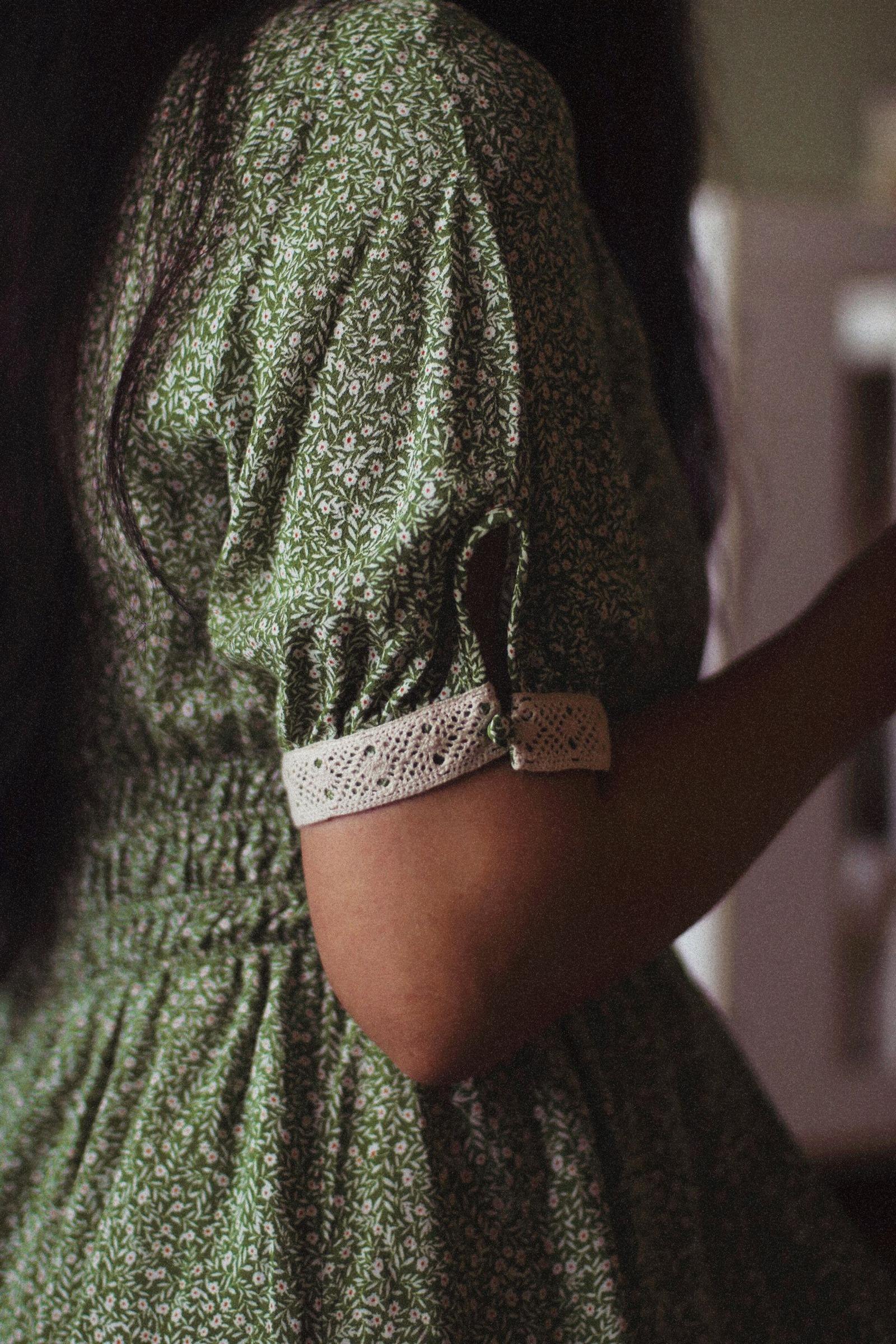
When a dress neckline slips backward or sleeves feel restrictive, the shoulder area is a useful place to start looking. It supports much of the garment’s weight and influences where the bodice hangs. A problem there can appear lower down as a tilted waist seam, uneven hem or fabric that never seems to settle.
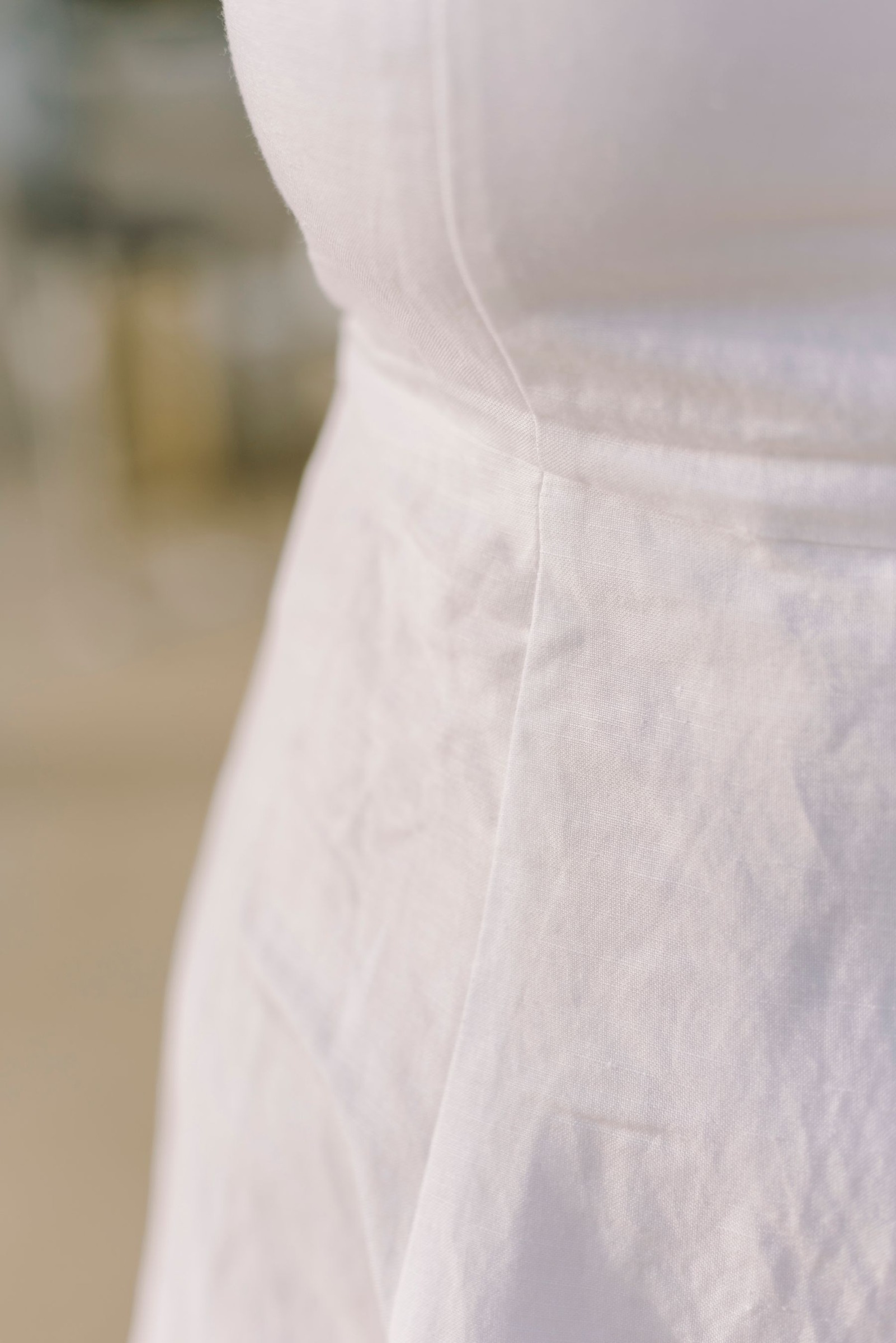
Shoulder seams are clues, not a single universal measuring rule. Some dresses use a traditional set-in sleeve, while others have dropped shoulders, raglan sleeves or no shoulder seam at all. Identify the intended construction before deciding a seam is misplaced. A deliberately relaxed design should not be judged as though it were a closely fitted woven bodice.
Identify the seam arrangement first
On a conventional set-in sleeve, the sleeve joins the bodice around the armhole, and the top of that join often sits near the shoulder edge. On a dropped-shoulder design, it sits farther down the upper arm by intention. Raglan seams run diagonally from the neckline toward the underarm and need a different visual assessment.
Compare the dress with its own cut rather than a different garment. For a conventional shoulder, look for the fabric falling smoothly without dragging the sleeve inward or leaving an empty extension beyond the shoulder. For a relaxed cut, focus more on balance, comfort and how the neckline settles.
Look for tension before reaching for a smaller size
A seam sitting farther outward can suggest excess width, but that does not prove the whole dress is too large. The bust or upper back may still need its current room. Likewise, a seam pulled inward may occur alongside tightness elsewhere. Assess the chest, back and sleeve together before changing sizes.
Stand naturally, with your arms resting rather than held away from your sides. Look for diagonal pulling from the armhole, folds gathering beneath the neckline or a sleeve that twists toward the front. These clues help you describe the issue even if they do not reveal a single cause by themselves.
Compare front and back balance
- Check whether the neckline sits comfortably without being pulled forward.
- Notice whether one shoulder seam moves farther backward than the other.
- See whether the waist seam appears level when you stand normally.
- Look for fabric caught beneath underwear straps before blaming the dress.
Use gentle movement to test support
Reach forward as though picking up a cup from a table. Then lift your arms only as far as needed for an ordinary task. A dress may rise somewhat during movement, particularly in structured woven fabric. The useful question is whether it returns comfortably or leaves the neckline and sleeves displaced.
If the whole bodice lifts sharply when you reach, the issue may involve armhole shape, sleeve room or upper-body ease, not simply shoulder width. Try another cut rather than repeatedly pulling down the skirt. A dress that requires restricted arm movements is not made more functional by a neat standing outline.
Check slips and layers independently
A lining or separate slip can pull across the upper back even when the outer fabric has room. Gently arrange each layer, then repeat the reach test. If the lining is visibly taut while the shell stays loose, a size comparison alone may not explain the problem. Inspect the inside construction if the dress is yours.
Outer layers can also move a neckline. Put on your jacket, remove it and see whether the shoulder issue exists with the dress alone. A tight jacket armhole can drag the dress backward, creating the appearance of a dress-fitting fault that disappears as soon as the outer layer comes off.
Choose a cut before planning an alteration
Shoulder changes can affect sleeves, neckline and bodice length together. They are not always a simple adjustment, especially with lining, embroidery or shaped sleeve heads. If you are buying a dress, compare another size and another shoulder construction before assuming an alteration will be straightforward.
For a dress you already own, show a tailor the movement that causes discomfort and ask what else a shoulder change would affect. Describe the result you want rather than prescribing a seam position. The most useful fit leaves the neckline stable, the sleeves comfortable and the dress balanced while you move naturally.