
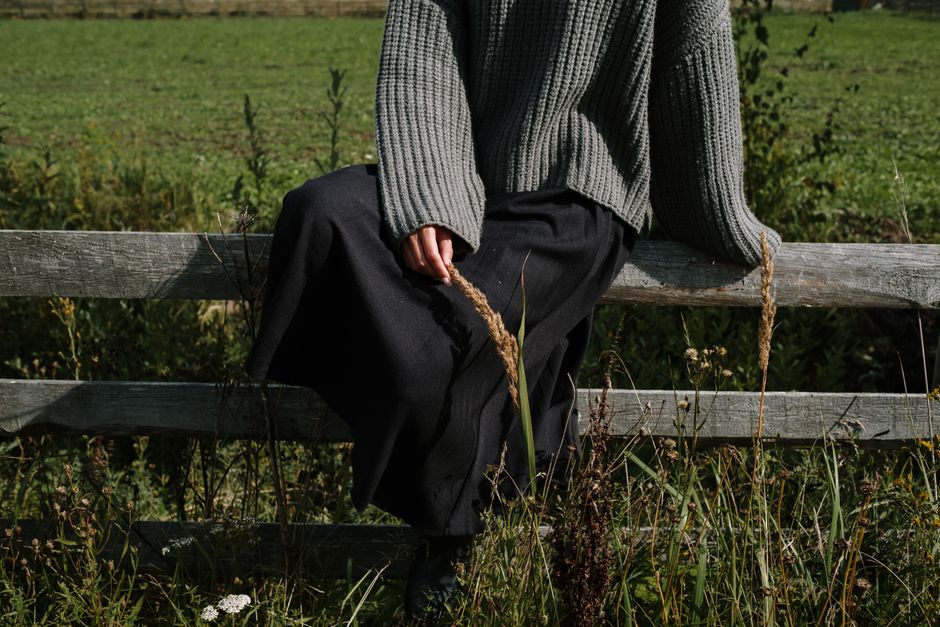
Corduroy skirts and pinafores bring a welcome change of texture to autumn dressing. Their raised ribs give simple outfits depth, and they work comfortably alongside shirts, jersey tops and knitwear. Choosing a useful piece starts with the fabric and fit, rather than a completely new set of accessories. With a little attention to construction and layering, you can find a skirt or pinafore that works with clothes you already enjoy wearing.
Start with the fabric
The ribs in corduroy are called wales. Fine needlecord has narrow ribs and often looks relatively smooth, while wider cord has a more pronounced texture. Neither automatically tells you how warm a garment will feel: the weight, composition and construction also matter. Handle the fabric if possible, and consider whether you want something soft and flexible or a cloth that holds a more structured shape.
Supple cord can work well in a relaxed pinafore, while firmer fabric can give an A-line skirt definition. A stiff cloth may feel less comfortable in a very close-fitting cut. Some corduroy contains stretch, but stretch should support movement rather than compensate for the wrong size. When shopping online, look for views of the back and sides as well as the front.
Choose a skirt with room to move
Try a corduroy skirt with the sort of top you expect to tuck into it. The waistband should feel secure without pressing into your middle, and the fabric should fall over your hips without strong horizontal pulling. Look at the back too, where pockets and seams can reveal tension that is harder to spot from the front.
An A-line cut gives the fabric space to move away from your body. It can also accommodate a tucked-in shirt without feeling crowded. A straight skirt creates a different silhouette but needs enough ease through the hips and thighs. If there is a vent, check that it allows a comfortable stride and does not constantly gape when you are standing.
Check the fastening while seated
A button-front skirt adds detail without needing much decoration elsewhere. Sit down and check the spaces between the buttons, particularly across the hips. A zip should lie reasonably flat, and press studs should stay secure during ordinary movement. If a fastening looks strained in the changing room, styling is unlikely to solve the underlying fit problem.
Fit a pinafore over your usual layers
A pinafore needs to work at the shoulders, chest and waist together. Begin by trying it over a familiar long-sleeved top. The bib should sit comfortably, with straps that stay in place without digging into your shoulders. Adjustable straps are useful, but changing their length also changes where the waist and hem sit, so check the whole garment after each adjustment.
Look at the sides of the bib and the openings beneath your arms. Your underlayer needs room without being pulled upwards or trapped in folds. A wide opening may show more of your top than you expect; a narrow one may be awkward over knitwear. Choose according to the layers you actually wear, rather than an imagined outfit that needs several new purchases.
Reach forwards, bend and sit down before deciding. Notice whether the bib buckles, the straps slip or the waist rides upwards. A thinner top may help if the layers feel bulky, but it should still be an underlayer you like wearing. If comfort depends on holding yourself very still, try another size or shape.
Keep underlayers smooth and manageable
Corduroy already supplies texture, so a simple underlayer is an easy starting point. Smooth jersey, a cotton shirt or a fine-knit jumper lets the ribs stand out without competing with them. With a pinafore, check that the sleeves move freely beneath the side openings. A very full sleeve can gather awkwardly, especially once you add a coat.
For a skirt, a tucked-in top gives a clear waist, but forcing a thick jumper into a fitted waistband can feel uncomfortable. A shorter knit that finishes near the top of the skirt may sit more easily. If you prefer a longer top, check that its hem does not catch on pockets or buttons as you walk.
- For everyday errands: try an A-line corduroy skirt with a plain jersey top and a jumper you can remove indoors.
- For a neater outfit: combine a straight corduroy skirt with a smooth shirt, leaving enough waistband room for the tucked fabric.
- For a simple pinafore look: start with a fine-knit jumper and a neckline that sits comfortably beneath the bib.
Choose colour around what you own
Look at your most-used tops and outerwear before choosing a corduroy colour. A brown skirt might work with an ivory shirt, blue knitwear and a charcoal coat already in your wardrobe. A navy pinafore could sit easily over cream, grey or a narrow stripe. Aim for several combinations you would happily wear, rather than one outfit that only works with everything carefully matched.
If you enjoy brighter clothing, let a colourful corduroy piece lead the outfit and keep the underlayer simple. Alternatively, use neutral corduroy beneath a favourite patterned shirt or colourful jumper. Check combinations in daylight when possible. The direction of the pile can make the fabric appear lighter or darker, so a subtle difference in shade may simply be the way it catches the light.
Look at pockets and lining
Patch pockets are part of corduroy’s appeal, but their placement affects how a garment hangs. Put your hands inside and see whether the skirt or pinafore pulls forwards. Consider what you normally carry as well. A phone or heavy keys can drag on a soft pocket, making a bag a more comfortable place for those items.
A lining can help a skirt move over tights, though it also needs enough room when you sit and walk. Check that it does not pull across your thighs or hang below the hem. For an unlined garment, try your usual tights before removing any return tags. The feel of the inner surface varies, and it is worth checking whether the layers move comfortably together.
Inspect carefully and care for the texture
When considering second-hand corduroy, examine the seat, pocket edges, waistband and fastening area in good light. Look for thinning fabric, loose stitching and stretched buttonholes. Gently smooth the pile with your hand to distinguish a flattened area from a change in its direction. Read the care label before assuming that an unfamiliar mark will wash out easily.
Follow that label for washing, drying and pressing. Corduroy garments can have different requirements, especially where linings or trims are involved. If pressing is allowed, work cautiously from the reverse and avoid heavy pressure that flattens the raised surface. Let the piece dry fully before storing it, with enough space that it is not tightly crushed.
Before heading out, wear your chosen outfit around the house with your normal coat and bag. Small adjustments to a strap or underlayer are easier to make at home. A comfortable waist, freely moving sleeves and fabric that hangs well will help your corduroy skirt or pinafore become a reliable part of your autumn wardrobe.