
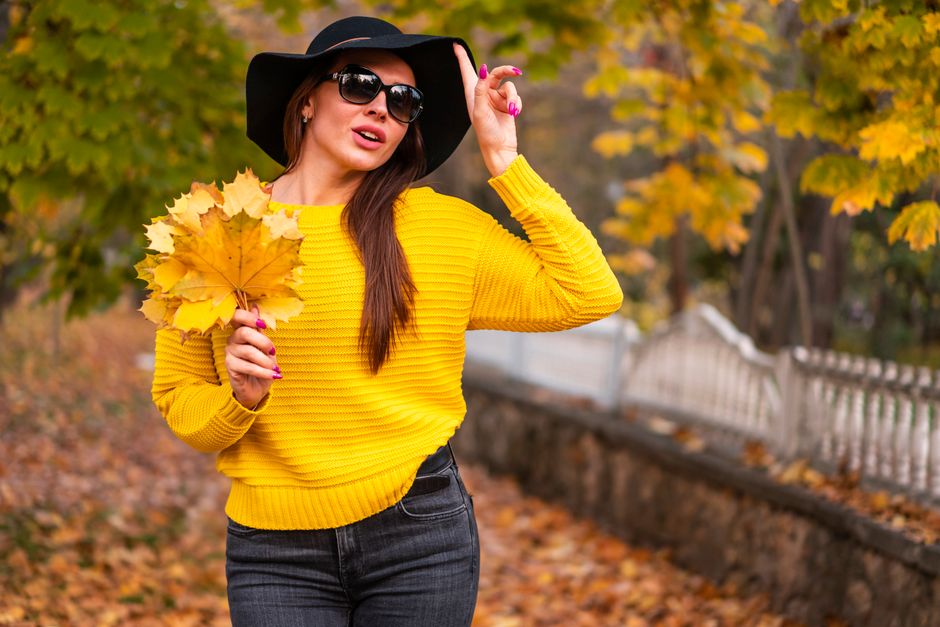
Rust, mustard and olive make a satisfying combination when you want colour with a softer edge. Rust brings the warmth of reddish brown, mustard adds a golden note, and olive gives the outfit a grounded green base. The useful trick is choosing how much of each shade to show. You can build a complete look from pieces you own, with one colour doing most of the work and the others adding interest.
Compare the actual shades first
Colour names cover a surprising range. Your rust skirt might look almost terracotta, while a rust blouse could lean towards deep brick. Mustard can be pale and dusty or rich and golden; olive can look grey, brown or distinctly green. Put your possible pieces together in daylight before deciding whether they work. Look at the fabrics in front of you rather than trying to match an imagined colour chart.
An easy starting point is to choose versions with a similar softness. A muted rust jumper, subdued mustard scarf and brownish olive trousers tend to sit comfortably together. A bright mustard can still work, but it will attract more attention. Give it a smaller role if you want a quieter outfit.
Give each colour a different job
Trying to give all three shades equal space can make getting dressed unnecessarily complicated. Instead, choose a main colour, a supporting colour and a small finishing touch. This creates a clear starting point and lets you adjust the balance without replacing the entire outfit.
- Main colour: a dress, trousers or coat that occupies a large part of the outfit.
- Supporting colour: a top, cardigan or skirt that creates a noticeable second area.
- Finishing touch: a scarf, belt, bag or visible layer in the third shade.
For example, olive trousers can anchor a rust blouse, with mustard appearing in a scarf. If your favourite piece is a mustard dress, let that lead and use an olive jacket with a small rust bag. You do not need matching shoes to make the combination feel complete.
Build around a piece you already love
Start with olive trousers
Olive trousers offer a straightforward foundation because they often behave much like a neutral. Add a rust top, then hold a mustard accessory against the combination. With wide trousers, a neat jumper or softly tucked shirt can keep the outline clear. With a slimmer cut, you might prefer a loose blouse. Let the fit of your existing clothes guide the shape.
Start with a rust dress or skirt
A plain rust dress makes it easy to introduce the other shades without adding much bulk. Try an olive cardigan worn open and a mustard scarf near the neckline. For a skirt, a mustard knit and olive outer layer can work well. Check the outfit with the outer layer removed, so the combination still feels comfortable indoors.
Start with a mustard jumper
Pair a mustard jumper with an olive skirt or trousers, then add rust through a bag or a lightweight layer visible at the collar. If the jumper is chunky, avoid forcing a thick hem into a fitted waistband. Leave it loose or try a small front tuck only if the fabric sits comfortably. The colours will look more considered when the clothes hang naturally.
Choose what feels good near your face
You do not need rigid rules about which colours you are allowed to wear. If mustard feels too strong beside your face, place it in a skirt, bag or belt instead. Keep your preferred shade at the neckline. A rust blouse beneath an olive jacket still leaves plenty of room for mustard elsewhere.
Try the outfit in ordinary daylight and notice whether you enjoy the effect. Opening a collar or adding a familiar cream top underneath can create a little breathing space. You can also use a patterned scarf containing smaller amounts of mustard rather than wearing a large block directly under your chin.
Use texture to separate the shades
These earthy colours can look especially rich when the fabrics have different surfaces. A rust cotton shirt, olive corduroy trousers and mustard knitted scarf create distinction through texture as well as colour. You can see where each piece begins without needing sharp contrasts or extra decoration.
Choose texture with the occasion in mind. For a relaxed day, soft knitwear and washed cotton feel natural together. For a dressier outfit, try a smooth rust blouse with olive tailored trousers and a mustard bag. If one piece has a sheen, let it be the focal point and keep the surrounding fabrics relatively simple.
Make shoes and layers work with the palette
There is no need to find footwear in the exact third colour. Brown, tan, dark chocolate and cream can give the palette a gentle finish, depending on what you own. Black can work too, particularly when it appears elsewhere in the outfit, such as a belt or the background of a print.
Test tights alongside the skirt or dress and shoes together. Dark brown tights can connect rust with brown boots; opaque black tights may feel more deliberate with black footwear. An existing neutral coat is perfectly useful. You can show all three colours through the clothes and accessories beneath it without buying a special coat.
Use a print as a connection
A print containing two of the shades can provide an easy connection. An olive and mustard patterned blouse, for instance, gives a rust skirt something to relate to. Look at the background colour as well as the motif: a large cream background will make the overall outfit lighter than the same pattern on dark brown.
You do not need a print that includes all three colours. Nor do the tones have to match every separate precisely. Repeat a recognisable colour relationship, then keep the remaining pieces plain if you want the outfit to feel calm. This is particularly useful when working with a patterned item already in your wardrobe.
Adjust the balance before buying anything
If the outfit feels too busy, remove an accessory and make the smallest colour area smaller still. If it seems dull, try a greener olive piece you already own, or bring the mustard closer to the centre of the outfit. A visible cuff or open cardigan can change how much colour appears without adding another item.
Before filling a supposed gap, try the clothes with your everyday bag, shoes and coat. The missing piece may simply be a different arrangement. Keep a quick outfit photograph if it helps you remember a combination you like. Once you find a comfortable balance of rust, mustard and olive, you can repeat it with different pieces and still feel like yourself.