
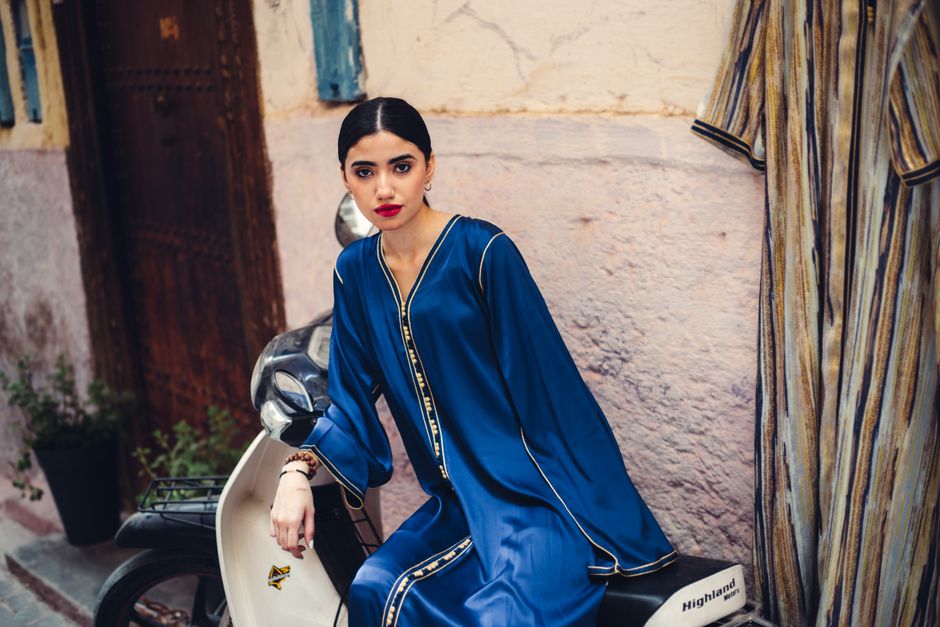
A kaftan can earn a place in your everyday wardrobe long after the beach bag has been put away. Its loose shape offers room to move, while a strong print or an interesting neckline can make a complete outfit feel effortless. The trick is to work with the particular kaftan you own: its fabric, side openings and sleeve shape matter more than any rule about how you should wear it.
For dressing beyond the beach, concentrate on giving that flowing shape a clear purpose. You might wear it as a dress for lunch, as a tunic over trousers or as the relaxed centre of an evening outfit. Start with pieces already in your wardrobe and make each addition solve a practical problem.
Decide what role your kaftan can play
Lay your kaftan flat and look at its construction. Some styles are essentially roomy dresses with enclosed side seams. Others have deep arm openings, high side splits or only a few stitches holding the sides together. Those details determine whether you can wear yours alone or need a substantial layer underneath.
Try it on with the underwear you expect to wear, then lift your arms and sit down. Check what happens at the sides as well as the front. A kaftan that looks covered when you stand still may reveal more when you reach for a shelf. If it needs an underlayer, choose one that provides the coverage you want throughout those movements.
Let the fabric set the starting point
A cotton kaftan with a crisp finish can feel like a relaxed day dress. A fluid fabric tends to fall closer to the body, while a sheer version works more naturally as a tunic over a complete base outfit. Embroidery, a decorative neckline or a substantial woven texture may already supply enough detail without extra jewellery.
Build an everyday dress outfit
If your kaftan works comfortably as a dress, give it a few familiar everyday companions. Flat sandals, simple trainers or closed-toe flats can each change its mood. Choose according to your plans and the hem length: you should be able to walk naturally without catching the fabric under your heel.
For a straightforward daytime combination, try a printed kaftan with plain shoes and a compact cross-body bag. Keep the strap clear of delicate embroidery that might snag. If the strap gathers too much fabric across your chest, shorten it slightly or switch to a handheld bag. Small practical adjustments often make the whole outfit feel more settled.
You do not need to add a hat, oversized earrings and a stack of bangles to make the outfit interesting. Choose the detail you enjoy most, then leave some breathing room around it. A patterned kaftan can comfortably be the main event.
Wear a shorter kaftan as a tunic
A thigh-length kaftan can work well over trousers when you want more coverage. Start with a pair that sits smoothly at the waist so the top can fall freely. Straight trousers, slim jeans or gently tapered trousers give you an easy starting point, especially if the sleeves are very wide.
Wide trousers can work too, but check where the two garments meet. A long, broad kaftan over equally broad trousers creates a lot of moving fabric. Try a shorter kaftan or trousers with a softer drape if the combination feels cumbersome. You are looking for comfortable movement and a shape you like, rather than trying to make yourself look smaller.
- Use a plain vest beneath a deep neckline when you want secure coverage.
- Choose trousers without bulky pockets directly beneath the kaftan’s side seams.
- Check that the tunic does not catch on the waistband when you sit down.
- Leave enough clearance between a long hem and the ground for your usual stride.
Give colour and print a supporting cast
For a colourful kaftan, pick out one shade and repeat it in your trousers, bag or shoes. A blue-and-green print might feel cohesive with navy trousers, for example. You do not need an exact match; a similar depth of colour often looks more relaxed than several accessories in identical shades.
If your kaftan is plain, use texture to add interest. A woven bag, smooth shoes or a simple metal bangle can give the outfit variety without introducing another colour. Check whether embellishment is already doing this job. Beading and shiny thread catch the light, so they may need very little company.
Choose whether you want waist definition
A kaftan does not need a belt to look finished. Its unbroken, flowing line is part of its appeal. Before adding anything at the waist, look at the side seams and sleeve construction. On some shapes, a belt gathers the whole garment, restricting your arms and lifting the hem much higher than expected.
If yours has a built-in drawstring or waist channel, start there. Adjust it lightly and let the fabric settle rather than pulling it tight. If you try a separate belt, keep it loose enough to sit comfortably and test your reach. Remove it if it makes the neckline pull backwards or leaves you constantly rearranging the skirt.
Handle layers without crowding the sleeves
Wide kaftan sleeves can be awkward beneath fitted outerwear. Before building an outfit around a jacket, check that you can slide your arms into it without folding the sleeves into uncomfortable bundles. A roomy, open layer may work with narrower kaftan sleeves, while a sleeveless layer leaves broader ones free.
For a cooler day, a close-fitting long-sleeved top beneath a tunic-style kaftan can be useful. Choose a smooth fabric and check that the necklines sit neatly together. Keep the underlayer plain if the kaftan is patterned. This works best when the kaftan has enough substance to fall freely over the top rather than clinging to it.
Make an evening outfit feel considered
For dinner or a relaxed celebration, begin with a kaftan whose fabric and coverage suit the setting. A flowing opaque style with a detailed neckline can need very little styling. Add shoes you can walk in comfortably and a small bag that leaves the fabric free to move.
If you want jewellery, place it where it has space. Earrings can work well with an embroidered neckline, while a cuff may suit plain sleeves. Avoid heavy necklaces that drag a soft neckline down. With sheer fabric, make the base outfit deliberate: a simple opaque dress underneath should provide coverage at the neckline, sides and hem.
Use what you own before buying extras
Try your kaftan in three complete combinations: as a day dress if suitable, over trousers and with your evening accessories. Take a quick photograph of each, including the shoes. This helps you notice whether a bag strap interrupts the print or whether a different trouser length would make the outfit easier to wear.
Then identify any actual gap. It might be an opaque underlayer rather than new jewellery, or comfortable shoes rather than another bag. Check the care label too, particularly before treating embellished fabric as everyday clothing. A kaftan becomes useful beyond the beach when the whole outfit fits your day, feels secure and lets you move without fuss.