

Wearing a top under a slip dress changes more than the neckline. It adds fabric at the armholes, waist and hips, where a fluid dress may reveal every fold. A good combination lets both garments settle naturally. Start with the space inside the dress instead of assuming any fitted tee will disappear underneath it.
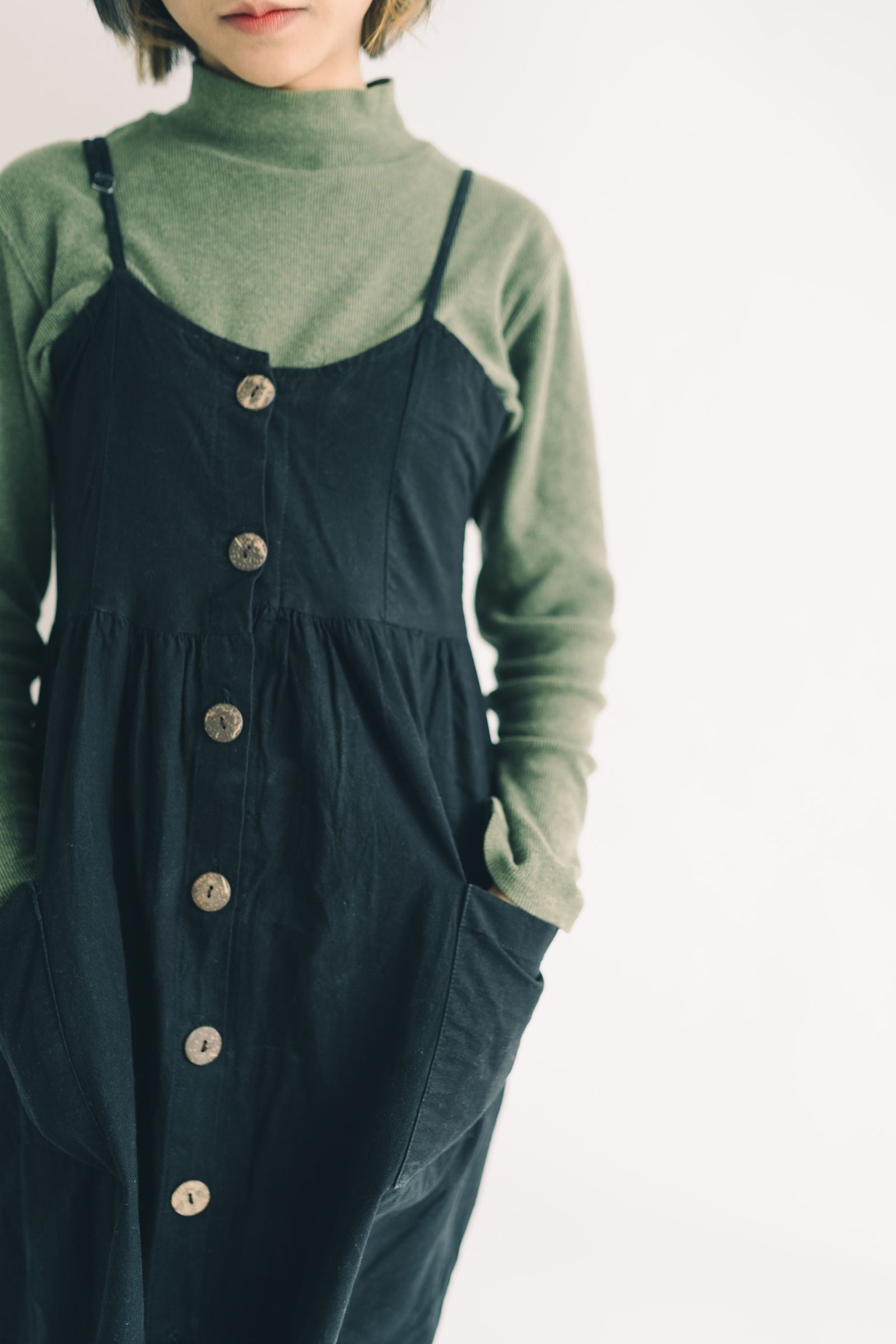
Try the dress alone first and notice how freely it hangs. A close-fitting slip with little spare room will behave differently from a loose straight style. Some bias-cut dresses respond strongly to added fabric beneath them. If the dress starts twisting or catching over a top, the pairing may need more ease rather than tighter underlayers.
Choose a top with a quiet surface
A smooth, lightweight knit is a useful starting point. Raised seams, heavy ribbing, chest pockets and thick printed graphics can show through a thin dress. Lay the top flat and inspect it before trying it on. Details that seem small on their own can become obvious beneath a reflective or closely draped fabric.
Choose a top that sits comfortably without being stretched tight. A very tight top can roll at its lower edge; an excessively loose one can fold under the skirt. Neither problem is solved by pressing the dress harder against it. Look for a stable fit with enough movement through the shoulders and arms.
Place necklines so the layers look intentional
A crew-neck tee under a low slip neckline creates a clear contrast. A finer high-neck top makes a more continuous upper section. Both can work, but check the relationship between the two edges. A top neckline that barely peeks above the dress may look accidental if it keeps disappearing and reappearing.
Inspect the straps as well. Adjustable straps should sit securely without pulling the dress armholes upward into the top. Shortening them to hide an unsuitable neckline can move the bust shaping and waist away from their intended positions. Set the dress straps for fit first, then choose an underlayer that works with that position.
Check the shoulder area from three angles
- From the front, look for the top bunching beneath each strap.
- From the side, see whether the slip armhole presses into the sleeve.
- From the back, check that both necklines lie flat and centered.
- Raise your arms and confirm that the straps stay comfortably in place.
Prevent sleeve fabric from collecting
A short sleeve can form a ridge if it ends exactly beneath a snug dress armhole. Try a sleeve that falls beyond that pressure point or a slimmer, less bulky cut. With long sleeves, smooth the shoulder and underarm area before judging the result. Extra sleeve length should not accumulate inside the upper arm.
Do not fold a thick sleeve into a smaller space and expect it to remain invisible. If the dress has narrow armholes, a sleeveless underlayer may be more practical. Alternatively, put the top over the dress as a separate styling choice, provided its hem sits comfortably and you like the new silhouette.
Resolve the lower hem before adding accessories
The underlayer’s hem matters even though it is hidden. A thick band ending at the fullest part of the hip can create a visible line beneath a smooth skirt. Try a top with a finer edge or a length that lies flatter. Check the back view, where fabric often gathers unnoticed.
Move around before smoothing the dress again. If the top steadily rolls upward, choose another cut instead of repeatedly pulling it down through the slip’s armhole. The combination should allow normal sitting and reaching. A tucked underlayer only helps when there is another appropriate garment beneath it; avoid improvising a bulky arrangement inside the dress.
Test light, friction and removal
Look at the outfit in daylight and indoor light. Pale or shiny dress fabric may reveal the underlayer’s seam positions or color more clearly in one setting. Walk, sit and stand to see whether the skirt slides over the top or catches at its hem. A smoother fabric pairing may be all that is needed.
Finally, take the layers off carefully and check whether the straps snag on the top’s texture or jewelry. Keep the combination that looks intentional and stays manageable through wear. The goal is not to make the extra layer invisible everywhere, but to show the neckline and sleeves deliberately while keeping the concealed parts smooth.