
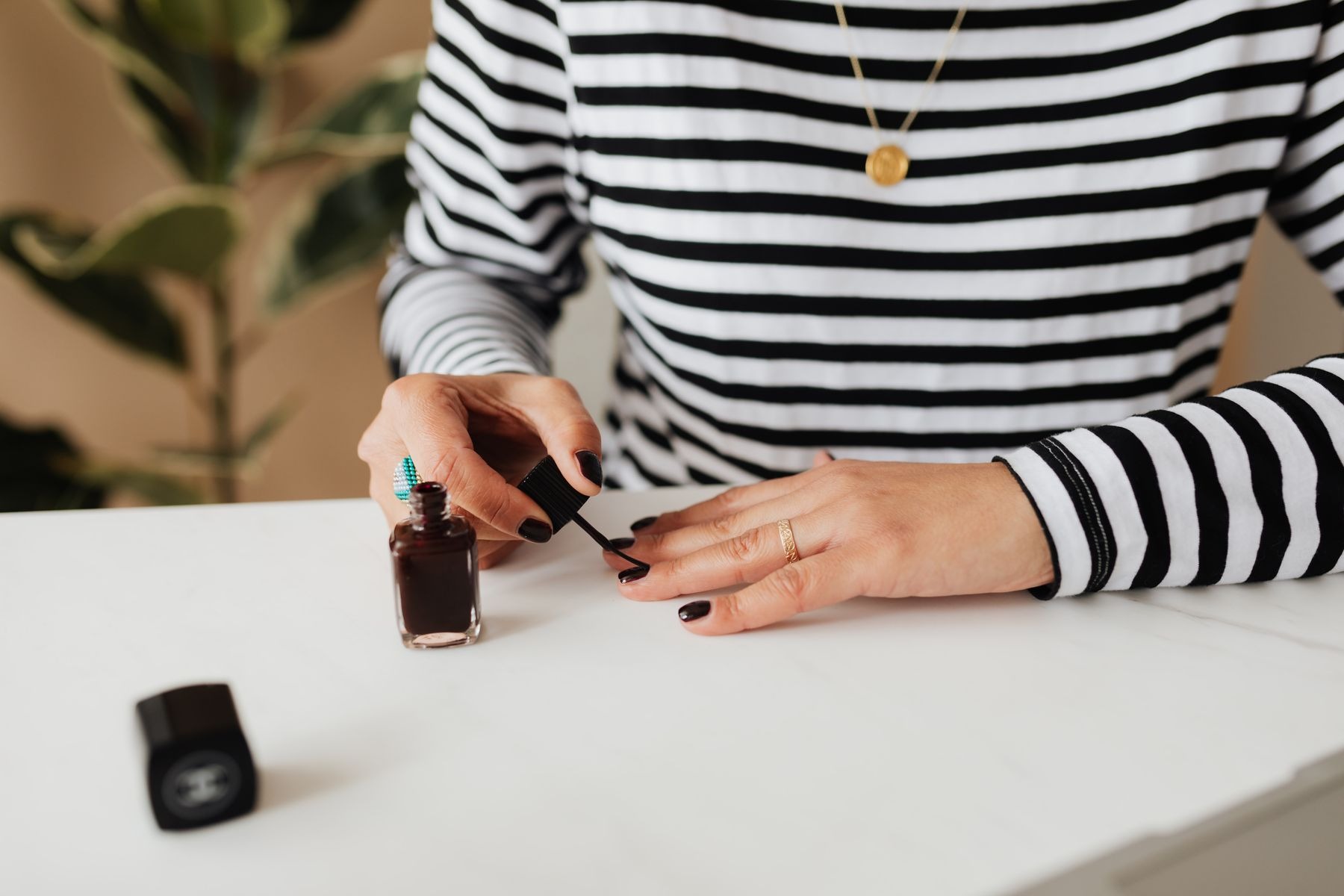
A single nail color makes small differences easy to see: one flooded corner, one thick thumbnail and one pale streak across the middle finger. The answer is not necessarily more coats. A consistent brush load, a supported hand and a sensible painting order make a plain manicure look more coherent.
Start with prepared natural nails and an ordinary air-drying lacquer system. Follow the instructions for its base coat, color, top coat and drying times. The technique below concerns controlling the brush, not substituting one type of manicure product for another.
Choose an order before the first coat
Paint the hand that is harder for you first, while concentration is fresh. For many people that means using the less practiced hand to paint the dominant one. Rest the working forearm on the table and keep the receiving hand supported. You should not have to hold both hands in the air.
Move from finger to finger in the same order for each coat. Thumbnails are wider and may need a slightly different brush load, so treating them as a separate step can help. Keep the bottle on a stable surface rather than balancing it between your knees or holding it in a freshly painted hand.
Learn the load from the first nail
Lift the brush slowly and wipe away excess against the inside neck as appropriate for its design. You want enough polish to move across the nail without a heavy droplet gathering at the tip. A broad paddle brush and a narrow round brush behave differently, so watch the actual bead of color.
Use the first nail as a practical check. If polish immediately runs toward the surrounding skin, reduce the load on the next nail. If the brush drags without laying an even film, it may need a little more product. Do not repeatedly wipe the brush until it is almost dry and then compensate with many strokes.
Place, guide and stop
Set the brush a small distance from the skin at the base of the nail. Guide it toward the free edge with light pressure, then cover the sides with controlled strokes. Leave a narrow, intentional margin rather than pushing wet lacquer into the nail folds.
Let the brush do a limited job
The exact number of strokes depends on brush width and nail size. The useful principle is to avoid working the same patch continuously as it begins to set. If a first coat is a little sheer, let the next permitted coat build coverage instead of dragging fresh color through a partly drying surface.
Turn the finger slightly when painting a side rather than twisting your wrist into an uncomfortable position. Keep the hand low and stable. A clear view of the edge is more helpful than pressing harder or trying to finish the whole nail in one sweep.
Make the second hand easier to reach
When switching hands, reposition the bottle and light if needed. Do not preserve a symmetrical table arrangement at the expense of a comfortable reach. Rotate the hand being painted so the brush can approach naturally, and steady the working hand with a spare finger only if that does not touch wet polish.
- Support the wrist before loading the brush.
- Use a manageable amount of lacquer.
- Keep sleeves away from the tabletop.
- Pause if the bottle or hand position becomes unstable.
Correct an edge without repainting the finger
Use a suitable cleanup tool and remover according to the product directions. Work on the misplaced color rather than flooding the entire nail edge. Wipe the tool between passes so it does not spread a colored blur. If a correction removes part of the manicure, let the surface settle before deciding whether that nail needs repainting.
For later coats, follow the lacquer’s timing and application guidance. Do not add an extra layer solely because you have reached the end of the routine; inspect opacity and finish first. A clear top coat cannot level every ridge created by an overloaded color brush.
Judge the set from normal distance
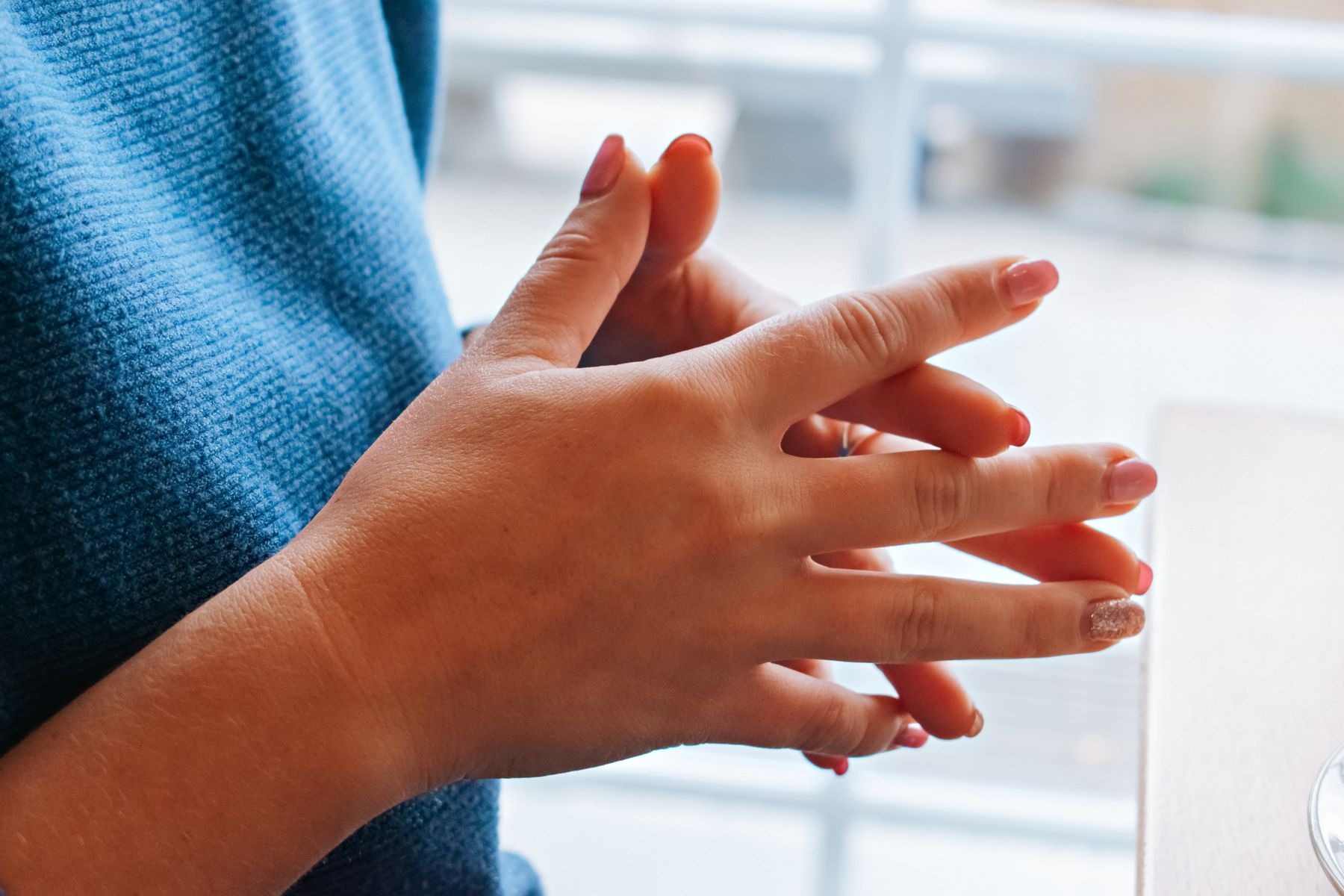
When the manicure has dried as directed, place both hands together and look at the overall color and outline. Tiny differences at magnifying distance do not always affect the finished impression. Note one adjustment for next time, such as a lighter thumbnail load. A repeatable one-color manicure grows from controlled decisions, not from endlessly touching up every nail.