
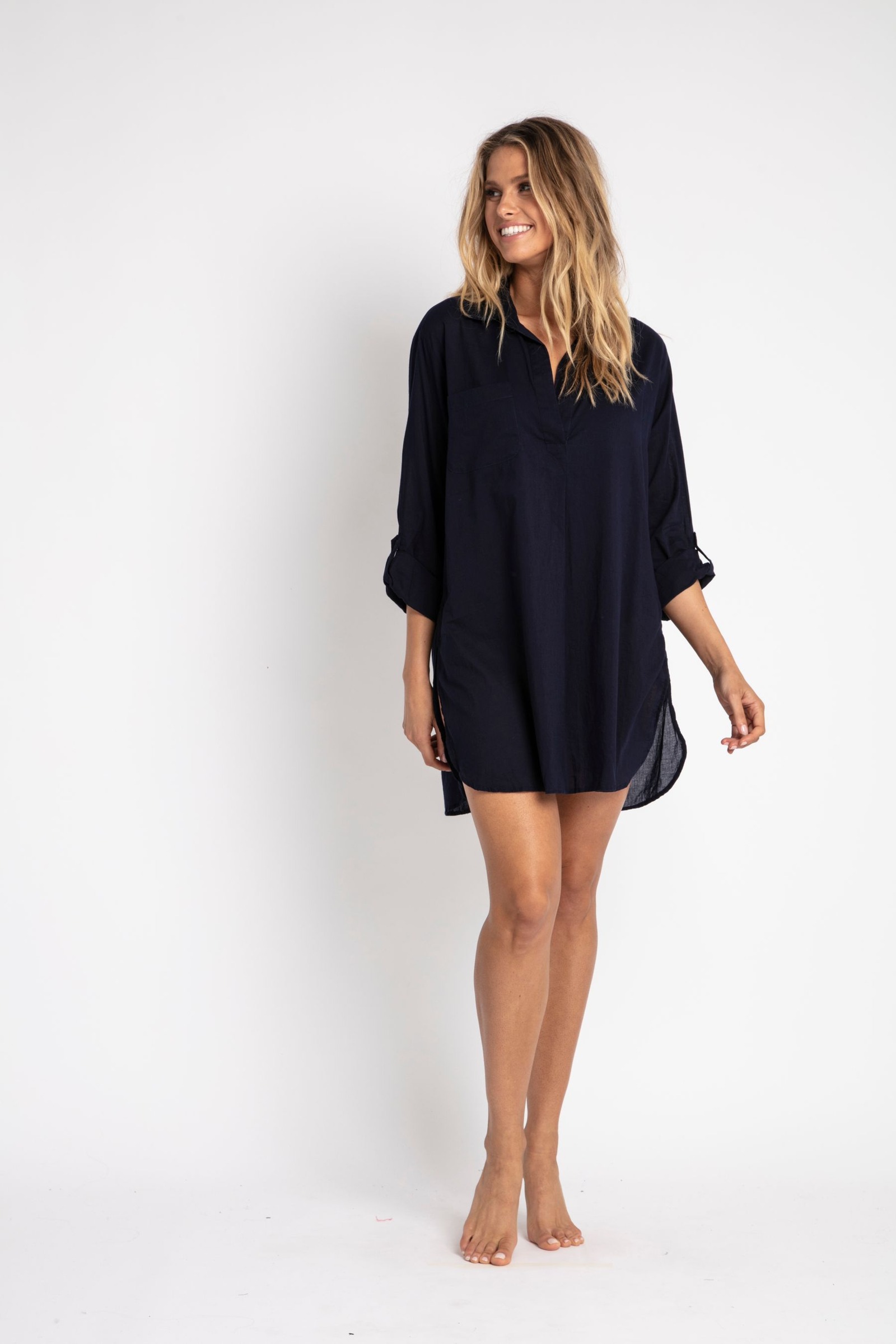
A shirtdress combines the familiar details of a shirt with the movement demands of a skirt. That means its buttons must stay comfortable through the chest, waist and hips, not only while you stand in front of a mirror. A straight-looking placket can reveal a great deal about fit once you sit, reach and walk.
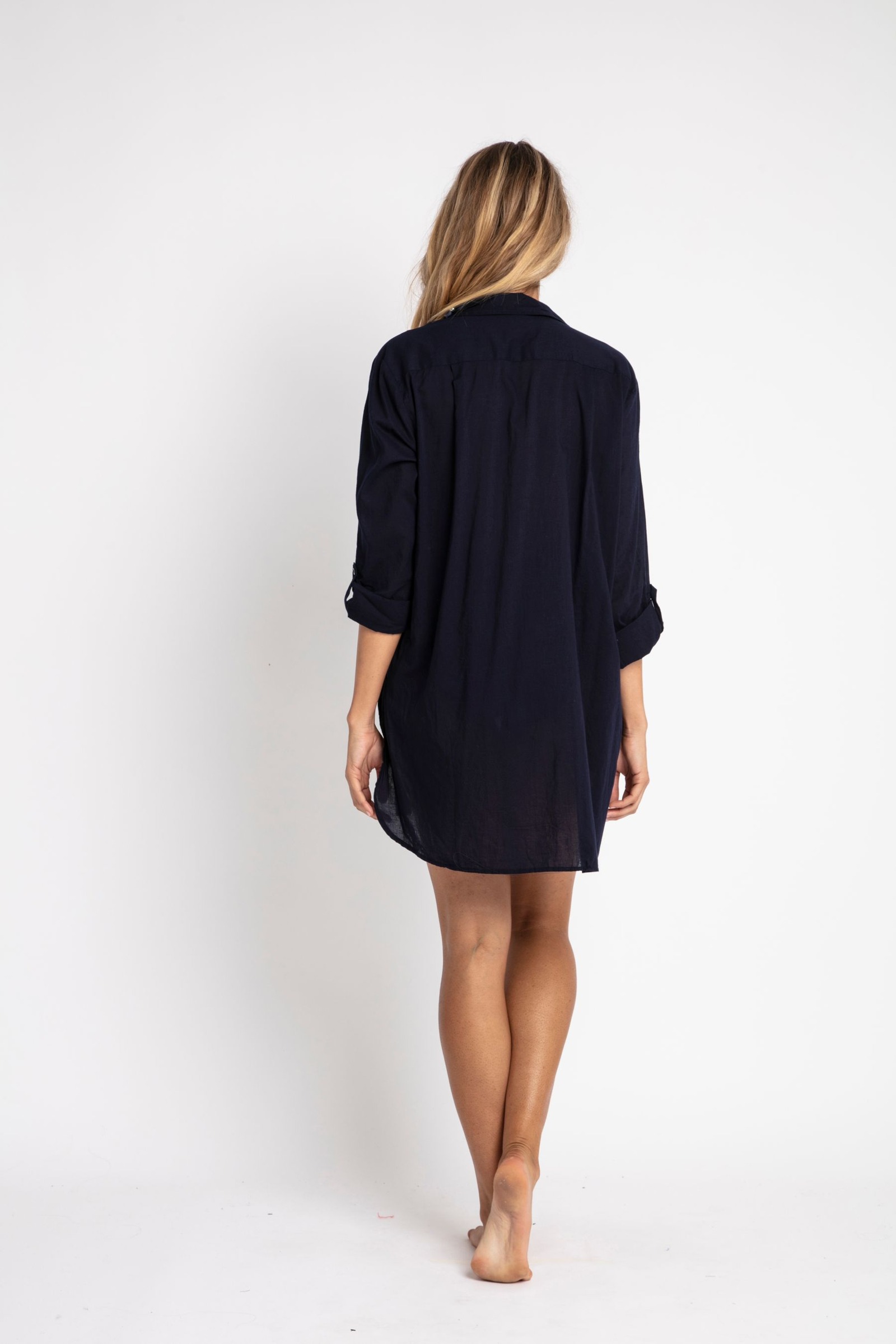
Begin with the dress fully fastened in the arrangement you intend to wear. If you prefer an open collar, leave only those upper buttons open. Do not assess the fit with the waist untied if you plan to wear the sash, because the tie can change the direction of tension along the front.
Read the spaces between buttons
Look at the placket from both straight ahead and a slight side angle. Small openings may be easier to see from the side. Horizontal pulling across the chest or hips suggests the garment lacks room there. A larger size may help, but compare the shoulders and collar too; different cuts distribute room differently.
A gap can also come from button placement rather than overall tightness. If the fabric hangs easily everywhere except a single opening between widely spaced buttons, a tailor may be able to add an appropriate concealed fastening. That is different from trying to hold a visibly strained dress closed with a stronger snap.
Check the waist with and without its tie
First look at the untied dress. The front should fall without being dragged sharply to one side. Then tie the sash loosely and redistribute the fabric so the placket stays centered. Pulling the knot hard toward one hip can rotate the dress and make the lower buttons appear crooked.
If the tie sits in fixed loops, notice whether their height works for your torso. A waist seam or loop position that feels wrong cannot always be corrected by tightening. Try a different cut when the bodice repeatedly rides upward or a fixed waistband presses while seated.
Keep pockets in the fit assessment
- Check whether empty pocket openings lie reasonably flat.
- Put your hands in gently and notice whether the front buttons pull apart.
- Test a small everyday item rather than loading both pockets heavily.
- Look for pocket bags showing through pale or lightweight fabric.
Sit before deciding the lower half fits
Use a normal chair and sit with your feet resting naturally. Watch the buttons across the lap and upper thigh. A dress can appear roomy standing but pull across this area when seated. If the spaces open, assess whether there is enough overall ease instead of automatically leaving another bottom button undone.
Then stand and walk several steps. The skirt opening should permit your ordinary stride without exposing more than you want. Some shirtdresses are designed with an open lower section; others have buttons nearly to the hem. Judge the actual overlap and your movement rather than assuming all button fronts provide the same coverage.
Let the collar and cuffs sit naturally
A collar that presses at the throat when worn open may be pulled backward by the upper back or shoulders. Smooth trapped fabric once, then repeat the reach test. If the problem returns, consider the cut. A scarf or necklace will not change a collar that is being pulled out of position.
For cuffs, choose a fastening that allows your wrist to move comfortably. If rolling the sleeves, fold them neatly above the cuff and check that they do not create a tight band around the forearm. Thick, repeated rolls can change sleeve movement and make the shoulder feel more restrictive than it did unrolled.
Separate styling choices from fit fixes
An open collar, softly rolled sleeve or alternative belt can change the appearance of a well-fitting shirtdress. These are styling decisions. Persistent gaping, twisting or strained pocket openings are fit information. Keep the two categories separate so a visually appealing adjustment does not distract you from a dress that needs constant management.
Before keeping the dress, try it with the underwear and shoes you expect to wear. Inspect the rear placket line if the design has one, check the side seams and repeat the seated test. Choose the version that stays aligned and comfortable, leaving you free to use the dress as an ordinary garment rather than a button-monitoring project.