

A wrap dress depends on two layers of fabric staying in a useful relationship. The bodice crosses at the chest, and the skirt overlaps across the legs. A secure knot matters, but it cannot create missing fabric where the dress is too small or correct a neckline cut that does not suit the coverage you want.
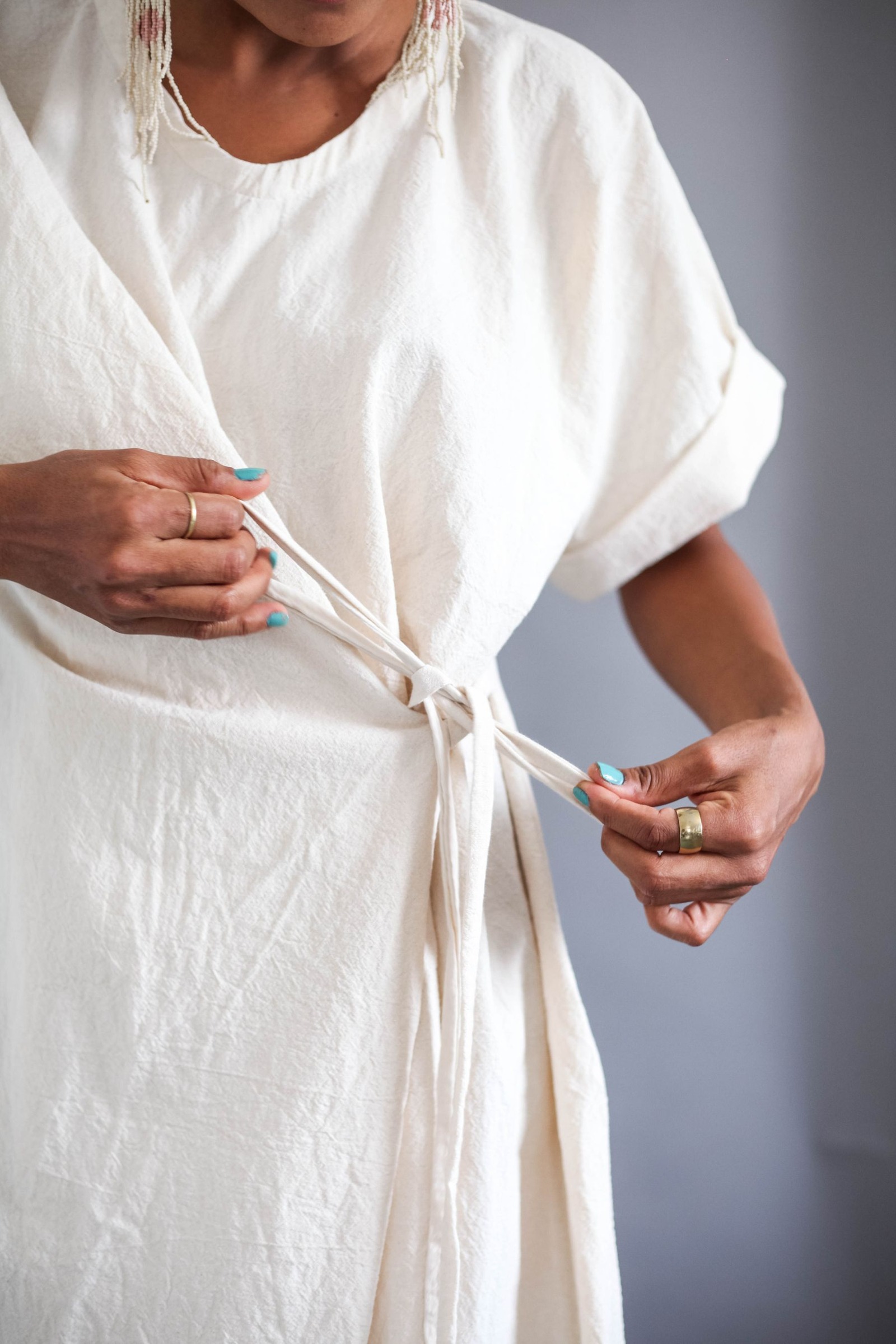
First identify whether the dress is a true wrap or a fixed wrap design. A true wrap opens around the body and has functional ties or closures. A fixed version may have a sewn crossover and a separate zipper. Follow the garment’s construction rather than assuming every decorative tie controls the fit.
Thread the ties through their intended route
On a true wrap, locate the inside fastening and any small opening at the side seam. Pass the appropriate tie through that opening, following the design, and smooth the inner panel before bringing the outer section across. Skipping an internal tie or threading both ends around the outside can leave the inner layer unsupported.
Tie the dress firmly enough to stay in place, but not so tightly that the side seam twists forward or the waist feels compressed. Check that both panels lie smoothly. If the dress only closes comfortably with a narrow sliver of overlap, more force on the ties is not the answer.
Assess the neckline without holding it
Stand naturally with your arms down and look at where the two bodice panels cross. Then reach forward and bend slightly as you would to pick up a bag. You should not need to keep a hand over the neckline to maintain your preferred coverage. Check from the side as well as the front.
If the bodice has enough room but the crossover is lower than you prefer, a smooth camisole can provide a deliberate underlayer. Choose one whose neckline you are happy to show. It should not pull the wrap panels upward or add bulky folds at the waist. Test it with the whole dress fastened.
Distinguish an opening from strain
- A relaxed but low crossover is primarily a coverage preference.
- Diagonal pulling from the chest toward the tie suggests tension.
- A neckline dragged backward can indicate shoulder or upper-back fit issues.
- An inner panel that slips out may need its intended fastening checked.
Give the skirt a separate movement test
Walk at your normal pace rather than taking tiny fitting-room steps. Turn, sit and step onto a low stair while using a handrail. Watch how far the outer panel moves away from the inner one. A generous standing overlap may open more than expected when the skirt is pulled across the lap.
Do not assume a heavier fabric guarantees coverage. Cut, panel width and fastening position all affect the result. A narrow skirt can pull apart while a lighter but fuller one has more room to move. Choose a design with an overlap you find usable for your actual activities.
Keep small fixes proportional to the problem
A tailor may be able to add a discreet fastening at a stable crossover point when the dress already fits. The fabric must support it without puckering or pulling. Ask for the proposed position to be marked while you wear the dress so the adjustment is assessed in its real shape.
Do not rely on a single safety pin to hold a strained bodice or skirt closed. It can distort fine fabric and concentrate tension at one small point. If you are considering garment tape, check its instructions and fabric compatibility, and treat it as a limited styling aid rather than the structure holding the dress together.
Check the knot under outer layers
A large side bow can become uncomfortable beneath a jacket or bag strap. If the design permits, try a flatter knot and arrange the ends so they do not enter the skirt opening. Avoid relocating the tie far from its intended position, which can change the wrap angle and pull the neckline unevenly.
Finish with a short indoor wear trial that includes sitting down and standing again. Retie once if needed, then check whether the same problem returns. A useful wrap dress stays comfortable with its normal closures, offers enough overlap for movement and gives you the neckline coverage you chose without continuous checking.