
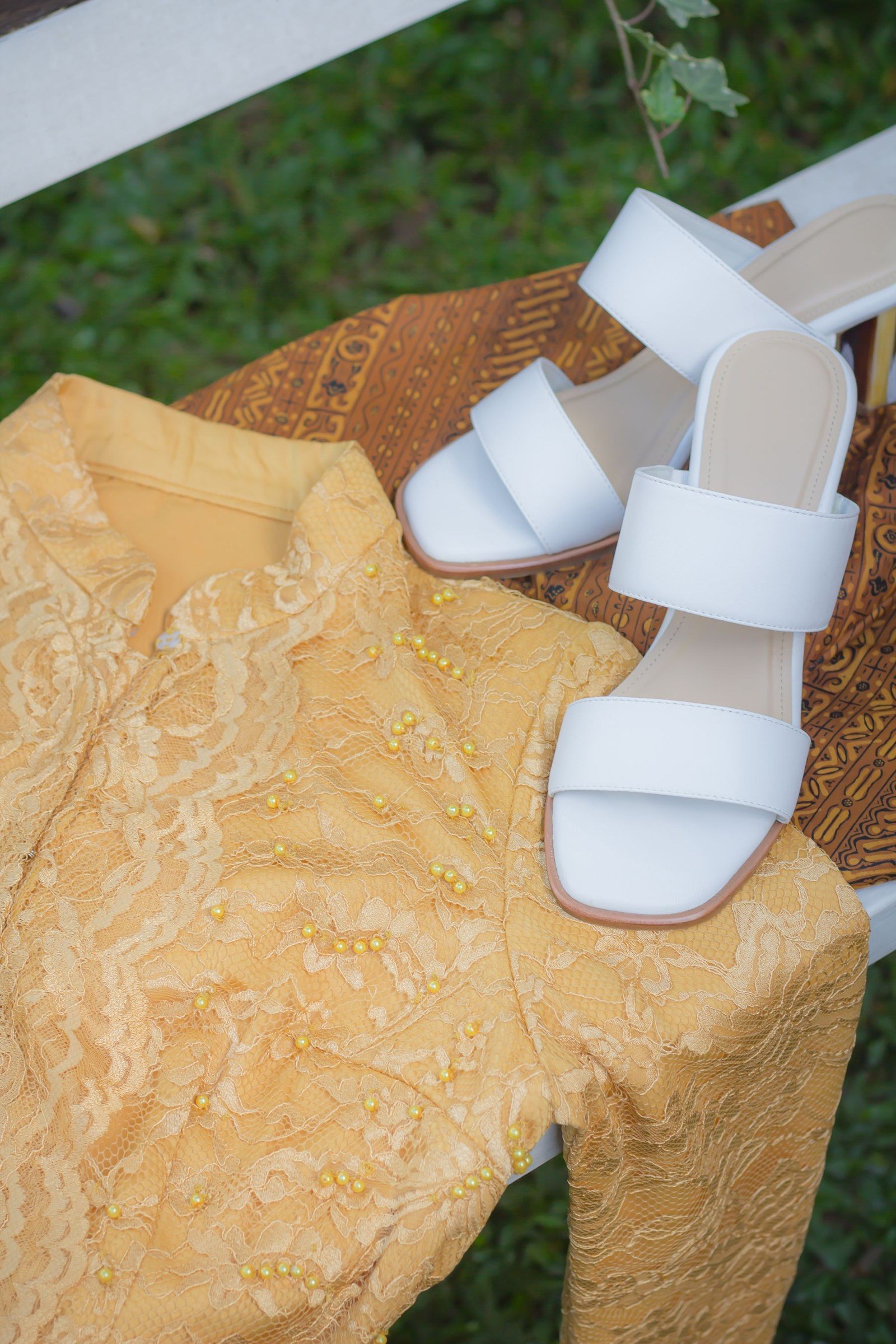
A shoe can look right with a dress and still be the wrong choice for the walking, standing and surfaces involved. Comfort is easier to judge when you test the pair as part of the actual outfit. The dress affects stride and hem clearance, while tights, socks and straps can change how the shoes feel.
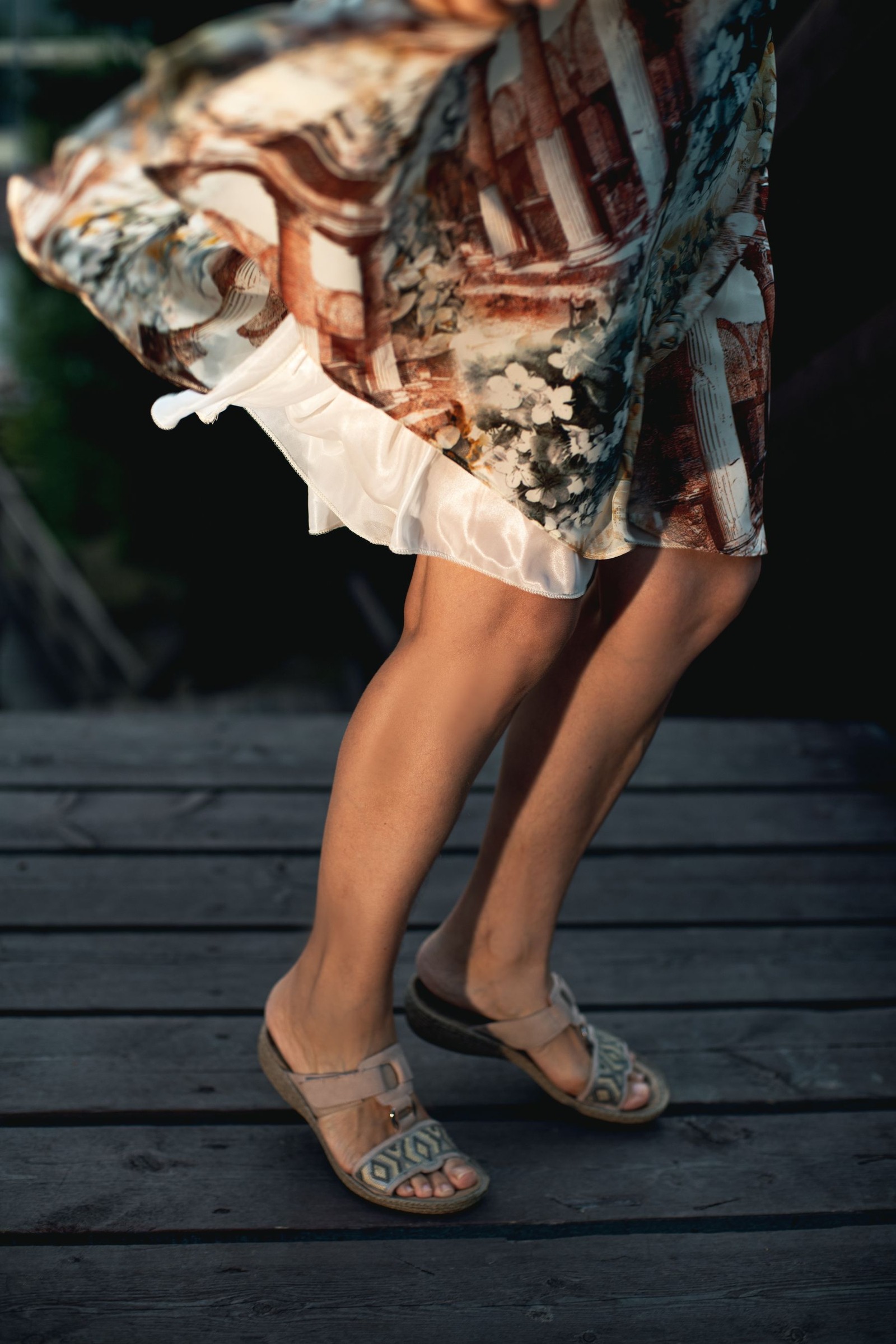
Start with the route rather than the photograph. Think about steps, uneven paving, time spent standing and whether you will carry a bag. Then choose a few suitable pairs you already own or can try indoors. Flats, sandals, loafers and boots can all work with dresses; no single category guarantees a comfortable fit.
Test with the intended socks or tights
Put on the hosiery you plan to wear. A shoe that fits comfortably with thin tights may feel different with thicker socks, while a smooth sock can change how securely your heel sits. Check each foot separately and avoid judging the pair from the more comfortable side alone.
Fasten straps and laces as you would for the day. If you must over-tighten a strap to stop slipping, the fit may not be suitable. Look for pressure from an edge or buckle while standing and after several steps. Persistent rubbing or pinching is useful evidence, not a reason to assume the shoe will somehow become appropriate.
Check space and stability in ordinary movement
Stand naturally and move your toes inside the shoes. Then walk at your usual pace on a clean indoor surface, following any return requirements. Notice whether your toes press forward, your heel lifts excessively or you grip with your feet to keep the shoes on. A mirror cannot show those sensations.
Turn, stop and start again. The shoe should feel secure through these transitions without needing a special walking style. If you are comparing heels, judge the whole shoe, including its base, fastening and fit, rather than assuming height alone predicts comfort. Choose a familiar, stable option when the day involves substantial movement.
Use the dress during the trial
- Walk without shortening your stride to protect the skirt.
- Step backward and check that the hem stays clear of the shoe.
- Use a low step with support to assess clearance.
- Sit and stand, noticing whether straps or boot tops catch the fabric.
Match the sole to the setting
Consider the surface you actually expect to use. A narrow heel can be awkward on soft ground, while a sole that feels secure indoors may behave differently on wet paving. Check the footwear’s intended use and the condition of its soles. Worn smooth areas or loose components deserve attention before the outfit is chosen.
Do not conduct a risky trial on slippery or unstable ground just to prove a pair works. Use what you know about the setting and choose a more appropriate option when uncertain. A dress does not require formal-looking footwear if a practical pair better supports the day.
Notice how the bag changes the test
Carry your normal bag with a realistic light load. Holding it can change your pace and leave fewer hands available for lifting a long skirt. If the combination only works when you continually hold the hem clear, consider a different dress length or shoes that offer more dependable clearance.
Outer layers matter too. A bulky coat and bag can make an already restricted skirt harder to manage on steps. Test the complete outfit before deciding the shoes are the only issue. Sometimes the comfortable solution is a roomier skirt rather than a different shoe shape.
Choose the pair that needs least negotiation
Wear each candidate indoors long enough to notice repeated pressure points, not just the first impression. If discomfort appears, stop and choose another option rather than extending the trial to push through it. Small accessories such as inserts change fit and should be tested in the actual shoe, not treated as a guaranteed correction.
Once you have a comfortable pairing, record the useful conditions: the socks worn, the dress’s hem clearance and the type of route it handled comfortably. This is more informative than labeling a shoe universally comfortable. A good dress outfit lets you walk normally and pay attention to the day, not to keeping footwear and fabric under control.